
Table of Contents
TogglePulling up to a home with a well-designed front yard sets the tone for everything that follows. Gravel landscaping has become a go-to choice for homeowners looking to overhaul their curb appeal without the constant maintenance that lawns demand. It’s durable, versatile, and offers a clean aesthetic that works with nearly any architectural style. Whether someone’s dealing with poor drainage, limited water access, or just tired of mowing every weekend, gravel delivers practical solutions wrapped in visual appeal. This guide walks through 15 design approaches that prove gravel isn’t just functional, it’s transformative.
Key Takeaways
- Front yard gravel landscaping eliminates weekly mowing and watering while maintaining curb appeal, making it an ideal solution for homeowners seeking low-maintenance alternatives to traditional lawns.
- Proper base preparation with landscape fabric, compacted crushed stone, and correct edging installation is essential for gravel driveways and pathways to remain stable and prevent long-term shifting.
- Gravel pairs exceptionally well with drought-tolerant plants like sedums, ornamental grasses, and native species, reducing irrigation needs by 30-50% compared to bare soil while suppressing weeds naturally.
- Color and gravel type selection should match your home’s architecture and regional geology—warm tones complement brick homes, gray stone suits modern designs, and locally sourced materials save 40-60% compared to specialty imports.
- Gravel landscaping costs 60-80% less than asphalt or concrete while providing superior drainage, fire resistance, and durability, with minimal maintenance beyond occasional raking and periodic top-dressing.
Why Choose Gravel for Your Front Yard Landscape
Gravel stands out as a landscaping material because it solves multiple problems simultaneously. Unlike grass, it doesn’t require weekly mowing, fertilizing, or constant watering, a significant advantage in regions facing drought restrictions or high water costs. Proper installation with landscape fabric underneath virtually eliminates weed growth, cutting maintenance hours dramatically.
From a drainage perspective, gravel excels where other materials fail. It allows water to percolate through to the soil below, reducing runoff and preventing the pooling issues common with impervious surfaces like concrete. This makes it compliant with many municipal stormwater management requirements and helps prevent erosion on sloped lots.
Cost comparisons favor gravel over alternatives like pavers or poured concrete, especially for larger areas. Crushed stone typically runs $30-$50 per cubic yard (before delivery), and a 100-square-foot area at 3 inches deep requires roughly one cubic yard of material. Installation is straightforward enough for DIYers: excavate 4-6 inches, lay landscape fabric, add a compacted base layer, then top with decorative gravel.
Durability factors matter. Gravel doesn’t crack like concrete, fade like mulch, or decompose like wood chips. With periodic raking to redistribute material and occasional top-dressing every few years, a gravel landscape maintains its appearance for decades. It also provides excellent fire resistance in wildfire-prone areas, unlike organic mulches that can ignite.
Modern Minimalist Gravel Designs
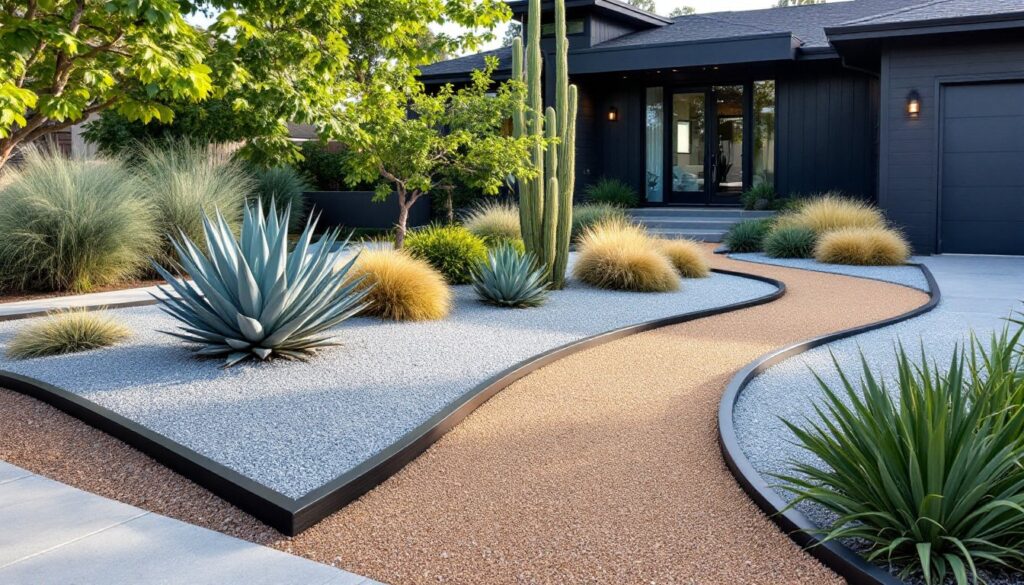
Minimalist gravel landscapes lean heavily on geometric precision and restrained palettes. Think clean lines, neutral tones, and deliberate negative space. A monochromatic approach using white or light gray pea gravel creates stark contrast against dark-trimmed modern architecture, while the smooth texture complements angular building forms.
One effective layout involves large rectangular gravel beds bordered by steel or aluminum edging, interspersed with concrete pavers set in a grid pattern. The gravel fills voids between pavers, creating visual rhythm without clutter. For homes with mid-century modern or contemporary styling, ¾-inch crushed limestone in pale gray provides the right scale and color temperature.
Planting in minimalist designs stays intentional and sparse. Architectural specimens like agaves, ornamental grasses such as blue fescue, or sculptural yucca plants punctuate gravel expanses without overwhelming them. These drought-tolerant selections align with the low-water philosophy that often drives gravel choices. Plant counts remain low, three to five substantial specimens for a typical front yard beat dozens of smaller plantings.
Lighting integration elevates minimalist gravel at night. Low-voltage LED path lights with simple geometric housings cast pools of light across textured stone surfaces. Uplighting placed beneath specimen plants creates dramatic shadows. The gravel itself reflects ambient light, reducing the fixture count needed compared to dense planting beds. Keep cable runs organized beneath the gravel layer, protected by conduit where codes require.
Gravel Pathways and Walkway Ideas
Gravel pathways offer flexibility that rigid materials can’t match. Curved routes feel organic and invite exploration, while straight runs project formality and efficiency. Crushed granite or ¼-inch to ⅜-inch pea gravel works best for walking surfaces, larger stones feel unstable underfoot, while finer material tracks indoors.
Proper base preparation prevents the sunken, migrating paths that plague poorly installed gravel walks. Excavate 4-5 inches deep, line with landscape fabric (6-ounce minimum weight), then add 2-3 inches of compacted crushed rock base. Top with 1-2 inches of decorative gravel. The base layer should be wetted and compacted with a plate compactor, hand tamping works for narrow paths under 2 feet wide, but wider walks need mechanical compaction for stability.
Edging keeps gravel contained and defines boundaries. Options include steel landscape edging (½-inch to ⅛-inch thick, depending on curve radius), pressure-treated lumber (minimum 2×4 nominal, which measures 1.5″ × 3.5″ actual), or mortared stone. Install edging so the top sits ½ inch above the gravel surface to prevent spilling. Stake steel edging every 3-4 feet: lumber requires stakes every 2 feet on straight runs, closer on curves.
Stepping stones integrated into gravel pathways create visual interest and offer stable footing in wet weather. Flagstone, bluestone, or concrete pavers work well, set them flush with or slightly above the gravel surface. Space them 18-24 inches apart (one comfortable stride) and vary placement slightly for a natural rhythm rather than rigid spacing.
Combining Gravel with Plants and Greenery
Gravel serves as an exceptional mulch alternative around plantings, particularly for xeric and Mediterranean gardens. The stone layer moderates soil temperature, suppresses weeds, and doesn’t decompose like organic mulch, eliminating the need for annual replacement. Research from the University of Nevada Extension shows that inorganic mulches like gravel can reduce irrigation needs by 30-50% compared to bare soil.
Succulent gardens thrive in gravel settings. Sedums, sempervivums, and echeveria varieties appreciate the excellent drainage gravel provides around root crowns, preventing the rot issues common with moisture-retentive mulches. Plant in clusters of odd numbers (three, five, seven specimens) for natural groupings, then surround with ¾-inch crushed rock in earth tones that complement foliage colors.
Native plantings paired with regional gravel types create cohesive, low-water landscapes. In Southwestern settings, decomposed granite with desert marigold, penstemon, and agave mirrors natural desert washes. Pacific Northwest designs might use river rock around Oregon grape, native ferns, and shore pine. Matching gravel to regional geology makes landscapes feel rooted in place rather than imported.
Border plantings soften gravel expanses and define edges. Low-maintenance perennials like Russian sage, catmint, or ornamental grasses provide seasonal color and movement without demanding constant care. Install plants before spreading gravel, cut X-shaped slits in landscape fabric for planting, then pull fabric snug around plant bases before adding stone. This prevents fabric edges from showing while maintaining weed suppression.
Gravel Driveway and Parking Area Inspiration
Gravel driveways balance economy with functionality, costing roughly 60-70% less than asphalt and 80% less than concrete when comparing similar areas. They handle freeze-thaw cycles better than rigid pavements, which crack under thermal stress, making them particularly suitable for cold climates.
Substrate construction determines driveway longevity. For passenger vehicle use, excavate 8-10 inches, install geotextile fabric (non-woven, 8-ounce minimum), then build up with 4-6 inches of compacted crushed stone base (¾-inch minus or #2 stone). Top with 2-3 inches of ¾-inch crushed gravel, angular crushed stone locks together better than round pea gravel, which shifts under tire loads. For driveways accommodating delivery trucks or heavier vehicles, increase base depth to 8 inches and use 4 inches of surface gravel.
Drainage management prevents rutting and washouts. Crown the driveway center 3-4 inches higher than edges on a 12-foot-wide drive to encourage water runoff. On slopes exceeding 10%, install speed bumps or transverse bars every 15-20 feet using pressure-treated 4×4s or landscape timbers, these slow water flow and reduce erosion. Direct runoff toward vegetated areas or rock-lined swales rather than onto pavement or neighboring properties.
Two-track driveways offer a middle ground between full gravel coverage and lawn. Set parallel gravel strips 5-6 feet apart (matching vehicle track width), bordered by treated lumber or steel edging, with turf or groundcover between. This reduces gravel volume needed while maintaining a green aesthetic. Use decomposed granite for the tracks in Mediterranean or modern settings, it compacts harder than crushed stone and provides a smoother ride.
Choosing the Right Gravel Type and Color for Your Home
Gravel selection impacts both function and aesthetics. Pea gravel (¼-inch to ½-inch smooth stones) works for pathways and decorative beds but shifts under foot traffic and vehicle tires. Crushed stone (¾-inch angular rock) compacts tightly for driveways and stable walkways. River rock (1-3 inch rounded stones) suits dry creek beds and decorative features but doesn’t compact, avoid it for surfaces requiring stability.
Color choices should reference existing materials. For brick homes, warm-toned gravels in tan, rust, or terra cotta create harmony. Gray or blue-gray stone complements contemporary siding and cool-toned trim. White or cream gravel brightens shaded areas but shows debris and requires more frequent raking. Multi-toned gravels (blends of browns, grays, and tans) disguise dirt and leaf litter better than solid colors.
Size matters for different applications. Large stones (2-4 inches) work in dry creek beds and as borders but feel awkward underfoot. Medium gravel (¾-1 inch) serves driveways, parking areas, and high-traffic paths. Fine gravel (¼-⅜ inch) suits walkways and planting beds. Avoid mixing sizes, smaller stones sift through larger ones, creating an inconsistent appearance and poor compaction.
Regional availability affects cost significantly. Locally quarried stone costs a fraction of imported specialty gravels. Contact landscape supply yards (not big-box stores) for bulk purchases, buying by the cubic yard rather than bagged saves 40-60%. Sample different types by requesting small quantities first: many suppliers provide sample bags for $5-10, allowing side-by-side comparison before committing to several tons.
Texture considerations extend beyond appearance. Smooth river rock stays cooler underfoot in summer than angular crushed stone, but crushed stone provides better traction when wet. Lighter colors reflect heat, reducing surface temperatures by 10-15°F compared to dark stone, important for walkways near living areas. Landscaping rock varieties with flat profiles compact tighter than rounded types, reducing maintenance frequency.
Conclusion
Front yard gravel landscaping delivers curb appeal without the maintenance burden of traditional lawns. From minimalist modern designs to naturalistic plantings, gravel adapts to virtually any architectural style and regional climate. The key lies in proper base preparation, thoughtful material selection, and integrating vegetation that complements rather than competes with the hardscape. With the right approach, a gravel landscape becomes a long-term investment that looks better with age rather than worse.