
Table of Contents
ToggleA pool’s just a hole full of water until the landscaping around it turns it into an actual backyard destination. Whether you’re staring at a freshly installed pool surrounded by dirt or a decade-old setup that’s seen better days, the right plants, hardscaping, and lighting can make the difference between “functional” and “the place everyone wants to hang out.” This guide walks through practical, DIYable approaches to poolside landscaping, from choosing chlorine-tolerant plants to installing pathway lighting without hiring an electrician. No fluff, just the stuff that actually works.
Key Takeaways
- Chlorine-tolerant plants like ornamental grasses, succulents, and native perennials are ideal for backyard with pool landscaping, requiring minimal maintenance while withstanding salt spray and reflected heat.
- Privacy screening using fast-growing living walls (bamboo, arborvitae) or lattice structures with climbing vines creates both enclosure and ambiance while protecting against wind load.
- DIY hardscaping with concrete pavers ($3–6 per sq ft), natural flagstone ($8–15), or stamped concrete ($6–12) provides durable pool deck solutions without hiring contractors.
- Low-voltage landscape lighting kits ($100–200) are safe and simple to install for DIYers, with LED path lights spaced 8–10 feet apart and warm white (2700–3000K) for natural ambiance.
- Budget-friendly upgrades like mulch refreshes, raised planter boxes, gravel pathways, and pergolas can transform a pool area in a weekend for under $1,500.
- Avoid deciduous trees, invasive root systems, and bee-attracting plants near pools to prevent filter clogs, deck damage, and constant maintenance headaches.
Creating Privacy and Ambiance Around Your Pool
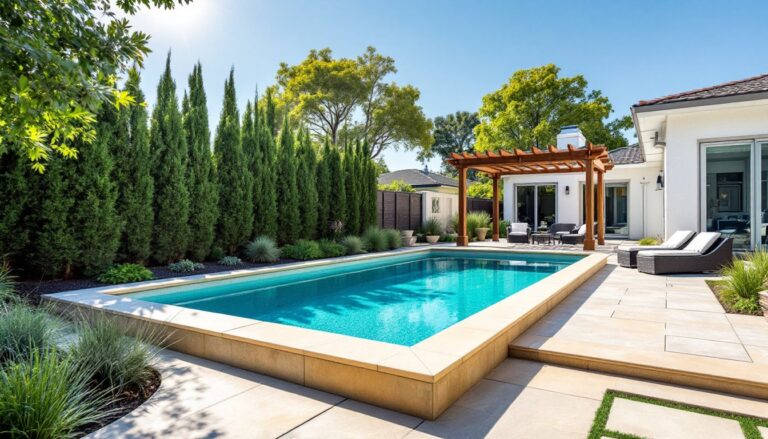
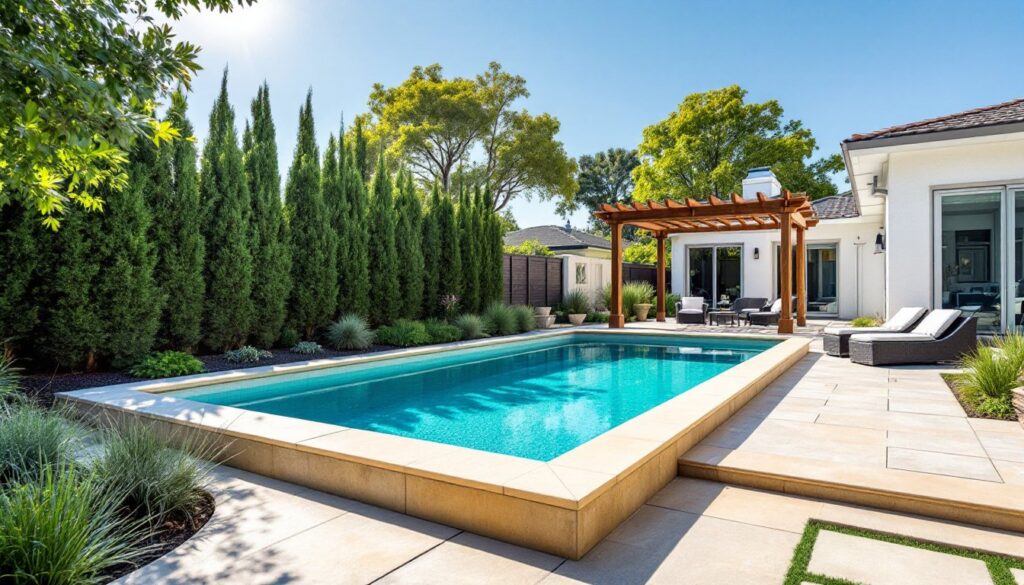
Privacy screening does double duty: it blocks sightlines from neighbors and creates a sense of enclosure that makes a pool area feel intentional. The go-to move is a living wall, think bamboo, arborvitae, or skip laurel planted along fence lines or property edges.
Bamboo grows fast (some clumping varieties add 3–5 feet per year) but needs a rhizome barrier buried 24–30 inches deep to prevent it from invading adjacent beds or, worse, the neighbor’s yard. Black bamboo and golden bamboo are common picks. Arborvitae like ‘Green Giant’ or ‘Emerald Green’ are slower but less invasive: expect 3–4 feet of growth annually once established. Space them 3–4 feet on center for a hedge that fills in within two seasons.
For instant privacy, lattice panels or slatted wood screens mounted on 4×4 posts work well. Treat the posts with a wood preservative rated for ground contact, or use concrete deck blocks to keep wood off wet soil. Clematis, jasmine, or passion vine can be trained up the lattice for a softer look within one growing season. Just make sure the structure can handle wind load, coastal or high-wind areas may need diagonal bracing or deeper footings.
Choosing the Right Plants for Poolside Landscaping
Poolside plants take a beating: chlorine or saltwater spray, reflected heat off concrete, and foot traffic from wet swimmers. The winners are species that tolerate salt, don’t drop a lot of litter, and won’t clog filters or stain decking.
Ornamental grasses like blue fescue, fountain grass, and maiden grass handle salt well and add movement. Keep them at least 4–5 feet from the pool edge to minimize shedding into the water. Agave, yucca, and sedum are solid choices for hot, sunny exposures, just mind the sharp tips on agave if kids are around.
Avoid deciduous trees near the pool (leaf cleanup becomes a weekly chore) and anything with invasive roots that could crack decking or plumbing. Fig trees, willows, and poplars are notorious for root spread. Skip plants like azaleas or gardenias that need acidic soil and lots of water: the high-pH runoff from pool chemicals and concrete coping will stress them out.
Stay clear of flowering plants that attract bees in high numbers, lavender and salvia are beautiful but turn a pool deck into a bee highway in peak summer. Many outdoor design projects feature poolside plantings that look great in photos but require constant maintenance.
Low-Maintenance Plant Options
For homeowners who want greenery without the weekend watering routine, succulents and native perennials are the MVPs. Hens-and-chicks, stonecrop, and jade plant need almost no irrigation once established and laugh at reflected heat.
Lantana, coreopsis, and black-eyed Susan are native perennials (depending on region) that thrive in full sun and don’t mind sporadic watering. They’ll bloom spring through fall and come back year after year with minimal input. Mulch beds with 2–3 inches of shredded hardwood or pine bark to suppress weeds and retain moisture, but keep mulch at least 6 inches back from the pool coping to avoid it washing into the water.
Dwarf shrubs like ‘Soft Caress’ mahonia or ‘Little Ollie’ olive grow slowly, stay compact (under 4 feet), and don’t need constant shaping. They’re ideal for tight spaces between pool equipment pads and fencing. Native grasses adapted to your region (like buffalo grass in the Plains or palmetto in the Southeast) can replace traditional turf in low-traffic zones, cutting mowing time and water use.
Hardscaping Elements That Complement Pool Areas
Hardscaping anchors the pool area and defines traffic flow. Pavers, natural stone, and stamped concrete are the workhorses here, each with trade-offs.
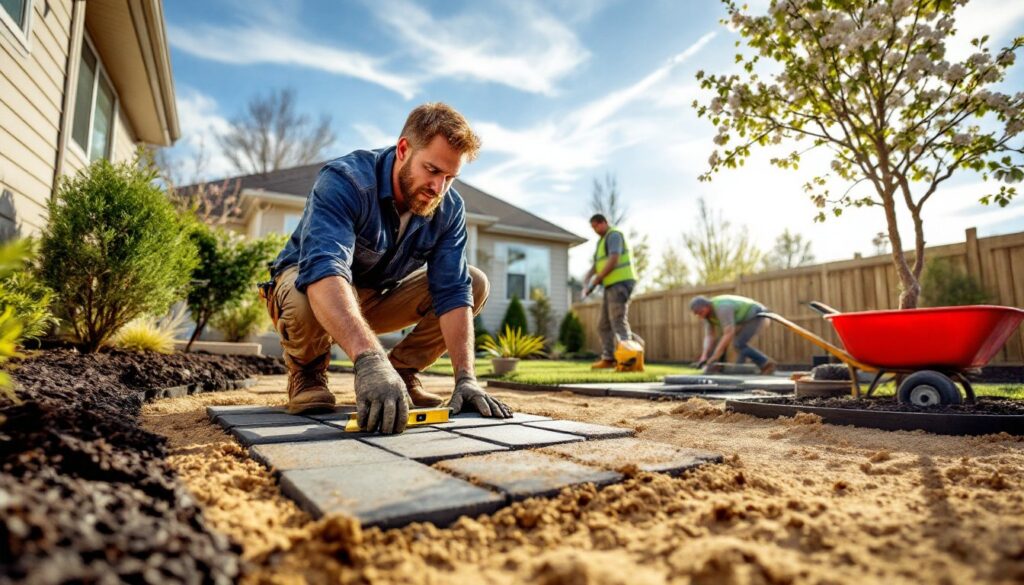
Concrete pavers (12×12 or larger) are DIY-friendly and budget-conscious. Lay them over a compacted gravel base (4–6 inches of ¾-inch crushed stone) topped with 1 inch of sand. Use a plate compactor (rent one for around $60/day) to avoid settling and uneven surfaces later. Polymeric sand swept into joints locks pavers in place and resists weed growth. Expect to spend $3–6 per square foot for materials.
Natural flagstone (bluestone, limestone, sandstone) costs more, $8–15 per square foot, but handles freeze-thaw cycles better than concrete and stays cooler underfoot in direct sun. It’s heavier and irregular, so plan on a mortar bed over a concrete slab for a stable installation. That’s a two-person job and may warrant a pro if you’re covering more than 200 square feet.
Stamped or textured concrete mimics stone or brick and costs $6–12 per square foot installed. It’s durable and low-maintenance, but cracks are inevitable in cold climates without proper control joints every 8–10 feet. Seal it every 2–3 years to prevent staining from pool chemicals. Combining hardscaping techniques with pool-specific materials creates durable and attractive outdoor spaces.
For raised planters or seat walls, use concrete blocks or natural stone. A seat wall 16–18 inches high and 12–14 inches deep provides extra seating without taking up deck space. Cap it with bluestone or limestone for a finished look. If building anything over 24 inches high, check local codes, retaining walls often require permits and may need engineering if they’re load-bearing or on a slope.
Lighting Solutions for Evening Pool Enjoyment
Good lighting extends usability into the evening and keeps people from tripping over step edges or planter boxes. The two main categories are low-voltage landscape lighting (12V) and line-voltage (120V) fixtures. For DIY installs, low-voltage wins on safety and simplicity.
A basic low-voltage kit includes a transformer, cable, and 6–8 fixtures for $100–200. The transformer steps household 120V down to 12V, so there’s minimal shock risk. Mount it near an outdoor GFCI outlet, then run 12- or 14-gauge landscape wire to fixture locations. Bury the wire 6–8 inches deep or run it through PVC conduit if crossing driveways or high-traffic zones. Path lights along walkways should be spaced 8–10 feet apart for even coverage.
Uplighting at the base of palms, ornamental grasses, or architectural plants adds drama. Use LED spotlights (3–5 watts) angled up from 12–18 inches away. LEDs run cooler, last 25,000+ hours, and draw a fraction of the power of halogen bulbs. Warm white (2700–3000K) looks more natural than cool white: save daylight (5000K+) for task lighting near grills or outdoor kitchens.
For in-pool or waterline lighting, that’s line-voltage (120V) territory and must meet National Electrical Code (NEC) Article 680 requirements. Unless you’re a licensed electrician, hire one, pool electrical work requires bonding, GFCI protection, and specific conduit types. Retrofitting LED pool lights into existing niches is doable for a pro and typically costs $200–400 per light installed. Proper lighting design ensures both safety and visual appeal around pools.
Budget-Friendly DIY Pool Landscaping Projects
Not every upgrade requires a landscape crew and a four-figure quote. Plenty of high-impact projects are achievable over a weekend with basic tools.
Mulch and edging refresh a tired pool surround for under $200. Dig a 4-inch-deep trench along bed edges, install aluminum or steel landscape edging (more durable than plastic), and backfill with soil. Top beds with 2–3 inches of mulch, hardwood or cypress both work. A 2-cubic-foot bag covers roughly 12 square feet at 2-inch depth, so a 200-square-foot bed needs about 17 bags at $4–5 each.
DIY fire pit seating areas pair well with pools. Use concrete retaining wall blocks to build a 36–42-inch-diameter ring (no mortar needed for a basic stack). Line the interior with fire brick if burning wood: for a propane or natural gas insert, follow manufacturer clearances. Many municipalities require a 10-foot setback from structures and a 25-foot clearance from property lines for open fires, verify local rules before striking a match.
Pergolas or shade sails reduce sun exposure without the cost of a permanent structure. A 12×12-foot pergola kit runs $800–1,500 and can be assembled in a weekend with a drill, level, and a second pair of hands. Anchor posts in concrete footings (dig 18–24 inches deep, below frost line in cold climates). Shade sails are faster: mount stainless steel turnbuckles and eye bolts to existing posts or fascia, tension the sail, and you’re done. A 12×12 sail costs $50–150 and blocks 85–95% of UV.
Raised planter boxes built from 2×6 or 2×8 cedar or redwood add dimension and keep soil contained. A 4×4-foot box takes about 40 board feet of lumber ($80–120) and can be assembled with exterior screws, no special joinery needed. Line the interior with landscape fabric to slow rot. Fill with a mix of native soil, compost, and perlite (2:1:1 ratio) for good drainage. Incorporating ideas from broader landscaping concepts helps unify pool areas with the rest of the yard.
Pebble or gravel pathways are low-cost alternatives to pavers. Excavate 3–4 inches, lay landscape fabric, add 2 inches of ¾-inch crushed stone, compact it, then top with 1 inch of pea gravel or river rock. Edge with steel or aluminum strips to keep gravel from migrating into turf. A 3×20-foot path costs $60–100 in materials. Projects inspired by regional design traditions often emphasize natural materials and informal layouts.
Conclusion
Turning a pool area from functional to finished doesn’t demand a landscape architect or a blank check. With the right plant choices, a few hardscaping upgrades, and strategic lighting, any homeowner can create a space that’s both practical and worth showing off. Focus on materials that stand up to water and sun, plan for maintenance from day one, and don’t skip the unsexy stuff like edging and drainage. The result is a backyard that works as hard as it looks.