
Table of Contents
ToggleSearching “backyard landscaping near me” means you’re ready to turn that neglected patch of grass into something usable. Whether it’s a contractor-led overhaul or a weekend DIY project, local landscaping decisions come with real consequences, drainage issues, plant hardiness zones, soil types, and municipal codes all vary by region. Hiring a crew that knows your area’s frost dates and clay content saves headaches. But not every upgrade needs a professional. This guide breaks down how to vet local pros, what styles work for most yards, and which projects a motivated homeowner can tackle without calling in help.
Key Takeaways
- Hiring local backyard landscaping professionals who understand your region’s climate, soil, hardiness zones, and municipal codes prevents costly mistakes like improper drainage and unsuitable plant choices.
- Verify contractor licensing, insurance, references, and detailed written estimates; ask about warranties (typically 1 year for plants, 2–5 years for hardscaping) and local code compliance before signing.
- DIY projects like mulch refreshes, gravel pathways, native plant beds, and raised garden beds are weekend-friendly and budget-conscious, while complex work like retaining walls and full-yard designs justify professional help.
- Popular backyard landscaping styles—from modern minimalist and cottage gardens to xeriscaping and edible landscapes—each have different maintenance demands and regional suitability.
- Typical costs for professional projects in 2026 range from $0.80–$2.50 per sq ft for sod to $8,000–$25,000 for full-yard installations, with design-only services ($500–$2,000) offering an affordable middle ground.
- Timing matters: plant in spring and fall for best root establishment, avoid summer transplanting in hot climates, and schedule hardscaping during mild weather when concrete and pavers cure properly.
Why Local Backyard Landscaping Matters for Your Property
Local landscapers understand microclimates. A crew three towns over may not know that your subdivision sits in a frost pocket or that your soil is decomposed granite, not loam. They’ll spec plants suited to USDA hardiness zones and install drainage that accounts for seasonal rainfall patterns specific to your county.
Property value also hinges on regional norms. In Phoenix, xeriscaping with native succulents signals smart water use. In Atlanta, a lush lawn still matters. A local pro tailors designs to what buyers in your market expect. They’ll also pull permits faster, they know which municipal offices require erosion control plans and which inspectors show up unannounced.
Material availability is another factor. Flagstone, river rock, and pavers vary in price and stock depending on local quarries. A nearby contractor can source materials quickly and often at better rates than a national chain. Plus, when a sprinkler line breaks in July, you want someone who can be on-site the same day, not a call center three states away.
How to Find the Best Backyard Landscaping Services in Your Area
Start with the basics: state licensing and insurance. Most states require landscape contractors to carry general liability coverage and workers’ comp. Ask for proof upfront. A legitimate outfit will provide certificate numbers and expiration dates without hesitation.
Check references from jobs completed in the last 12 months. Drive by finished projects if possible, photos can be staged, but a yard shows the truth. Look for clean edging, level pavers, and healthy plant stock. If the crew installed hardscaping, check for proper grading away from foundations (minimum 1-inch drop per 10 feet).
Get three written estimates that itemize labor, materials, and timelines. Vague “all-inclusive” bids hide markup. A detailed quote lists cubic yards of mulch, linear feet of edging, and the exact cultivar of each plant. That transparency matters when change orders come up mid-project.
Verify their knowledge of local codes. Ask if they’ll handle permit applications for retaining walls over 4 feet, electrical for landscape lighting, or irrigation backflow preventer inspections. If they dodge those questions, walk away.
Questions to Ask Local Landscaping Professionals
Before signing a contract, nail down these specifics:
- What’s your timeline, and how do weather delays get handled? Reputable crews build buffer days into schedules and communicate proactively when rain pushes work back.
- Who’s on-site daily, and can I contact them directly? You want a foreman’s cell number, not a routing through an office manager.
- What warranty covers plant establishment and hardscape settling? Industry standard is one year for plantings (assuming you irrigate per their schedule) and 2–5 years for pavers and walls.
- How do you handle soil amendment and drainage issues discovered mid-dig? French drains and imported topsoil aren’t always in the original bid. Agree on a change-order process upfront.
- Do you subcontract any work? If they farm out irrigation or electrical, confirm those subs are also licensed and insured.
Popular Backyard Landscaping Styles for Homeowners Today
Modern minimalist leans on clean lines, geometric planters, and a restrained palette, think ornamental grasses, steel edging, and large-format pavers. It’s low-maintenance once established but requires precise installation. Edges must stay crisp, so plan on re-cutting borders annually.
Cottage garden style packs perennials, self-seeding annuals, and climbing vines into layered beds. It looks casual but needs regular deadheading and division every 3–4 years to prevent overcrowding. Soil prep is critical, amend with 2–3 inches of compost before planting.
Xeriscape prioritizes drought-tolerant plants and efficient irrigation. Drip systems and mulch reduce water use by 50% or more compared to traditional lawns. Many design-forward xeriscapes incorporate decorative rock and native grasses for year-round interest without the irrigation bill.
Tropical oasis works in humid climates where palms, bananas, and elephant ears thrive. Overwintering becomes an issue north of zone 8, plan on digging and storing rhizomes or treating tropicals as annuals. Drainage is non-negotiable: these plants rot in standing water.
Edible landscaping integrates fruit trees, raised vegetable beds, and herb borders into ornamental layouts. Blueberries and espaliered apples double as focal points. Just remember: productive gardens demand more input than decorative beds. Budget time for fertilizing, pruning, and pest management.
Budget-Friendly DIY Backyard Landscaping Projects You Can Start This Weekend
Mulch refresh: A 2–3 inch layer of shredded hardwood or pine bark instantly cleans up beds. Calculate coverage at 2 cubic feet per 12 square feet for 3-inch depth. Rent a pickup truck if you’re buying in bulk from a landscape yard, bagged mulch costs 3x more.
Gravel pathways: Lay landscape fabric, add 2–3 inches of crushed stone (not pea gravel, which migrates), and edge with steel or aluminum. A 3-foot-wide path uses roughly 1 ton of stone per 15 linear feet. Compact with a hand tamper or plate compactor (rent one for $40/day).
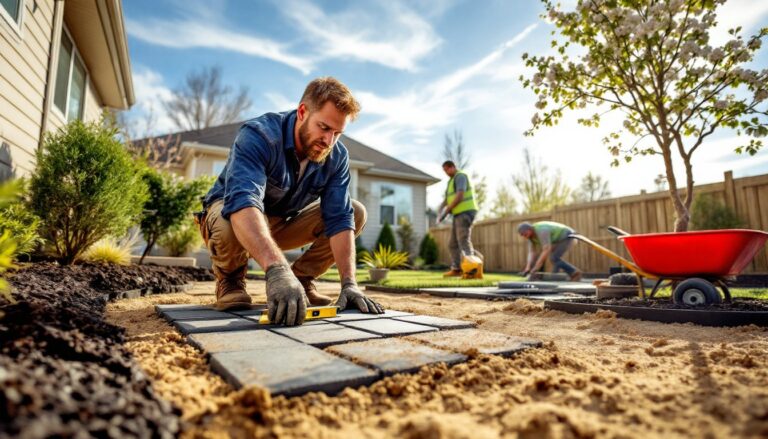
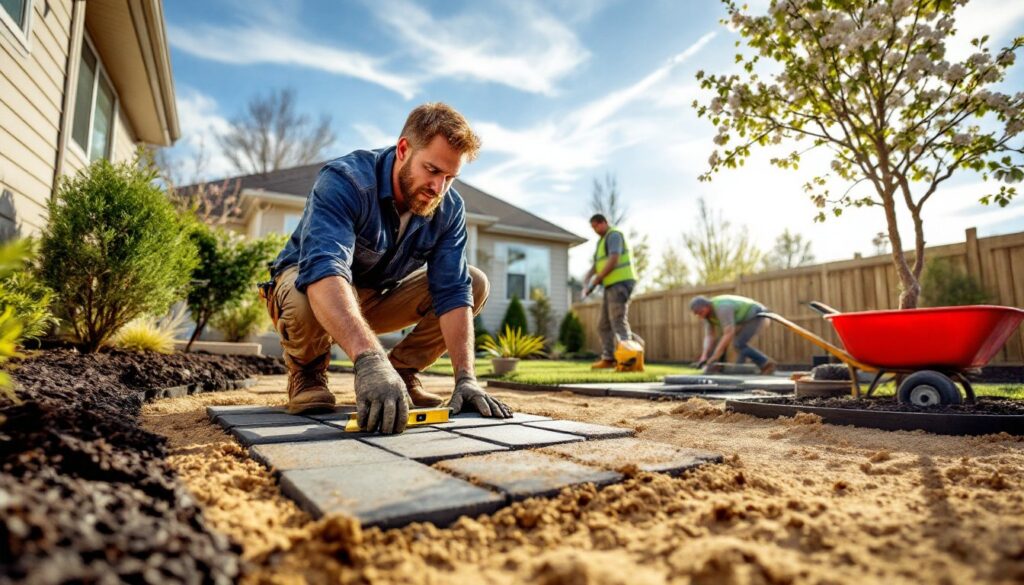
Paver patios for small spaces: For areas under 100 square feet, DIY is viable. Excavate 6–8 inches, add 4 inches of compacted gravel base, then 1 inch of leveling sand. Use a screed board (a straight 2×4 works) to level sand before laying pavers. Polymeric sand in joints prevents weed growth. Skip this project if you hit clay or rocky soil, grading becomes a nightmare without an excavator.
Native plant beds: Group plants by water needs. Establish low-maintenance native beds with species suited to your zone. Dig holes twice the width of root balls, backfill with native soil (no amendments for most natives), and mulch heavily. Water daily for two weeks, then taper off.
Rain garden installation: Identify a low spot 10+ feet from your foundation. Dig a shallow basin (6–12 inches deep), amend with compost if soil is heavy clay, and plant moisture-tolerant natives like switchgrass, Joe Pye weed, or cardinal flower. This captures roof runoff and reduces erosion. Check local stormwater guides, some municipalities offer rebates.
DIY fire pit: Dig a 12-inch-deep circle, line with gravel for drainage, and stack firebrick or retaining wall blocks (no mortar needed for temporary pits). Keep it 15+ feet from structures and check local fire codes, some areas require spark screens or permits.
Raised garden beds: Use untreated lumber (cedar or redwood) or composite boards. Standard dimensions: 4 feet wide (so you can reach the center from either side) by 8 feet long by 12 inches tall. Line the bottom with hardware cloth to deter burrowing pests. Fill with a 50/50 mix of topsoil and compost. One 4×8 bed holds roughly 32 cubic feet of soil.
What to Expect: Typical Costs for Professional Backyard Landscaping
Pricing varies wildly by region, scope, and material grade, but here are 2026 benchmarks for common projects:
- Full-yard design and installation (¼-acre lot): $8,000–$25,000. Includes grading, sod or seed, irrigation, trees, shrubs, and mulch beds. High-end projects with custom hardscaping or specimen trees push $40,000+.
- Sod installation: $0.80–$2.50 per square foot, depending on grass type. Bermuda and fescue run cheaper: zoysia and St. Augustine cost more. Includes soil prep and initial watering setup.
- Paver patio (200 sq ft): $2,500–$5,500. Interlocking concrete pavers are budget-friendly: natural stone (bluestone, travertine) doubles the cost. Add $500–$1,200 for a gravel base and edge restraints.
- Retaining wall (3 feet tall, 20 linear feet): $2,000–$4,000 for segmental block systems. Engineered walls over 4 feet require permits and geogrid reinforcement, adding $1,500–$3,000.
- Irrigation system (zone-based, ½-acre): $2,500–$5,000 for in-ground sprinklers with a smart controller. Drip systems for beds cost $1–$3 per linear foot of tubing.
- Tree planting: $150–$600 per tree, depending on caliper (trunk diameter). A 2-inch caliper shade tree runs $300–$500 installed. Specimen trees (Japanese maples, magnolias) start at $800.
- Outdoor lighting: $2,000–$8,000 for low-voltage LED path and accent lights (8–12 fixtures). Transformer and wiring included. Prices climb if trenching hits rock or existing utilities.
Many contractors offer design-only services ($500–$2,000) if you plan to DIY the labor. That gets you a planting plan, material list, and grading specs, worth it for complex projects like transforming multi-level yards or tackling drainage issues.
Seasonal Considerations for Backyard Landscaping in Your Region
Spring (March–May): Prime time for planting perennials, shrubs, and cool-season grasses. Soil temps hit 50–55°F, triggering root growth. Mulch after the last frost to suppress weeds. Schedule hardscaping work now, concrete and pavers cure best when temps stay above 50°F but below 85°F.
Summer (June–August): Avoid transplanting unless you can water daily. Focus on installing decorative rock features or building structures, decks, pergolas, and retaining walls go up faster in dry weather. In southern zones, monsoon rains turn clay soil into soup: pause grading projects until it dries.
Fall (September–November): Best window for seeding lawns and planting trees. Roots establish before winter, giving plants a head start come spring. Divide overgrown perennials and transplant shrubs. Order spring bulbs and get them in the ground 6 weeks before the first hard freeze.
Winter (December–February): In cold climates, plan and permit only, frozen ground shuts down digging. In zones 8–10, winter is ideal for heavy construction and grading since plants are dormant and won’t suffer root disturbance. Prune deciduous trees while sap is down. Mulch beds after the ground freezes to prevent frost heaving.
Regional quirks matter. Pacific Northwest gardeners deal with wet winters and dry summers, install patio drainage solutions before October rains hit. Desert Southwest projects should wrap up by May to avoid 110°F installation days. Midwest contractors often book 6–8 months out for spring work: secure bids by February. Southern states can landscape year-round but should avoid planting tender tropicals before the last frost (typically mid-March to early April).