
Table of Contents
ToggleA front yard rock garden offers a low-maintenance, water-wise alternative to traditional lawns while delivering serious curb appeal. Whether you’re dealing with poor soil, sloped terrain, or drought conditions, a well-designed rock garden solves practical problems and looks sharp year-round. Unlike thirsty grass that demands weekly mowing and constant irrigation, rock gardens blend hardscape materials with drought-tolerant plants to create visual interest without the weekend chore list. This guide walks through design principles, material selection, plant pairing, and hands-on installation steps to help homeowners build a front yard rock garden that elevates their property’s first impression.
Key Takeaways
- Front yard rock garden landscaping eliminates weekly mowing and irrigation demands while delivering year-round curb appeal and water conservation in any climate zone.
- Strategic layering of boulders (18–36 inches), medium cobble (4–8 inches), and smaller gravel (¾–1½ inches) creates visual depth and prevents a monotonous, flat appearance.
- Select drought-tolerant plants like succulents, ornamental grasses, dwarf conifers, and Mediterranean herbs that thrive in lean, rocky soils without frequent fertilizer or pest management.
- Proper installation begins with landscape fabric, correct boulder placement (burying the bottom third for organic appearance), and quality finishing gravel applied in 2–3 inch layers to suppress weeds.
- Rock gardens improve with age as plants fill in and materials weather naturally, requiring only quarterly weeding, gravel top-dressing every 3–5 years, and minimal seasonal maintenance after the first year of establishment.
Why Choose a Rock Garden for Your Front Yard?
Rock gardens check several boxes that traditional landscaping can’t match. Water conservation tops the list, especially in arid climates or regions facing watering restrictions. Once established, a rock garden requires a fraction of the irrigation that turf grass demands.
Erosion control is another practical benefit. Slopes and hillsides that shed topsoil during heavy rain stabilize when rocks and deep-rooted plants anchor the grade. This makes rock gardens ideal for properties with challenging topography.
Year-round structure sets rock gardens apart from seasonal flower beds. While perennials come and go, the bones of a rock garden, boulders, gravel beds, and evergreen alpines, hold visual interest through winter. They don’t go dormant or leave bare patches.
Maintenance drops dramatically. No weekly mowing, minimal weeding (especially with proper landscape fabric and mulch depth), and far less fertilizer or pest management. For homeowners who want curb appeal without the upkeep, rock gardens deliver.
Finally, rock gardens work with difficult soil conditions like heavy clay or sandy loam that won’t support a healthy lawn. Rather than amending soil repeatedly, homeowners can lean into native stone and xeric plants that thrive in those exact conditions.
Essential Design Principles for Front Yard Rock Gardens
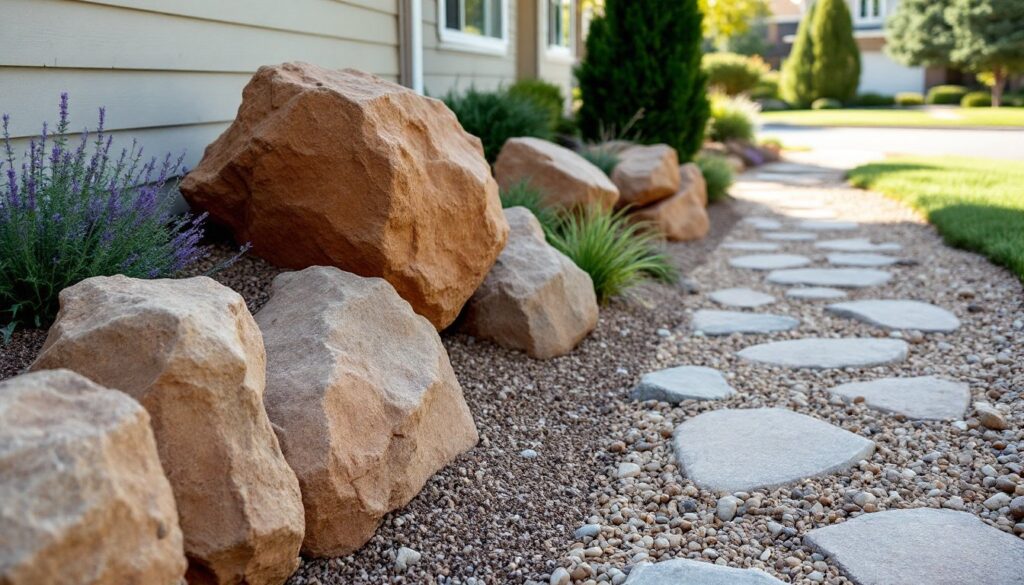
Scale and proportion matter more than most DIYers realize. A 200-square-foot front yard doesn’t need stadium-sized boulders, oversized rocks will overwhelm the space. Conversely, pea gravel alone in a large yard reads flat and monotonous. Mix rock sizes: anchor with a few statement boulders (18–36 inches), layer in medium cobble (4–8 inches), and fill gaps with smaller gravel (¾–1½ inches).
Layering and elevation changes create visual depth. Flat expanses of gravel look like parking lots. Instead, mound soil to create subtle berms (12–18 inches high), nestle larger rocks into slopes, and tuck plants at varying heights. Even a gentle grade shift breaks up sightlines and adds dimension.
Color and texture coordination tie the design together. Warm-toned sandstone pairs well with rust or amber gravel, while cool gray granite complements blue-gray river rock. Avoid mixing too many stone types, stick to two or three complementary materials to keep the palette cohesive.
Pathways and focal points give the eye somewhere to land. A meandering gravel path (minimum 24 inches wide for comfortable passage) guides visitors toward the front door, while a specimen boulder or architectural plant (like a sculptural agave or upright juniper) anchors the composition.
Consider sight lines from the street and from inside the house. The design should look intentional from the curb, but also frame pleasant views from front windows. Walk the space at different times of day to understand how sun and shadow play across the rocks.
Popular Rock Garden Styles and Layouts
Desert xeriscapes lean into bold, sun-baked aesthetics: decomposed granite paths, angular boulders, and heat-loving succulents like agave, yucca, and prickly pear. This style works best in USDA zones 7–11 where freezing temps are rare. Pair with ornamental grasses like blue grama or Mexican feathergrass for movement.
Alpine rock gardens mimic high-elevation environments with dwarf conifers, creeping thyme, sedums, and compact perennials tucked between craggy stones. This style suits cooler climates (zones 3–7) and thrives in well-drained soils. Use fractured limestone or weathered granite to echo mountain scree.
Japanese-inspired gardens emphasize restraint and asymmetry. Smooth river stones, carefully placed boulders, and raked gravel suggest water and flow. Plant sparingly: a single Japanese maple, ornamental grasses like mondo grass, and moss groundcover. This style requires more intentionality, every rock placement matters.
Mediterranean courtyards blend terracotta hues, flagstone, and aromatic herbs like rosemary, lavender, and santolina. Warm-toned gravel (crushed terracotta or golden decomposed granite) and informal planting soften the hardscape. This works well in zones 8–10 with mild winters.
Many homeowners find inspiration in front yard transformations that incorporate dry creek beds and boulders to add naturalistic texture.
Best Rock Types and Materials for Landscaping
River rock (1–3 inches) offers smooth, rounded surfaces in shades of gray, tan, or mixed earth tones. It works well for dry creek beds and around plant pockets but can shift underfoot on slopes. Expect to pay $40–$80 per cubic yard, depending on region.
Crushed granite or decomposed granite (DG) compacts into a firm, walkable surface ideal for paths. It ranges from tan to reddish-brown and costs roughly $30–$50 per ton. DG binds better than loose gravel but will migrate over time without edging.
Pea gravel (¼–½ inch) is affordable ($30–$40 per cubic yard) and drains quickly, but it migrates easily and isn’t comfortable to walk on barefoot. Best used as mulch around plants rather than high-traffic areas.
Boulders and fieldstone anchor the design. Prices vary wildly by type and size, expect $100–$400 per ton for quarried stone. Local fieldstone is often cheaper and blends naturally with regional geology. For large boulders (500+ pounds), budget for delivery and professional placement unless you have excavation equipment.
Lava rock (½–2 inches) is lightweight and porous, available in red, black, or brown. It’s a good mulch for retaining moisture around plants and costs $60–$120 per cubic yard. The porous surface can trap debris, making cleanup fiddly.
Flagstone or slate works for stepping stones or edging. Irregular pieces (1–2 inches thick) cost $200–$600 per ton. Use for pathways or as vertical accents set on edge.
Whatever material you choose, calculate coverage carefully: one cubic yard of 2-inch-deep gravel covers approximately 160 square feet. Always order 10–15% extra to account for settling and irregular edges.
Choosing the Right Plants for Your Rock Garden
Succulents and cacti dominate warm-climate rock gardens. Hens-and-chicks (Sempervivum), stonecrop (Sedum), and ice plant (Delosperma) tolerate poor soil and need minimal water once rooted. In frost-free zones, agave, aloe, and barrel cactus add architectural punch. Plant in well-draining pockets: succulents rot in standing water.
Ornamental grasses soften hard edges and add motion. Blue fescue (Festuca glauca), fountain grass (Pennisetum), and Mexican feathergrass (Nassella tenuissima) thrive in rocky, lean soils. They require little fertilizer and handle drought well once established. Cut back spent foliage in early spring.
Dwarf conifers and evergreens provide year-round structure. Creeping juniper (Juniperus horizontalis), dwarf mugo pine (Pinus mugo), and compact spruce varieties stay under 3 feet and resist deer browsing. These work in zones 3–8 and anchor the garden through winter.
Alpine perennials like candytuft (Iberis), creeping phlox (Phlox subulata), and moss campion (Silene acaulis) hug the ground and bloom in spring. They’re ideal for tucking into crevices between rocks. Most prefer full sun and excellent drainage.
Mediterranean herbs, lavender, rosemary, sage, and thyme, offer fragrance, texture, and utility. They thrive in rocky, alkaline soils and need infrequent watering. Prune after flowering to maintain compact growth.
Before planting, check your USDA hardiness zone and choose species rated for your climate. Amend planting pockets with compost (not the entire bed, rock gardens rely on lean soil), and mulch around plants with river rock or gravel to suppress weeds and retain moisture. Space plants according to mature size to avoid overcrowding as they fill in.
DIY Installation Tips and Steps
1. Site prep and layout
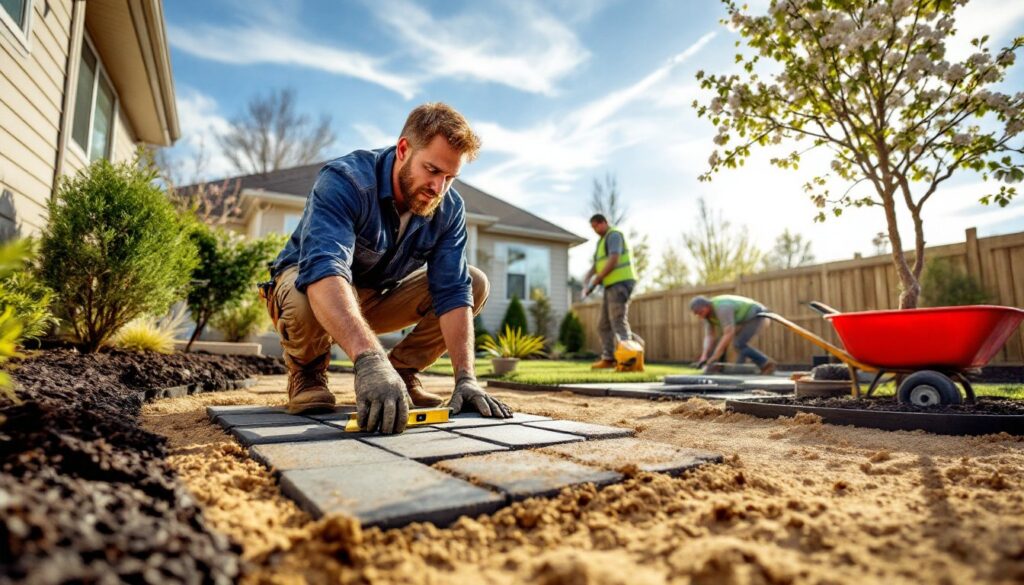
Clear existing turf, weeds, and debris. For small areas (under 200 square feet), a flat shovel and manual labor suffice. Larger projects justify renting a sod cutter ($60–$90/day). Rough-grade the area, creating subtle berms or swales for drainage. Use a garden hose or landscape paint to outline pathways, planting zones, and boulder placements. Walk the layout from multiple angles before committing.
2. Install landscape fabric or weed barrier
Lay commercial-grade woven landscape fabric (not cheap plastic sheeting, which tears and doesn’t breathe). Overlap seams by 6–12 inches and secure with landscape staples every 2–3 feet. Cut Xs where plants will go. This step drastically reduces weed pressure but isn’t optional if you want low-maintenance results.
3. Position boulders and large rocks first
Bury the bottom third of each boulder to mimic natural stone outcropping, this looks more organic than rocks sitting on the surface. For stones over 100 pounds, use a hand truck, pry bar, and a helper. Roll rather than lift. Tilt boulders slightly back into the slope for stability. Group in odd numbers (1, 3, 5) and vary spacing to avoid rigid symmetry.
4. Add base layer of larger gravel or cobble
Spread a 2–3 inch layer of medium rock (2–4 inches) over the fabric, working around boulders. This base layer provides drainage and prevents smaller gravel from sinking into soil over time.
5. Set plants in pockets
Cut through landscape fabric at planting locations. Dig holes twice the root ball width, amend with compost, and backfill. Water thoroughly after planting. Space according to mature size, rock garden plants spread more than you’d expect.
6. Top with finish gravel
Apply a 2–3 inch layer of finish gravel (¾–1½ inches). Rake smooth and tuck around plant crowns, leaving a small gap to prevent stem rot. For pathways, consider decomposed granite, which compacts into a firmer walking surface than loose stone.
7. Edge and contain
Install metal or plastic landscape edging along borders to prevent gravel migration into lawns or planting beds. Steel edging (⅛ inch thick, 4–6 inches tall) lasts decades and holds crisp lines. Pound stakes every 3 feet.
Safety note: Wear work gloves, safety glasses, and steel-toed boots when handling stone. Dust masks are essential when spreading decomposed granite, silica dust is a respiratory hazard. Lift with your legs, not your back, and don’t hesitate to rent equipment (skid steer, plate compactor) for large jobs. For slopes steeper than 3:1 or projects requiring retaining walls, consult a licensed landscaper or engineer. Retaining walls over 4 feet often require permits and engineered plans per the International Residential Code (IRC).
Maintenance and Long-Term Care
Rock gardens aren’t zero-maintenance, but they’re close. Weeding is the primary task, pull by hand or spot-treat with a non-selective herbicide (glyphosate-based products work, but follow label directions and avoid overspray on desirable plants). Landscape fabric reduces weed pressure by 80%, but wind-blown seeds still germinate in gravel. A quarterly walk-through keeps things tidy.
Gravel replenishment becomes necessary every 3–5 years as material settles or migrates. Add a fresh 1-inch top-dress to restore depth and color. Rake to redistribute and level.
Plant pruning and division keeps perennials vigorous. Trim spent blooms on lavender and ornamental grasses in early spring. Divide overcrowded sedums or creeping thyme every 3–4 years by lifting clumps and replanting sections.
Irrigation adjustments matter, especially in the first year. Newly planted rock gardens need regular watering (2–3 times per week) until roots establish, usually 6–12 months. After that, cut back to deep, infrequent watering (every 10–14 days in summer, less in cooler months). Overwatering is a bigger killer than drought for most rock garden plants.
Seasonal cleanup includes removing fallen leaves, trimming dead foliage, and checking for pest issues like aphids on succulents or spider mites on conifers. Inspect landscape fabric edges for tears or lifting and re-secure as needed.
For homeowners seeking additional curb appeal ideas that integrate with rock gardens, consider pairing with lighting (low-voltage LED uplights on boulders create dramatic night interest) or edging the garden with brick or stone borders for crisp transitions between zones. Resources like Homedit and Southern Living showcase regional variations and design inspiration that can inform plant and material choices.
A well-executed rock garden matures beautifully. Plants fill in, stones weather, and the whole composition gains character over time. Unlike lawns that demand constant intervention to stay uniform, rock gardens improve with age, making them a smart investment for homeowners who value both aesthetics and weekends free from yard work.