
Table of Contents
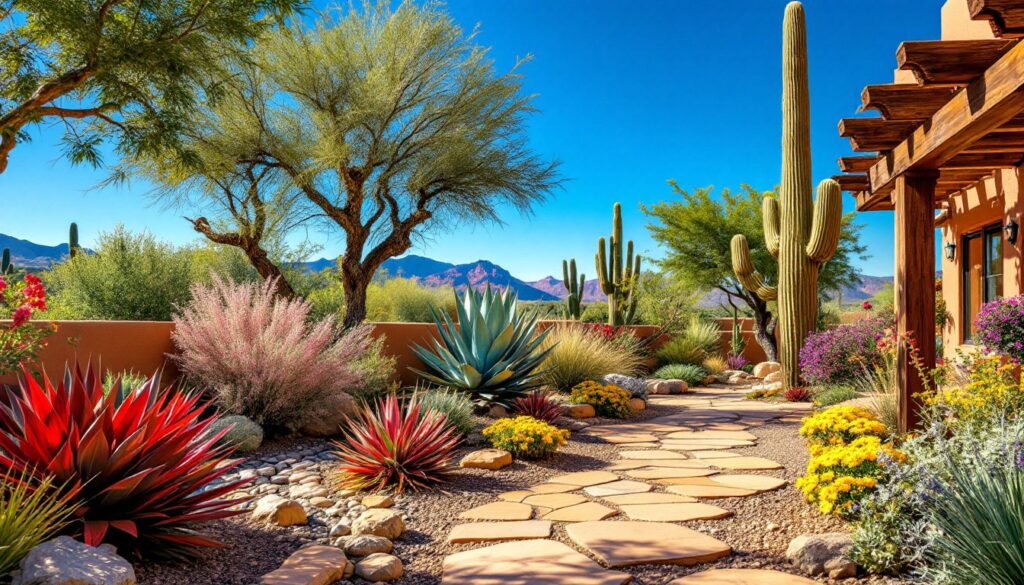
ToggleArizona homeowners face a unique set of challenges when designing front yard landscapes. The intense sun, low annual rainfall, and rocky soil demand a completely different approach than traditional grass-and-flower beds. But working with the desert, not against it, creates outdoor spaces that are striking, sustainable, and surprisingly low-maintenance. With the right combination of native plants, strategic hardscaping, and water-smart systems, a front yard can showcase the natural beauty of the Sonoran landscape while staying resilient through triple-digit summers and occasional hard freezes. This guide walks through practical, region-specific ideas for transforming Arizona front yards into functional, attractive desert gardens.
Key Takeaways
- Arizona front yard landscaping ideas succeed by working with the desert’s natural conditions—native plants, strategic hardscaping, and drip irrigation reduce water consumption and maintenance while creating resilient, attractive spaces.
- Native cacti, agaves, and desert shrubs like Texas ranger and penstemon thrive in Arizona’s intense heat, alkaline soil, and low rainfall, eliminating the need for unsustainable turf lawns that consume 73 gallons of water per square foot annually.
- Decomposed granite, river rock, and flagstone hardscaping elements complement desert landscapes affordably while managing monsoon runoff and heat reflection from masonry walls.
- Drip irrigation with 1 GPH emitters spaced 18–24 inches apart delivers water efficiently to root zones, and seasonal adjustments account for monsoon rains and freeze risk across Arizona’s varying climate zones.
- Breaking through caliche (calcium carbonate layer) and choosing plants suited to your USDA hardiness zone and local microclimate prevents common Arizona landscaping failures like root rot and heat scorch.
Understanding Arizona’s Unique Landscaping Challenges
Arizona’s climate zones range from low desert (Phoenix, Tucson) in zones 9b–10a to high desert (Flagstaff, Prescott) in zones 5–7. Most front yard projects in metro areas deal with alkaline soil (pH 7.5–8.5), less than 10 inches of annual rainfall, and summer temperatures exceeding 110°F.
Traditional turf lawns consume roughly 73 gallons of water per square foot annually in Phoenix, unsustainable and expensive. Many municipalities now offer rebates for xeriscaping conversions, and some HOAs have updated covenants to allow desert-adaptive landscaping.
Caliche, a cement-hard calcium carbonate layer common 6–24 inches below the surface, blocks drainage and root penetration. Breaking through it with a pickaxe or rented jackhammer is often necessary before planting larger specimens. Failing to address caliche results in waterlogged root zones and plant failure.
Freeze risk varies widely. Low-desert areas may see only a few nights below 32°F per year, while higher elevations experience sustained freezes. Plant selection must account for both heat and cold tolerance. USDA hardiness zones and sunset climate zones are both useful references, but local nurseries often provide the most reliable guidance for microclimates.
Reflected heat from south- and west-facing block walls can push effective temperatures 10–15°F higher than ambient air. Plant placement needs to account for this radiant load, even heat-loving species can scorch against a masonry wall in July.
Desert-Friendly Plant Selections for Arizona Front Yards
Native Cacti and Succulents
Saguaro (Carnegiea gigantea) is iconic but slow-growing and expensive: younger specimens (2–4 feet) cost $100–$300 and require minimal water once established. They’re also protected by state law, harvesting from the wild is illegal, and transplanting requires permits.
Barrel cactus (Ferocactus cylindraceus) and hedgehog cactus (Echinocereus spp.) offer lower profile accents with vibrant spring blooms. Both handle reflected heat well and work in boulder landscaping schemes.
Agave varieties, particularly Agave parryi (artichoke agave) and Agave americana (century plant), provide bold architectural form. Mature plants span 3–6 feet. Note that century plants die after flowering (typically 10–25 years), so plan for replacement or pup propagation.
Ocotillo (Fouquieria splendens) delivers vertical interest with minimal water. Bare canes leaf out and bloom after monsoon rains, then go dormant in drought, a dramatic seasonal cycle. Space them 4–6 feet apart for screening or use a single specimen as a focal point.
Prickly pear (Opuntia spp.) spreads aggressively in ideal conditions: use a less invasive variety like Opuntia santa-rita (purple prickly pear) for controlled color accents. Glochids (fine barbed spines) are a hazard near walkways, leave at least 3 feet of clearance.
Drought-Tolerant Flowering Plants and Shrubs
Desert marigold (Baileya multiradiata) blooms nearly year-round with bright yellow flowers, tolerates poor soil, and self-seeds readily. It’s short-lived (2–3 years) but reseeds so reliably that bare patches are rare.
Penstemon species (especially Penstemon parryi and P. eatonii) attract hummingbirds with tubular red or pink blooms in spring. They prefer well-drained soil and light afternoon shade in low-desert zones.
Texas ranger (Leucophyllum frutescens) is a reliable shrub that blooms purple, pink, or white after summer rains. Mature plants reach 5–8 feet and handle reflected heat without supplemental irrigation. Prune lightly: heavy shearing reduces flowering.
Red yucca (Hesperaloe parviflora) isn’t a true yucca but produces tall coral-pink flower spikes from late spring through fall. It’s deer-resistant, freeze-hardy to zone 5, and works well as a low maintenance plant for borders.
Brittlebush (Encelia farinosa) offers silver-gray foliage and cheerful yellow daisy-like flowers in spring. Cut back spent growth in late spring to maintain compact shape. It can look ragged by midsummer but rebounds with fall rains.
Fairy duster (Calliandra eriophylla) is a low-growing shrub with fine-textured foliage and pink powder-puff blooms. It attracts native bees and butterflies, making it a solid choice for pollinator-friendly designs.
Hardscaping Elements That Complement Desert Landscapes
Decomposed granite (DG) is the workhorse ground cover for Arizona front yards. It comes in natural tan, gold, or reddish hues and costs roughly $40–$60 per ton (covers about 100 square feet at 3-inch depth). Stabilized DG with resin binder resists erosion better than natural DG but costs 30–50% more. Lay landscape fabric underneath to suppress weeds: skip plastic sheeting, which traps heat and blocks water infiltration.
River rock and crushed rock add textural contrast. Use ¾-inch to 1½-inch rock around plant bases for definition: larger 3–5-inch river cobbles work for dry creek beds or drainage swales. Darker stones absorb more heat, stick to lighter tones near south-facing walls.
A well-designed dry creek bed channels monsoon runoff, prevents erosion, and adds visual interest. Size the bed to handle peak flow: a 6-inch depth and 2–3-foot width handles most residential runoff. Line the base with landscape fabric, then add river rock graded from larger stones at the center to smaller at the edges. Planting native grasses like deer grass (Muhlenbergia rigens) along the banks softens the look.
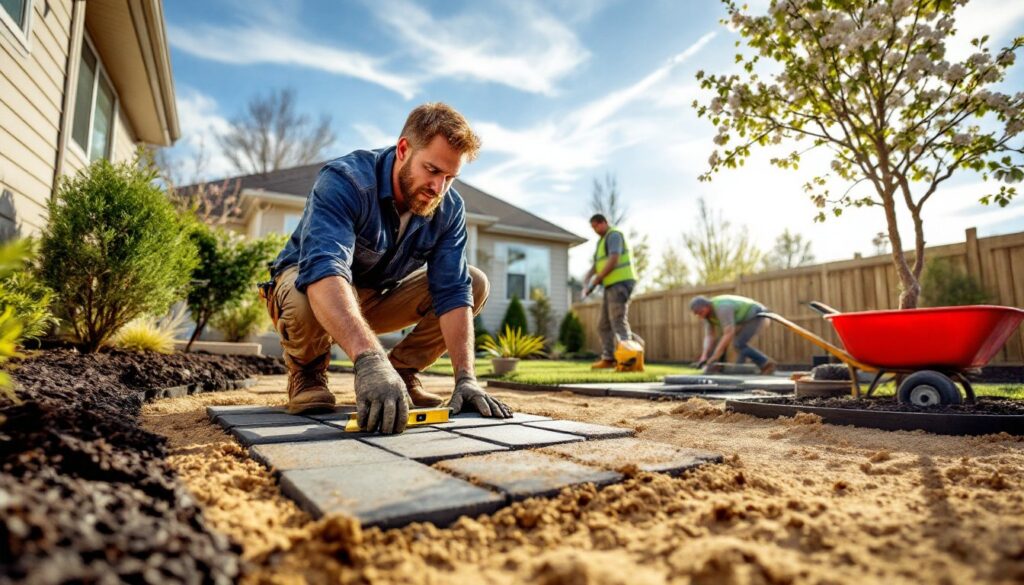
Flagstone or saltillo tile pathways provide durable, heat-reflective walking surfaces. Set flagstone on a 2-inch sand base over compacted crushed rock for stability: polymeric sand in the joints resists weed growth and washout. For a more eco-friendly approach, consider permeable pavers that allow water infiltration.
Stacked stone or block retaining walls handle grade changes and create planting terraces. Walls over 3 feet tall typically require engineering and permits per the International Residential Code (IRC). Use interlocking concrete blocks for DIY-friendly installation: natural stone veneer over a concrete block core offers a high-end look with structural integrity. Even small retaining walls can add dimension and solve drainage issues.
Shade structures, ramadas, pergolas, or simple steel arbors, reduce plant stress and create usable outdoor space. A 10×12-foot pergola with 2×8 rafters on 4×4 posts provides partial shade: orient rafters east-west for maximum midday shading. Check local codes: structures over 120 square feet often require permits.
Corten steel edging and planters have become popular for their rustic, weathered appearance. The material develops a stable rust patina that won’t stain surrounding stone or DG. It’s pricier than plastic or aluminum edging but lasts indefinitely.
Water-Smart Irrigation and Maintenance Strategies
Drip irrigation delivers water directly to root zones with minimal evaporation loss. A basic setup includes a backflow preventer, pressure regulator (typically 25–30 PSI for drip), filter, and distribution tubing with emitters. Use ½-inch polyethylene tubing for main lines and ¼-inch tubing for individual emitters.
Space 1 GPH (gallon per hour) emitters 18–24 inches apart for most desert shrubs and perennials. Cacti and succulents need less frequent watering, one or two emitters per plant, run every 10–14 days during summer, monthly in winter. Adjust seasonal run times rather than emitter count: a controller with seasonal adjust or smart watering features simplifies management.
Bubblers or mini-sprinklers work better for trees. A newly planted 15-gallon palo verde needs a basin (berm or rock ring) about 3 feet in diameter and weekly deep watering for the first summer. Established desert trees can survive on rainfall alone in many areas, though occasional deep irrigation during extended drought improves canopy health.
Water early morning (4–7 AM) to minimize evaporation and fungal issues. Monsoon season (July–September) delivers unpredictable but often intense rainfall: adjust irrigation schedules or install a rain sensor to prevent overwatering. Similarly, easy landscaping ideas often emphasize working with natural rainfall patterns.
Mulching with 2–3 inches of shredded bark or wood chips conserves moisture, moderates soil temperature, and suppresses weeds. Avoid piling mulch against plant stems, leave a 2–3-inch gap to prevent crown rot. Rock mulch doesn’t decompose and reflects more heat, so use it sparingly around heat-sensitive plants.
Weed control is ongoing. Hand-pull or hoe weeds when small: pre-emergent herbicide (like prodiamine or dithiopyr) applied in late winter and again in late summer prevents most annual weeds. Always follow label instructions and avoid application near desirable plants.
Prune dead or frost-damaged growth in early spring after the last freeze risk. Some desert plants, like ornamental grasses, benefit from annual cutback to rejuvenate growth. Avoid heavy pruning during summer heat stress.
Conclusion
Arizona front yards thrive when designed around the desert’s natural rhythms rather than fighting them. By selecting regionally adapted plants, incorporating durable hardscaping, and deploying efficient irrigation, homeowners can achieve landscapes that are both beautiful and resource-conscious. The result isn’t just curb appeal, it’s a functional outdoor space that requires less water, less maintenance, and less ongoing expense than traditional landscaping approaches.