
Table of Contents
ToggleCombining rocks and mulch in front yard landscaping creates a dynamic, low-maintenance design that holds up under weather extremes and cuts down on watering needs. Unlike turf lawns that demand weekly mowing and seasonal reseeding, a well-planned rock and mulch layout offers texture, color contrast, and year-round curb appeal. This guide walks through choosing materials, blending them for visual impact, and handling installation and upkeep so the finished project looks professional, not like a gravel pit surrounded by wood chips.
Key Takeaways
- Front yard landscaping ideas with rocks and mulch combine durability and low maintenance while reducing water needs and eliminating weekly mowing compared to traditional turf lawns.
- Rocks provide permanent ground cover ideal for high-traffic zones and drainage, while mulch retains moisture, suppresses weeds, and softens hardscape edges for a polished look.
- Match rock colors to your home’s exterior and limit designs to two rock types maximum; pair hardwood bark or cedar mulch with river rock or crushed granite for visual contrast and balanced maintenance.
- Proper installation requires sloping soil away from foundations, laying landscape fabric, and maintaining mulch at 2–3 inches deep with a 2-inch gap around plant stems to prevent rot.
- Annual maintenance includes spring mulch top-dressing, periodic rock rinsing, hand-pulling weeds, and edging repairs, with total long-term costs significantly lower than maintaining traditional lawns.
Why Combine Rocks and Mulch in Front Yard Landscaping?
Rock and mulch serve different functions, and pairing them leverages the strengths of both. Rocks, whether river stone, crushed granite, or lava rock, provide permanent ground cover that won’t decompose or blow away in high winds. They excel in high-traffic zones, around downspouts, and anywhere you need reliable drainage. Mulch (bark, wood chips, or rubber) retains soil moisture, moderates root-zone temperatures, and breaks down over time to improve soil structure.
Using rock alone can look stark, especially against house siding or fencing. Mulch softens those edges and creates planting pockets for shrubs, perennials, or small ornamentals. Mulch also suppresses weeds more effectively than bare rock because it blocks sunlight at the soil surface. Conversely, mulch alone in areas with heavy foot traffic or concentrated runoff turns into a soggy mess or washes out.
From a maintenance standpoint, the combination reduces labor. Rock zones don’t need annual top-up the way mulch beds do, so you can focus replenishment on planted areas. Cost-wise, covering an entire front yard in decorative stone runs high, mixing in mulch keeps material expense reasonable while delivering visual variety.
Safety note: If you’re grading soil or adjusting drainage slopes, confirm local building codes. Some jurisdictions require permits for significant grade changes near property lines or easements.
Choosing the Right Rocks for Your Front Yard Design
Rock selection hinges on color, size, and regional availability. River rock (smooth, rounded stones ranging from 1 to 6 inches in diameter) works well in dry creek beds or as a transition between mulched planting beds and driveways. Smooth edges won’t snag shoes or pet paws.
Crushed granite or decomposed granite (DG) compacts into a firm, gravel-like surface ideal for pathways. DG contains fines that lock together when wetted and rolled, creating a semi-permeable hardscape. Expect coverage of roughly 100 square feet per ton at a 2-inch depth, though this varies by particle size and compaction.
Lava rock is lightweight and porous, available in red, black, or brown. Because it’s volcanic, lava rock doesn’t retain as much heat as dense granite, which can benefit plant roots in hot climates. The downside: wind can displace smaller pieces if you don’t use landscape fabric or edging.
Pea gravel (⅜-inch smooth stones) is budget-friendly and drains fast, but it migrates easily. Install metal or plastic edging at least 3 inches tall to contain it. Landscaping river rock offers a polished look with minimal upkeep once edging is in place.
Match rock color to your home‘s exterior. Tan or buff stones complement beige siding: charcoal or black rock pops against white trim. Avoid mixing more than two rock types in a single front yard, multiple colors and sizes can read as chaotic rather than intentional.
Selecting Mulch Types That Complement Rock Features
Hardwood bark mulch (shredded or chipped) is the workhorse of residential landscapes. It breaks down slower than softwood options, typically lasting 2–3 years before needing replenishment. Hardwood mulch in dark brown or natural tan tones provides strong contrast against lighter-colored river rock or limestone.
Cedar or cypress mulch resists decay and repels some insects, but costs roughly 20–30% more than generic hardwood. The aromatic oils can deter termites, though they won’t replace professional pest control. Use cedar in planted beds near the house foundation for added peace of mind.
Rubber mulch (recycled tire chips) never decomposes, so it won’t enrich soil. It’s best reserved for play areas or slopes prone to washout. Rubber retains heat, which can stress plant roots in summer, and some studies suggest it leaches trace metals. Skip it in beds where you’re growing edibles or sensitive ornamentals.
Pine straw offers a soft, natural look popular in the Southeast. It knits together and resists blowing away, but acidifies soil as it breaks down, great for azaleas or blueberries, less ideal for plants preferring neutral pH. Coverage runs about 150 square feet per bale at a 2-inch depth.
When pairing mulch with rock, keep mulch depths to 2–3 inches in planting beds. Deeper layers smother root systems and encourage fungal issues. If you’re layering mulch over existing soil, pull back turf or weeds first and lay landscape fabric rated at 3–4 oz per square yard to block re-growth without impeding water infiltration.
Design Ideas: Blending Rocks and Mulch for Maximum Impact
Start by sketching zones on graph paper or using a free landscape-design app. Identify high-traffic areas (walkways, driveway apron), wet spots (downspout discharge), and planting beds. Assign rock to hardscape and drainage zones: mulch to beds around shrubs, trees, and perennials.
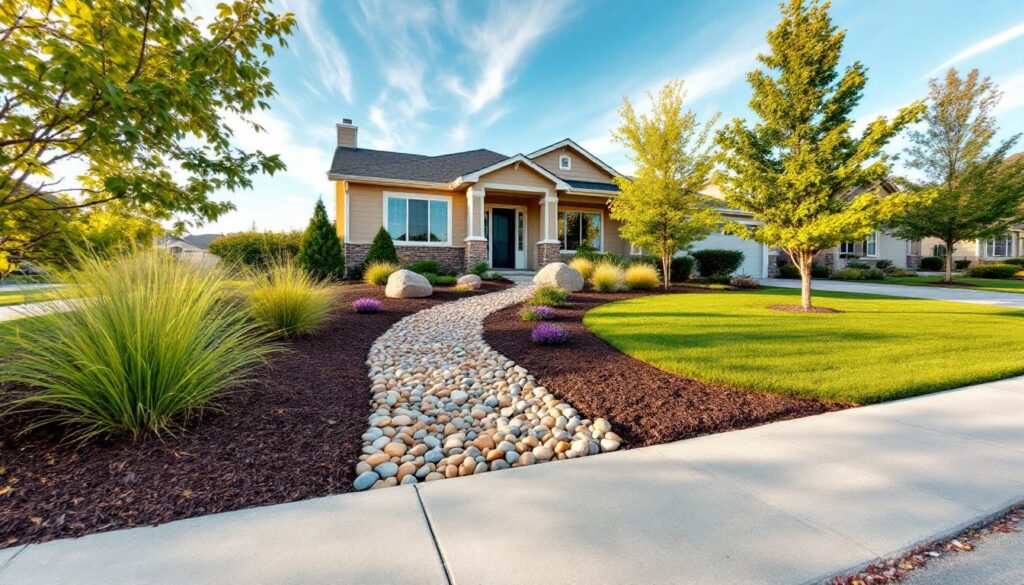
Layered bed technique: Outline planting beds with a 6- to 12-inch border of medium river rock (2–3 inches diameter), then fill the interior with dark hardwood mulch. The rock border acts as a mow strip, preventing grass encroachment and giving mower wheels a clean edge. Plant ornamental grasses, knock-out roses, or dwarf conifers in the mulched center for vertical interest.
Dry creek bed: Mimic a natural streambed by arranging larger boulders (12–24 inches) along a meandering course, filling the channel with river rock, and flanking both banks with mulched beds. This design handles runoff while adding dimension. Boulder landscaping techniques can anchor the design, especially if your yard has a slope.
Geometric contrast: For modern or minimalist homes, use crushed granite in broad, angular swaths edged with steel or aluminum landscape trim. Drop mulched squares or rectangles within the granite field, each hosting a single specimen plant, Japanese maple, ornamental cherry, or sculptural agave. The hard geometry reads clean and requires minimal weeding.
Mixed-size rock accent: Place a cluster of large decorative boulders (often sold by the ton at landscape supply yards) at a focal point, beside the mailbox, flanking the entry walk, or anchoring a corner bed. Surround the boulders with fist-sized river rock, then transition to mulch as you move outward. This creates a natural “rockfall” effect that draws the eye.
Creating Pathways and Borders with Rock and Mulch Combinations
Pathways see the most foot traffic, so prioritize stable, compactable materials. Crushed granite or decomposed granite over a 2-inch compacted gravel base delivers a firm walk that drains well. Edge the path with treated 4×4 timber, bricks for edging, or galvanized steel to prevent lateral spread.
Flank the pathway with 12-inch mulched borders planted with low-growing groundcovers, creeping thyme, sedum, or mondo grass. The mulch softens the transition from path to lawn or bedding, and the plants spill slightly onto the rock for an established look.
For a more rustic approach, set flagstone or stepping stones in a river-rock matrix, filling gaps with pea gravel, then mulch the margins. Space stones 18–24 inches on center for a comfortable stride. Embedding stones slightly below grade keeps edges from becoming trip hazards.
Borders and edging: Install edging before spreading rock or mulch. Plastic, steel, or aluminum landscape edging prevents material migration and keeps lines crisp. Bury the bottom flange 2–3 inches deep and stake every 3 feet. For curved beds, flexible poly edging bends smoothly: for straight runs, consider composite or recycled-rubber edging that won’t rot.
Installation Tips for a Professional-Looking Front Yard
Prep work determines longevity. Start by clearing existing turf, weeds, and debris. For small areas (under 500 square feet), a flat spade and wheelbarrow suffice. Larger projects justify renting a sod cutter, which slices turf into rollable strips in a fraction of the time.
Once bare soil is exposed, grade for drainage. Slope soil away from the foundation at a minimum ¼ inch per foot, so a 10-foot bed drops 2.5 inches from house to lawn edge. Use a 4-foot level and a straight 2×4 to check grade. Poor drainage leads to standing water, which undermines both rock and mulch installations.
Lay landscape fabric across the entire area, overlapping seams by 6 inches. Secure with landscape staples every 3–4 feet. Fabric blocks weeds but allows water and air to reach roots. Skip fabric in heavily planted beds where you’ll be adding perennials annually, it complicates digging. In rock-only zones, fabric is non-negotiable.
Rock installation: Spread rock to a uniform depth, 2 inches for decorative river rock, 3 inches for crushed granite or DG. Use a garden rake to level, working in small sections. For DG pathways, mist lightly with a hose and compact with a hand tamper or plate compactor. A single pass firms the surface: multiple passes create a nearly solid crust.
Mulch installation: Dump mulch in piles, then distribute with a pitchfork or rake to 2–3 inches deep. Don’t pile mulch against tree trunks or shrub stems, leave a 2-inch gap to prevent rot and pest issues (the “mulch volcano” is a common DIY mistake). Slope mulch slightly away from plant crowns.
Safety gear: Wear leather work gloves when handling rock (sharp edges cause cuts), safety glasses if running a plate compactor, and a dust mask when spreading DG or fine mulch on windy days. If you’re moving boulders over 50 pounds, recruit help or rent a two-wheel dolly.
Most easy front-yard projects don’t require permits, but confirm with your local building department if you’re altering drainage, installing retaining structures over 18 inches tall, or working within utility easements.
Maintenance and Long-Term Care for Rock and Mulch Landscapes
Rock beds need periodic rinsing to remove dust, pollen, and organic debris that accumulate in crevices. Once or twice a year, spray rock zones with a garden hose on a high-pressure setting. For stubborn algae or moss in shaded areas, apply a diluted vinegar solution or commercial algaecide, then rinse.
Weeds inevitably sprout, even through landscape fabric. Hand-pull while they’re small, or spot-treat with a post-emergent herbicide labeled for ornamental beds. Avoid pre-emergent granules in mulched beds if you plan to seed annuals or let perennials self-sow.
Mulch decomposes and compresses, so top-dress annually, usually in early spring. Rake the existing layer to fluff it, remove any matted clumps, then add 1 inch of fresh mulch to restore depth. Don’t exceed a total of 3 inches: excess mulch holds moisture against stems and invites fungal disease.
Edging will shift over time, especially in freeze-thaw climates. Walk the perimeter each spring, re-stake loose sections, and trim any grass or roots creeping over the edge. Metal edging lasts decades: plastic may need replacement every 5–7 years.
If you’ve included low-maintenance plants in mulched zones, prune dead or damaged growth in late winter before new growth starts. Mulch and rock both suppress weeds, but they don’t eliminate the need for seasonal cleanup.
Long-term costs: Budget for mulch replenishment ($30–$60 per cubic yard, depending on type and region) and occasional rock top-up if you’re using small pea gravel that migrates. Larger river rock and boulders are effectively permanent. Overall, the environmental footprint is lower than maintaining turf, since you’ll eliminate fertilizer, pesticide, and weekly mowing fuel.
For sloped yards or areas prone to erosion, consider adding a small retaining wall to terrace beds. Stacked stone or timber walls under 18 inches typically don’t require engineering, but confirm local codes. Terracing lets you create level planting pockets, reducing mulch and rock washout during heavy rain.
By balancing rock’s permanence with mulch’s soil-building benefits, a front yard stays visually interesting with far less water and labor than traditional turf. The key is thoughtful material selection, solid edging, and a maintenance rhythm that keeps weeds in check without constant intervention.