
Table of Contents
ToggleA waterlogged backyard doesn’t have to mean abandoning outdoor projects. Instead of fighting constant moisture, homeowners can work with it, transforming drainage problems into lush garden features, functional hardscapes, and thriving plant zones. Wet soil presents unique challenges, but with the right plants, grading strategies, and hardscape solutions, that soggy patch can become a low-maintenance, attractive landscape that handles water naturally. This guide covers practical solutions, from selecting water-tolerant plants to building rain gardens and raised beds that turn drainage issues into design opportunities.
Key Takeaways
- Transform wet backyard challenges into design opportunities by diagnosing the root cause—whether poor drainage, clay soil, or grade issues—before selecting solutions.
- Native water-tolerant plants like swamp milkweed, cardinal flower, and sedges thrive in soggy soil while supporting local ecosystems and requiring minimal maintenance.
- Hardscape solutions such as permeable pavers, gravel pathways, and dry creek beds improve drainage while adding functional beauty to landscaping ideas for wet backyard areas.
- A rain garden captures roof and driveway runoff in a shallow planted depression, allowing water to infiltrate within 12–48 hours while reducing erosion and filtering pollutants.
- Raised beds and berms create dry planting zones for vegetables and ornamentals that don’t tolerate wet roots, filled with well-draining soil mixes above the water table.
Understanding Your Wet Backyard Challenges
Before breaking ground, it’s essential to diagnose why the yard stays wet. Poor drainage usually stems from compacted clay soil, a high water table, runoff from neighboring properties, or low-lying topography that collects water. Walk the yard after heavy rain and note where puddles form and how long they persist.
Clay soil is common in many regions and drains slowly because particles pack tightly, leaving little room for air or water movement. Sandy or loamy soils drain faster. A simple percolation test helps: dig a hole 12 inches deep, fill it with water, and time how long it takes to drain. If water sits for more than four hours, drainage is poor.
Check gutters and downspouts. If they dump directly onto the lawn without extensions or splash blocks, that’s often the culprit. Regrading may be necessary if the yard slopes toward the house or into a low pocket. In some cases, a French drain or catch basin is needed, these are moderate-difficulty projects that may require a permit depending on local codes.
Identify whether the wetness is seasonal (spring thaw, heavy rains) or year-round. Seasonal moisture is easier to manage with plant selection and mulch. Persistent standing water may indicate a drainage system failure or require professional assessment, especially if it’s affecting the foundation or septic system.
Water-Loving Plants That Thrive in Soggy Soil
Native Perennials for Wet Areas
Native perennials adapted to wet conditions require less maintenance and support local pollinators. Swamp milkweed (Asclepias incarnata) tolerates standing water and attracts monarchs. It grows 3–4 feet tall with pink flower clusters in mid-summer. Cardinal flower (Lobelia cardinalis) thrives in moist to wet soil, producing bright red spikes that hummingbirds love. Plant it in partial shade for best results.
Joe Pye weed (Eutrochium purpureum) reaches 5–7 feet and handles wet feet without complaint. Its mauve blooms appear in late summer. For ground-level interest, blue flag iris (Iris versicolor) and marsh marigold (Caltha palustris) both tolerate soggy conditions and provide early-season color.
Woody shrubs like buttonbush (Cephalanthus occidentalis) and winterberry holly (Ilex verticillata) add structure. Winterberry is dioecious, so plant one male for every 5–10 females to ensure berry production. These natives also support regional ecosystems better than non-native ornamentals.
Ornamental Grasses and Groundcovers
Ornamental grasses bring texture and movement to wet zones. Switchgrass (Panicum virgatum) tolerates a range of moisture levels, including wet soil, and provides vertical interest up to 4–5 feet. Cultivars like ‘Heavy Metal’ offer blue-gray foliage. River oats (Chasmanthium latifolium) prefer shade to part-shade and produce dangling seed heads that persist into winter.
Sedges (Carex species) are true water-lovers. Unlike most grasses, sedges thrive in wet soil and shade. Try Pennsylvania sedge (Carex pensylvanica) for a lawn alternative in damp, shady spots, or palm sedge (Carex muskingumensis) for a bold, upright form.
For groundcover, creeping Jenny (Lysimachia nummularia) spreads quickly in moist soil, note that it can be invasive in some regions, so check local guidelines. Ferns like ostrich fern (Matteuccia struthiopteris) and cinnamon fern (Osmundastrum cinnamomeum) handle wet, shaded areas and require minimal care once established.
Hardscape Solutions for Drainage and Functionality
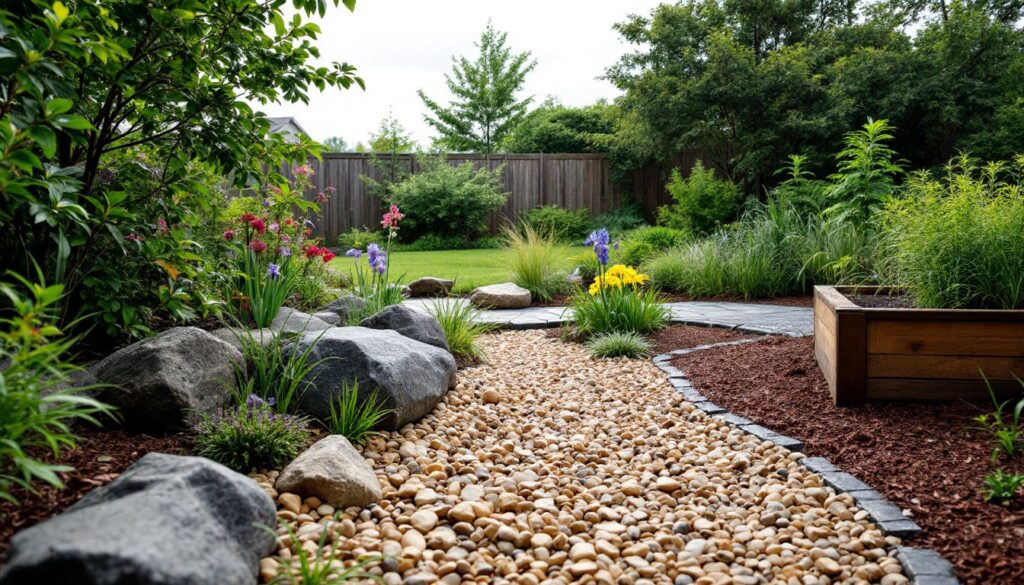
Hardscaping isn’t just aesthetic, it’s functional in wet yards. Gravel pathways and permeable pavers allow water to infiltrate rather than pooling on impervious surfaces. Use crushed stone (3/4-inch minus) as a base for stability, topped with pea gravel or decomposed granite for a finished look. Edge with treated lumber, steel, or stone to prevent spreading.
For patios or seating areas, consider permeable paver systems that let water drain through joints. Standard concrete traps water and can exacerbate drainage issues. Permeable options include interlocking pavers with wide joints filled with gravel, or porous concrete designed for drainage.
Dry creek beds mimic natural waterways and channel runoff. Dig a shallow trench following the natural slope, line it with landscape fabric, and fill with river rock in graduated sizes, larger boulders at the center, smaller stones at the edges. This creates visual interest while directing water away from problem areas.
If the yard has significant grade changes, a retaining wall can create level terraces and reduce erosion. Use pressure-treated lumber, concrete blocks, or natural stone. Walls over 3–4 feet often require engineering and permits due to load-bearing considerations. Always include drainage behind retaining walls, use perforated drain pipe and gravel backfill to prevent hydrostatic pressure buildup.
Safety note: Wear gloves and eye protection when cutting stone or pavers. Use a diamond blade on a wet saw or angle grinder, and work in a well-ventilated area to reduce dust.
Creating a Rain Garden to Manage Excess Water
A rain garden is a shallow depression planted with water-tolerant species that captures runoff from roofs, driveways, or slopes. It’s not a pond, water should infiltrate within 12–48 hours. Rain gardens reduce erosion, filter pollutants, and recharge groundwater while adding visual appeal.
Sizing and placement: A rain garden should be roughly 20–30% the size of the drainage area feeding it. Position it at least 10 feet from the foundation and away from septic fields. Avoid areas with high water tables where water won’t percolate. Many municipalities offer rain garden guides with sizing calculators.
Construction steps:
- Mark the perimeter with spray paint or a garden hose. Kidney or oval shapes look natural.
- Excavate 4–8 inches deep at the center, sloping gently to the edges. Save the topsoil.
- Amend soil if it’s heavy clay. Mix in compost (30–50% by volume) to improve drainage. Don’t use sand alone in clay, it can create a concrete-like layer.
- Create a berm on the downhill side using excavated soil to contain water temporarily.
- Direct runoff into the garden using a swale, buried downspout extension, or river rock channel.
Plant selection: Use a mix of deep-rooted perennials that tolerate both wet and dry conditions. Plant the center (wettest zone) with species like cardinal flower and blue flag iris. Mid-zones can handle black-eyed Susan (Rudbeckia hirta) and coneflower (Echinacea purpurea), which tolerate occasional wetness. Edges should include drier-soil plants for seasonal variation.
Mulch with shredded hardwood 2–3 inches deep to suppress weeds and retain moisture during dry spells. Avoid mulching too deeply, which can prevent water infiltration.
Building Raised Beds and Berms for Dry Zones
When wet soil is unavoidable, raised beds and berms create dry planting zones above the water table. This approach works for vegetable gardens, ornamentals that don’t tolerate wet roots, or seating areas.
Raised bed construction:
Use rot-resistant lumber like cedar, redwood, or pressure-treated pine rated for ground contact. Nominal 2×10 or 2×12 boards work well for beds 10–12 inches tall. For taller beds (18–24 inches), double up boards or use composite decking or corrugated metal for a modern look.
- Level the site as much as possible, removing sod if present.
- Assemble the frame using 3-inch deck screws or galvanized nails at the corners. Reinforce corners with metal brackets or stake the outside with rebar driven into the ground.
- Line the bottom with hardware cloth (1/4-inch mesh) if rodents are an issue, but leave it open to allow drainage.
- Fill with a mix of topsoil, compost, and peat moss or coconut coir (1:1:1 ratio). Avoid using native clay soil. Beds will settle 10–15% after watering, so overfill slightly.
Berms are mounded soil structures that add height and improve drainage. Shape them with gentle, natural-looking slopes (3:1 or 4:1 rise-to-run) to prevent erosion. Compact soil in 6-inch lifts as you build to avoid settling. Plant the berm with groundcovers or ornamental grasses to stabilize soil and add visual interest.
For larger backyard projects, consider combining raised beds with pathways and seating areas to create distinct garden rooms. Use matching materials to tie the design together.
Drainage tip: Even raised beds need drainage. If water pools around the base, install a perforated drain pipe wrapped in landscape fabric at the perimeter, sloped to daylight or a dry well. In extreme cases, a sump pump may be needed, but this requires electrical work and permitting, consult a licensed electrician.