
Table of Contents
ToggleLandscaping a front yard can transform a home’s curb appeal and property value, but it’s also one of the easiest places to blow a budget if you’re not careful. Homeowners planning a front yard overhaul in 2026 need to understand the real costs, from sod and shrubs to hardscaping and labor. This guide breaks down average expenses, the factors that drive pricing up or down, and where to invest versus where to cut corners. Whether tackling the project solo or hiring a pro, knowing the numbers upfront prevents sticker shock and keeps the project on track.
Key Takeaways
- The cost of landscaping a front yard typically ranges from $3,000 to $16,000, with most homeowners spending around $8,500 for a complete renovation including plants, hardscaping, and professional installation.
- Yard size, terrain complexity, and location significantly impact costs—sloped yards can double expenses compared to flat yards, while urban areas charge 30-50% more in labor than rural markets.
- DIY landscaping can reduce costs by 40-60% on simple projects like mulching and edging, but professional help is essential for hardscaping, irrigation, grading, and structural work to avoid costly mistakes.
- Phasing your front yard landscaping project over multiple years, buying plants off-season, and choosing native drought-tolerant species can lower your overall budget by 20-50% without sacrificing curb appeal.
- Sourcing materials from local landscape supply yards and rental shops for specialty tools can save 20-40% compared to big-box retailers, maximizing value on your landscaping investment.
Average Cost to Landscape a Front Yard
The national average for front yard landscaping falls between $3,000 and $16,000, depending on project scope. Most homeowners spend around $8,500 for a complete renovation that includes new plants, grading, mulch, edging, and basic hardscaping like a walkway or small retaining wall.
Smaller projects, think refreshing flower beds, adding mulch, and planting a few shrubs, can cost as little as $1,500 to $3,000. Mid-range projects that incorporate sod installation, irrigation adjustments, and decorative rock beds typically land in the $5,000 to $10,000 range. High-end designs with mature trees, custom stonework, outdoor lighting, and professional design services can exceed $20,000.
Regional labor rates and material availability play a huge role. Urban areas with higher cost of living, think San Francisco, New York, Seattle, can see labor rates 30 to 50 percent higher than rural markets. Material costs also fluctuate seasonally: buying plants in early spring or late fall often yields better pricing than peak summer demand.
For a typical 1,000-square-foot front yard, expect the following baseline costs:
- Sod installation: $1,000–$2,000 (including soil prep)
- Mulch and edging: $400–$800
- Shrubs and perennials (10–15 plants): $300–$1,200
- Basic grading and drainage: $500–$1,500
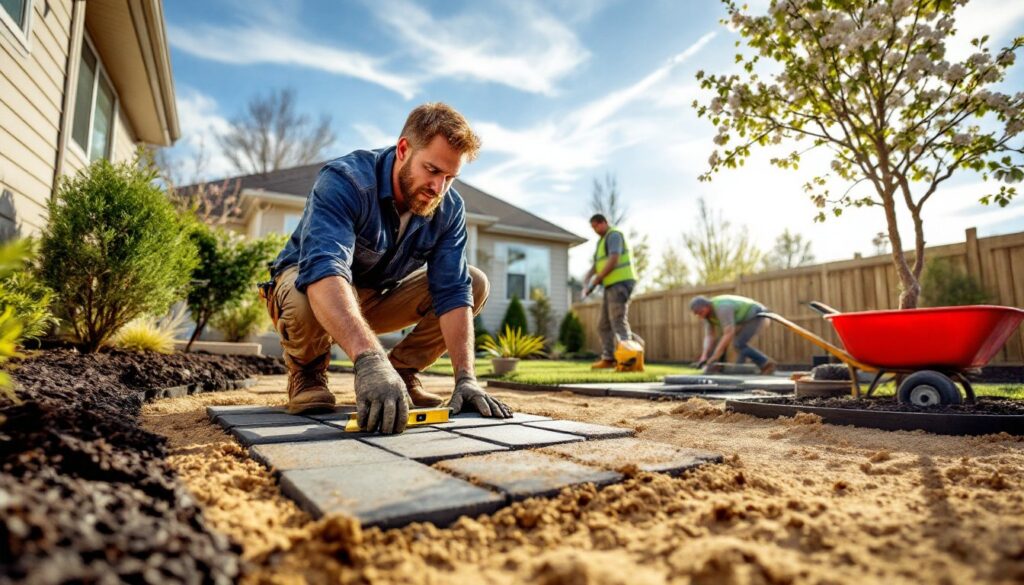
- Walkway or patio (simple pavers): $1,200–$3,500
These figures assume standard materials and professional installation. DIY work can cut labor costs by 40 to 60 percent, but requires tools, time, and skill.
What Influences Front Yard Landscaping Costs?
Yard Size and Terrain
Square footage is the single biggest cost driver. A 500-square-foot front yard costs significantly less to landscape than a 2,000-square-foot lot, both in materials and labor hours. Landscapers typically charge by the square foot for tasks like sod installation ($0.50 to $2 per square foot) or mulch spreading ($0.30 to $0.80 per square foot).
Terrain complexity adds cost fast. Sloped yards require grading, erosion control, and possibly retaining walls to prevent runoff, expenses that can double a flat-yard budget. Heavy clay soil or rocky terrain demands soil amendment or removal, adding $500 to $2,000 depending on severity. Poor drainage often requires French drains or dry wells, which run $1,000 to $3,500 installed.
Access matters, too. If equipment can’t reach the front yard easily, narrow gates, overhead obstacles, tight corners, crews resort to manual labor or smaller machinery, which slows work and inflates costs. Always mention access constraints when getting quotes.
Material and Plant Choices
Plant selection swings budgets dramatically. A one-gallon perennial costs $8 to $25, while a fifteen-gallon tree runs $150 to $500 or more for mature specimens. Native plants and low-maintenance options tend to cost less upfront and save on water and fertilizer long-term, but exotic or specimen plants command premium prices.
Hardscape materials vary widely in cost and longevity:
- Pea gravel or crushed stone: $30–$50 per cubic yard
- River rock: $60–$120 per ton
- Concrete pavers: $3–$8 per square foot
- Natural flagstone: $15–$30 per square foot
- Mulch (hardwood or cedar): $25–$50 per cubic yard
Cheaper materials like concrete pavers are easier to install and replace: natural stone looks higher-end but requires skilled labor and costs more. For design inspiration that balances aesthetics and budget, creative landscape ideas often highlight versatile materials.
Irrigation systems add $1,500 to $3,500 for a basic drip or spray setup on a front yard. If you’re planting drought-tolerant natives, you may skip this entirely and rely on hand-watering or rainwater.
Cost Breakdown by Landscaping Element
Understanding individual costs helps prioritize spending. Here’s a per-element breakdown for typical front yard projects:
Lawn Installation
Sod is the fastest route to a finished lawn. Expect $0.50 to $2 per square foot installed, including soil prep and starter fertilizer. A 1,000-square-foot lawn runs $500 to $2,000. Hydroseeding costs less, $0.10 to $0.25 per square foot, but takes weeks to establish and requires careful watering.
Planting Beds and Borders
Plants, soil amendments, mulch, and edging for a 100-square-foot bed typically cost $300 to $800. Factor in $50 to $150 for edging materials (plastic, metal, or stone). Mulch coverage: one cubic yard covers roughly 100 square feet at three inches deep.
Hardscaping (Walkways, Patios, Edging)
A 100-square-foot paver walkway costs $800 to $2,500 depending on material and pattern complexity. Natural stone pushes that to $1,500 to $3,000. Retaining walls run $15 to $50 per square foot of wall face, depending on material (treated timber, concrete block, or natural stone).
Trees and Shrubs
Small shrubs in one- or two-gallon pots cost $15 to $40 each. Larger five-gallon shrubs run $40 to $100. Trees vary wildly: a young sapling may cost $50, while a mature ten-foot tree can exceed $500. For instance, a crepe myrtle in a fifteen-gallon container typically costs $80 to $200.
Grading and Drainage
Minor grading to correct low spots or slope away from the foundation costs $500 to $1,500. If excavation or fill dirt is required, add $50 to $150 per cubic yard of material. French drains, catch basins, or dry wells add $1,000 to $3,500.
Outdoor Lighting
Low-voltage LED path lights or uplighting for trees cost $100 to $300 per fixture installed. A basic six-fixture system runs $800 to $2,000 including transformer and wiring.
Design Fees
Professional landscape designers charge $50 to $150 per hour or 5 to 15 percent of total project cost. Some offer flat-rate consultations for $300 to $1,000. DIY design saves this cost but requires research and planning.
DIY vs. Professional Landscaping: Which Saves More?
DIY landscaping can cut costs by 40 to 60 percent, but it’s not always the smarter move. The savings depend on skill level, tool access, and project complexity.
When DIY Makes Sense
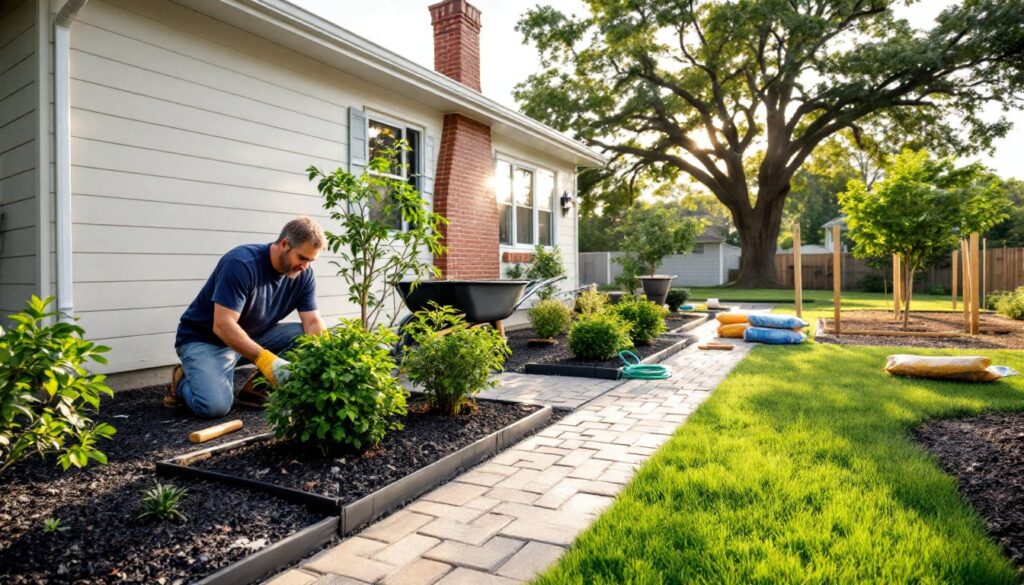
Simple projects, planting flower beds, spreading mulch, installing edging, or laying pea gravel, are manageable for most homeowners. Tools like a wheelbarrow, shovel, rake, and garden hose are enough. A weekend project replacing mulch and adding a few easy landscaping touches might cost $200 to $500 in materials versus $800 to $1,500 with labor.
Installing sod is labor-intensive but straightforward: rent a sod cutter ($80 to $120 per day), prep the soil, lay the sod, and water religiously for two weeks. A 1,000-square-foot DIY sod install might cost $500 to $800 in materials and rental fees versus $1,500 to $2,000 professionally.
When to Hire a Pro
Hardscaping, grading, and irrigation require specialized tools and experience. Poorly laid pavers settle unevenly, and improper grading causes drainage nightmares. Installing a paver walkway without a compacted gravel base and edge restraints leads to shifting and weed intrusion within a year.
Electrical work for outdoor lighting often requires a permit and must meet National Electrical Code (NEC) standards. In many jurisdictions, unlicensed work voids homeowner’s insurance if a fire or injury occurs.
Structural work, retaining walls over three to four feet, drainage systems, or anything affecting property grading near the foundation, often requires permits and engineered plans. Skipping permits risks fines and complicates future home sales.
Hybrid Approach
Many homeowners save by doing demo and prep work themselves, removing old plants, pulling sod, spreading mulch, then hiring pros for technical tasks like paver installation or irrigation. This can trim 20 to 30 percent off labor costs.
According to recent landscaping cost data, professional front yard projects average $3,000 to $16,000, while DIY-focused renovations run $1,200 to $5,000 depending on scope.
Ways to Lower Your Front Yard Landscaping Budget
Cutting costs without sacrificing results takes strategic planning and smart material choices.
Start Small and Phase Work
Tackle the front yard in stages over two or three years. Year one: grading, edging, and mulch. Year two: add shrubs and a walkway. Year three: install lighting or a focal point tree. Spreading costs over time eases cash flow and lets you learn as you go.
Buy Plants Off-Season
Nurseries discount inventory in late fall and early spring. Perennials and shrubs planted in fall establish roots over winter and explode with growth come spring. Bare-root trees cost 50 percent less than potted stock but must be planted during dormancy.
Choose Native and Drought-Tolerant Species
Native plants cost less to maintain, require less water, and resist local pests. An eco-friendly approach that emphasizes natives can cut water bills by 30 to 50 percent annually. Many municipalities offer rebates for removing turf and installing drought-tolerant landscaping.
Use Mulch and Decorative Rock Strategically
Mulch costs $25 to $50 per cubic yard in bulk, far less than sod or groundcovers. A three-inch layer suppresses weeds, retains moisture, and refreshes annually for pennies per square foot. River rock or pea gravel works in low-traffic areas and lasts indefinitely with minimal maintenance.
Rent, Don’t Buy, Specialty Tools
A sod cutter, plate compactor, or power auger can cost hundreds to own but $80 to $150 per day to rent. For one-time projects, rental is the clear winner.
Shop Multiple Material Sources
Big-box stores like Home Depot and Lowe’s offer convenience, but local landscape supply yards often beat their prices on bulk mulch, soil, gravel, and pavers by 20 to 40 percent. Stone yards sell flagstone and boulders by the ton at lower rates than retail garden centers.
DIY Where Skills Allow, Hire Where They Don’t
Mixing DIY and professional help maximizes savings. According to landscaping cost guides, homeowners who handle prep work and finish tasks themselves while hiring pros for hardscaping and grading save an average of $2,000 to $4,000 on a full front yard renovation.
Reuse and Recycle Materials
Salvaged brick, stone, or timbers from Craigslist, Habitat ReStores, or demolition sites cost a fraction of new materials. Edging stones, pavers, and landscape timbers often appear free or cheap as homeowners remodel their own yards.
Avoid Overbuying Plants
Small plants fill in faster than expected. Spacing shrubs according to their mature width, not their current size, prevents overcrowding and wasted money. A three-foot-wide shrub planted on two-foot centers will choke its neighbors in three years.
Skip Unnecessary Irrigation
If rainfall in your region exceeds 30 inches annually and you choose appropriate plants, hand-watering with a hose and timer may suffice. Drip irrigation costs less than spray systems and delivers water directly to roots with minimal waste.
Time Projects Around Sales and Discounts
Memorial Day, Fourth of July, and Labor Day often bring discounts on outdoor materials. End-of-season clearances in September and October offer deep cuts on plants, soil, and hardscape supplies.