
Table of Contents
ToggleStaring at a backyard that demands more time than it gives back? You’re not alone. Between weekly mowing, constant weeding, and replanting annuals every spring, traditional landscaping can feel like a second job. Low maintenance landscaping flips that equation, giving homeowners an attractive outdoor space that doesn’t require weekend after weekend of upkeep. This isn’t about letting the yard go wild or settling for gravel and rocks. It’s about smart plant choices, strategic hardscaping, and systems that do the heavy lifting. Whether dealing with a postage-stamp patio or a sprawling lawn, the right approach cuts maintenance hours by half or more while still delivering curb appeal.
Key Takeaways
- Low maintenance backyard landscaping reduces annual yard work by 60–70% while cutting water usage and maintenance costs, freeing up to four work weeks each year.
- Native plants and drought-tolerant species like coneflower, black-eyed Susan, and ornamental grasses form the backbone of sustainable low maintenance yards without needing constant fertilizing or pest control.
- Hardscaping elements such as gravel paths, flagstone patios, and steel edging replace high-maintenance turf and flower beds while creating functional outdoor spaces that cut mowing time significantly.
- Ground cover alternatives like clover, creeping thyme, and artificial turf eliminate the need for weekly mowing and can be established for $2–20 per square foot depending on the option.
- Automated drip irrigation systems and smart controllers cut water consumption by 30–50% when paired with native plantings, delivering water directly to plant roots on a preset schedule.
- Starting with one zone—such as replacing turf with gravel and drought-tolerant perennials—builds momentum toward a lower-maintenance landscape that thrives with minimal effort.
Why Choose Low Maintenance Landscaping?
Low maintenance landscaping saves time, water, and money, three things most homeowners don’t have in surplus. Traditional lawns drink up to 10,000 gallons of water per season for a typical suburban lot, while high-maintenance flower beds demand weekly deadheading, fertilizing, and pest control.
Beyond water bills, there’s labor. A conventional yard requires roughly 150 hours of maintenance annually, mowing, edging, weeding, pruning, and seasonal planting. That’s nearly four full work weeks spent pushing a mower or kneeling in mulch. Low maintenance designs cut that figure dramatically, often by 60–70%, by using perennials, native plants, and hardscaping elements that don’t need constant attention.
Environmentally, it makes sense too. Native plants support local pollinators, require fewer chemical inputs, and thrive without fertilizers that leach into groundwater. Sustainable landscaping practices align with water conservation ordinances increasingly common in drought-prone regions. If the goal is a yard that looks intentional without weekend slavery to a trimmer, this approach delivers.
Drought-Tolerant Plants and Native Species
Native plants are the backbone of any low maintenance yard. They’ve adapted to local soil, rainfall, and pests over millennia, so they don’t need coddling. In the Southwest, species like agave, penstemon, and Texas sage thrive on neglect. Midwest gardeners lean on coneflower (Echinacea), black-eyed Susan (Rudbeckia), and little bluestem grass. Pacific Northwest yards benefit from salal, Oregon grape, and sword fern.
Drought-tolerant doesn’t mean desert-only. Even temperate zones have plants that handle dry spells without wilting. Lavender, sedum, and yarrow survive on rainfall alone in many climates after establishment. Pair them with ornamental grasses like feather reed grass (Calamagrostis) or blue fescue for texture that moves in the breeze and stays green with minimal water.
Plant in odd-numbered groupings (threes or fives) for a natural look, and space according to mature size, not nursery pot size. Crowding plants creates competition and invites disease. Use a 2–3 inch mulch layer around plantings to retain moisture and suppress weeds, but keep mulch away from stems to prevent rot. Watering deeply twice a week during the first growing season encourages deep root development: after that, most natives are self-sufficient.
When it comes to low maintenance plants that deliver year-round interest, evergreen perennials like hellebore and bergenia hold their foliage through winter, eliminating the spring cleanup frenzy.
Hardscaping Elements That Reduce Yard Work
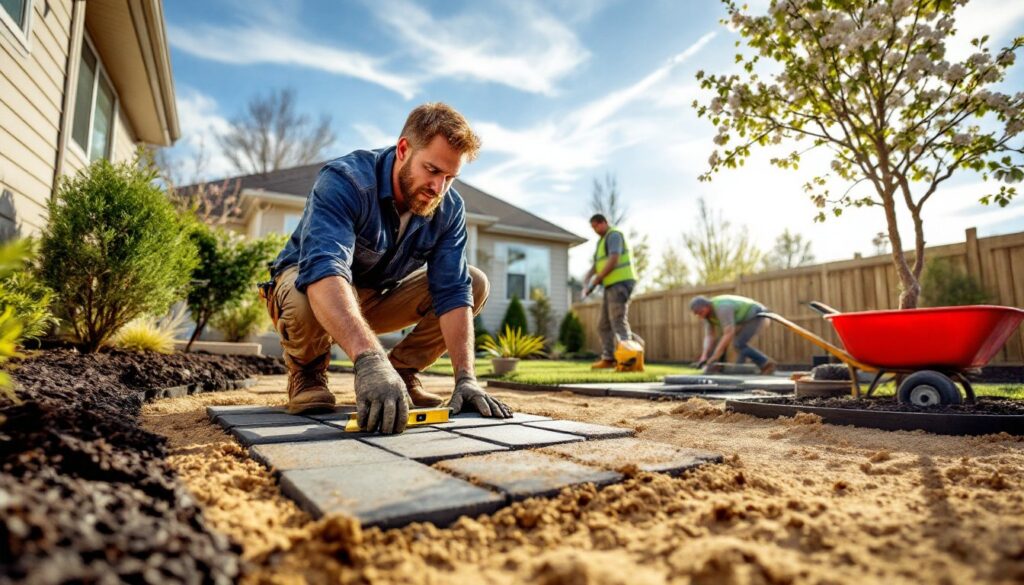
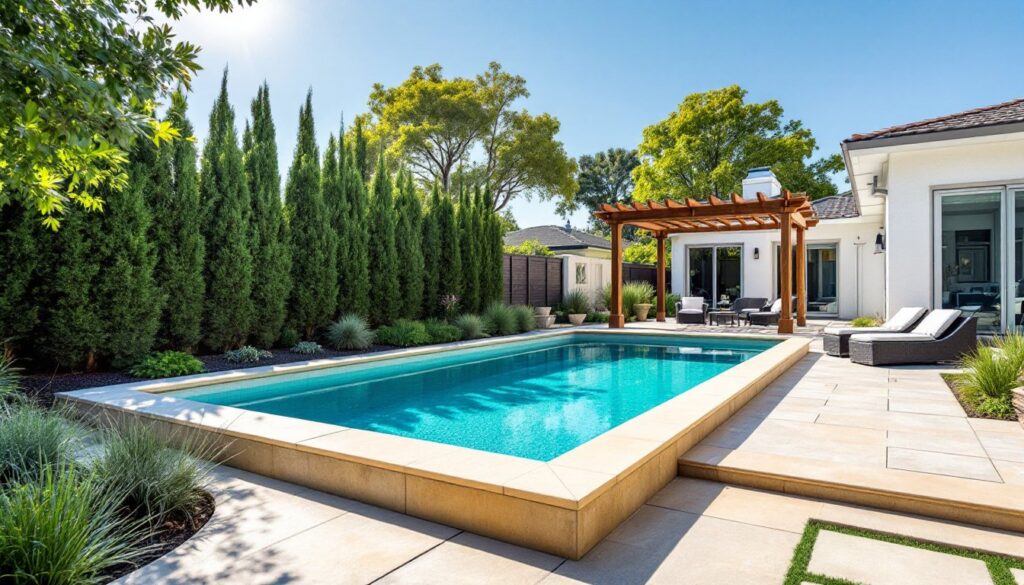
Hardscaping replaces high-maintenance turf or flower beds with stone, gravel, pavers, or wood, materials that don’t grow, wilt, or need fertilizer. A well-placed patio, walkway, or retaining wall cuts mowing area and creates functional outdoor rooms.
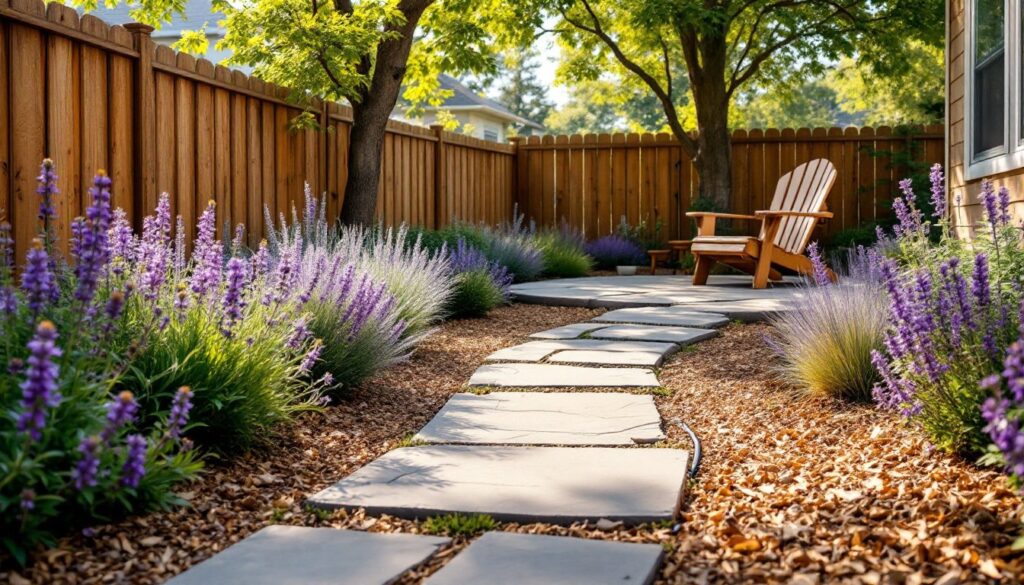
Gravel paths are one of the easiest installs. Excavate 3–4 inches, lay down landscape fabric (not plastic sheeting, it doesn’t breathe), add a 2-inch base of crushed stone (¾-inch minus compacts well), then top with 1–2 inches of pea gravel or crushed granite. Edge with steel or aluminum landscape edging to keep gravel in bounds. Total cost runs $2–4 per square foot depending on gravel type and region.
Flagstone patios deliver a more finished look. Dry-laid flagstone (set on a sand base) is DIY-friendly but can shift over time. For permanence, set stones in a 1-inch mortar bed over a 4-inch compacted gravel base. Joints can be mortared or planted with low-growing groundcovers like creeping thyme for a living patio. Flagstone costs $15–30 per square foot installed, less if you’re doing the labor.
Retaining walls made from interlocking concrete blocks (Allan Block, Versa-Lok) are manageable for walls under 3 feet. Anything taller or load-bearing requires engineered design and likely a permit. Walls eliminate slope maintenance and create planting terraces. Sustainable landscape design often incorporates permeable pavers or gravel to manage stormwater runoff while reducing maintenance.
Don’t forget edging. Steel or aluminum edging (not plastic, it degrades and heaves) creates clean lines between lawn and beds, cutting trim time significantly. It’s a $1.50–3 per linear foot investment that pays off every mow.
Ground Cover Alternatives to Traditional Grass
Turf grass is the single biggest maintenance drain in most yards. Ground covers offer a living carpet that needs mowing once a year or not at all.
Clover (white Dutch or microclover) stays green through summer droughts, fixes nitrogen (feeding itself), and handles foot traffic. It grows 4–8 inches tall, so some homeowners mow it monthly for a manicured look: others let it bloom for the bees. Seed costs around $8–12 per pound, covering roughly 4,000 square feet.
Creeping thyme forms a dense, 2-inch mat that releases fragrance when stepped on. It tolerates light foot traffic and blooms purple in early summer. Plant plugs 6–12 inches apart: they’ll fill in within two seasons. Best in full sun and well-drained soil.
For shade, Pachysandra or creeping Jenny (Lysimachia) spread quickly and choke out weeds. Pachysandra is evergreen in most zones: creeping Jenny goes dormant in winter but bounces back hard. Both are aggressive, so use edging to contain them.
Artificial turf has come a long way from the Astroturf of the ’70s. Modern products like SYNLawn or TigerTurf mimic natural grass texture and require zero water, mowing, or fertilizer. Installation runs $5–20 per square foot depending on quality and base prep (you’ll need a compacted aggregate base with drainage, topped with a sand leveling layer). While the upfront cost is steep, it pays back in water savings and eliminated equipment costs. Homeowners in backyard landscaping designs increasingly use turf in high-traffic play areas or dog runs where grass struggles.
Mulching and Weed Control Strategies
Mulch does three jobs: suppresses weeds, retains moisture, and regulates soil temperature. Skimp on it, and you’ll spend the summer weeding.
Shredded hardwood bark is the standard. It breaks down slowly, improving soil over time. Apply 2–3 inches around plants, keeping it an inch away from stems to prevent rot. A cubic yard covers roughly 100 square feet at 3 inches deep. Expect to top-dress annually as mulch decomposes.
Pine straw is popular in the Southeast, it’s cheaper, doesn’t float away in heavy rain, and acidifies soil slightly (good for azaleas, camellias, and blueberries). It does need replenishing more often than bark.
Rubber mulch (recycled tires) lasts indefinitely and works well in play areas, but it doesn’t improve soil and can leach chemicals over time. Stick with organic options in planting beds.
For weed control, landscape fabric under mulch helps, but only if installed correctly. Overlap seams by 6 inches, pin every 2–3 feet with landscape staples (not the flimsy plastic pins, use 6-inch galvanized staples), and cut Xs for plant placements rather than large holes. Fabric alone won’t stop weeds: mulch on top completes the barrier.
Pre-emergent herbicides like Preen (corn gluten-based, organic) or Snapshot (synthetic) prevent weed seeds from germinating. Apply in early spring before soil temps hit 55°F, and again in late summer for fall weeds. They don’t kill existing weeds, so clean beds first. Always check product labels for compatibility with desirable plants.
In gravel or rock landscaping areas, use a 3–4 mil woven polypropylene fabric rated for commercial use. Thinner fabric degrades and lets weeds punch through within two seasons.
Automated Irrigation and Watering Solutions
Dragging hoses around the yard is neither low maintenance nor efficient. Automated irrigation delivers water where and when plants need it, and not a drop more.
Drip irrigation is the gold standard for beds and shrubs. Polyethylene tubing (½-inch mainline with ¼-inch distribution lines) runs along plantings, with emitters placed at each plant’s root zone. Emitters deliver 0.5–2 gallons per hour, adjustable by type. A basic drip kit for a 500-square-foot bed costs $75–150 and installs in an afternoon. Connect to a battery-operated timer ($25–50) at the hose bib, and you’ve got a set-it-and-forget-it system.
For larger zones, a wired irrigation controller (Rachio, Rain Bird) manages multiple valve zones. Installation is straightforward if you’re comfortable with low-voltage wiring and PVC gluing, but trenching and valve placement require planning. Budget $800–2,000 for a DIY system covering 3,000–5,000 square feet. Hiring a pro doubles that cost but ensures proper pressure regulation and backflow prevention (required by code in most jurisdictions).
Smart controllers with weather sensing (via WiFi or onboard rain sensors) adjust watering schedules based on rainfall and temperature, cutting water use by 30–50%. Worth the extra $50–100 over basic timers.
Soaker hoses are a low-tech alternative, porous rubber hoses that weep water along their length. They work for row plantings or linear beds but can’t match the precision of drip emitters. Connect to a timer for true automation.
Whatever system you choose, water deeply and infrequently rather than daily sprinkles. Most plants (especially natives and drought-tolerant species) prefer 1 inch of water per week, delivered in one or two sessions. Shallow watering encourages shallow roots and weak plants. Use a rain gauge or empty tuna can to measure output and dial in your timing.
As noted on The Spruce, combining smart irrigation with native plantings can reduce outdoor water consumption by up to 50% compared to traditional landscaping methods.
Conclusion
Low maintenance landscaping isn’t about settling for less, it’s about working smarter. By choosing native plants, replacing turf with ground covers, integrating hardscaping, and automating irrigation, homeowners reclaim weekends without sacrificing curb appeal. The upfront investment in materials and planning pays dividends in reduced water bills, eliminated mowing, and a yard that thrives on neglect. Start with one zone, swap a struggling lawn section for gravel and drought-tolerant perennials, or install a drip system in the front beds. Small wins build momentum, and within a season or two, the yard works for you instead of the other way around.