
Table of Contents
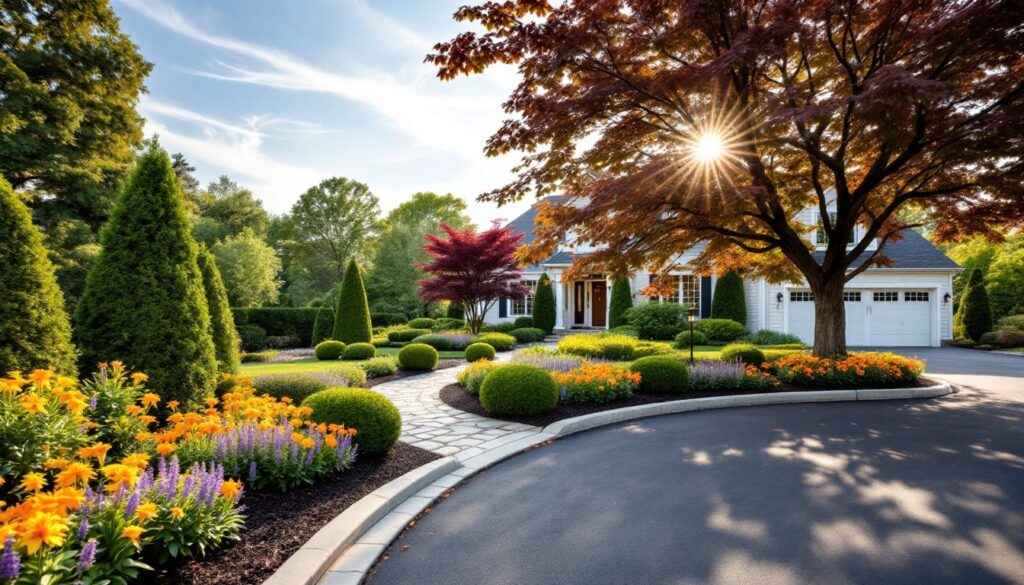
ToggleA driveway doesn’t exist in isolation. Too often, it’s an afterthought, a strip of pavement or gravel that gets vehicles from the street to the garage and nothing more. But homeowners who treat the driveway as an integral part of their landscape design unlock a whole new level of curb appeal. Smart landscaping around a driveway can soften harsh edges, guide the eye, add privacy, and even improve drainage. Whether working with asphalt, concrete, pavers, or gravel, the right plants, hardscaping, and lighting can turn a utilitarian slab into a welcoming entry that sets the tone for the entire property.
Key Takeaways
- Front yard driveway landscaping ideas transform underutilized pavement into a welcoming entry that improves curb appeal and signals that your property is well-maintained.
- Border plantings with hardy perennials like daylilies and coneflowers, plus compact shrubs such as dwarf boxwood, frame your driveway beautifully while tolerating heat and road salt.
- Low-maintenance ground covers like creeping thyme and sedums, paired with proper edging, prevent weeds and soil migration while creating a polished appearance.
- Strategic tree and shrub placement—positioned 10–15 feet from pavement with less aggressive root systems—provides shade, privacy, and focal interest without damaging driveways.
- Low-voltage LED path lights and uplighting enhance safety, extend outdoor usability after dark, and showcase your landscaping investment with minimal electricity use.
- Driveway landscaping manages stormwater runoff through permeable surfaces and vegetated buffers, helping your property meet environmental codes while improving drainage.
Why Driveway Landscaping Matters for Your Home
First impressions stick. A well-landscaped driveway doesn’t just look good, it signals that the property is cared for. From a practical standpoint, plantings and hardscaping along the driveway help manage stormwater runoff, reduce erosion, and prevent soil from washing onto pavement. Many municipalities encourage or even require permeable surfaces and vegetated buffers in new construction to meet stormwater management codes.
From a design perspective, the driveway often occupies a significant portion of the front yard. Left bare, it can dominate the view. Strategic landscaping balances that visual weight, drawing attention to the house, walkways, and garden beds instead. It also provides an opportunity to establish a cohesive style, whether that’s formal and symmetrical, cottage-garden casual, or modern and minimalist.
Finally, driveway landscaping can add function. Border plantings create a natural boundary, reducing the need for fencing. Lighting improves safety and extends usability after dark. Thoughtful tree placement provides shade for parked vehicles in summer, which can lower interior cabin temperatures and reduce fuel evaporation.
Border Plantings That Frame Your Driveway Beautifully
Borders give a driveway definition and polish. The goal is to choose plants that stay within their mature size, tolerate road salt or dust, and require minimal pruning to avoid encroaching on the pavement.
Perennials are workhorses for driveway borders. Daylilies (Hemerocallis spp.) are nearly indestructible, bloom prolifically, and handle heat radiating off asphalt. Coneflowers (Echinacea) and black-eyed Susans (Rudbeckia) offer reliable color from mid-summer through fall and self-seed lightly without becoming invasive. For shadier driveways under tree canopy, hostas and ferns provide lush foliage without needing full sun.
Compact shrubs add year-round structure. Dwarf boxwood (Buxus ‘Green Gem’ or ‘Green Velvet’) forms tight, evergreen mounds that stay under 3 feet and tolerate shearing. Spirea (Spiraea japonica ‘Little Princess’ or ‘Goldflame’) blooms in late spring, stays compact, and adapts to a wide range of soils. For a looser, naturalistic look, consider low maintenance plants like ‘Blue Mist’ spirea (Caryopteris) or dwarf hydrangeas.
Spacing matters. Leave at least 18 to 24 inches between mature plant widths and the pavement edge to allow for growth and air circulation. Mulch the bed with 2 to 3 inches of shredded hardwood or pine bark to suppress weeds and retain moisture. Refresh mulch annually, it breaks down faster along hot, sunny driveways.
Low-Maintenance Ground Covers and Edging Solutions
Ground covers do double duty: they fill space between larger plants and choke out weeds. For driveway edges, choose varieties that tolerate foot traffic, heat, and occasional tire encroachment.
Creeping thyme (Thymus serpyllum) is a top pick. It stays under 3 inches tall, releases a pleasant scent when stepped on, and produces small purple or pink flowers. It thrives in full sun and well-drained soil, making it ideal for the heat island effect near pavement. Sedum (Sedum spurium or Sedum kamtschaticum) offers succulent foliage and drought tolerance. Both are hardy to USDA Zone 3 or 4.
For shaded driveways, pachysandra (Pachysandra terminalis) or vinca minor (periwinkle) spread reliably and stay evergreen in most climates. Note that vinca can be aggressive in some regions, so check local invasive species lists before planting.
Edging keeps ground covers and mulch from migrating onto the driveway. Options include:
- Aluminum or steel landscape edging: durable, low-profile, and easy to install with stakes. It bends to follow curves.
- Concrete or stone pavers: laid flat or set on edge, they create a clean line and double as a mow strip.
- Plastic edging: budget-friendly and flexible, but degrades in UV exposure over 5–7 years.
Install edging so the top sits 1 inch below the pavement surface. This allows mower wheels to pass over without scalping turf or catching the blade. For driveways with significant runoff, permeable edging options like gravel-filled trenches or vegetated swales can help manage stormwater while maintaining a tidy border.
Creative Hardscaping Elements to Enhance Your Driveway
Hardscaping adds contrast and structure. It’s especially useful where soil conditions, shade, or salt spray make plant establishment difficult.
Dry creek beds simulate natural drainage channels. Line a shallow trench (6 to 12 inches deep) with landscape fabric, then fill with river rock or rounded stone. Size the stone to 3 to 6 inches in diameter for a natural look. Creek beds work well along sloped driveways to slow runoff and add visual interest. Plant moisture-loving grasses or sedges at the edges to soften the transition.
Gravel or decomposed granite strips can replace turf in narrow planting beds where mowing is awkward. Lay 2 to 3 inches of ¾-minus gravel over compacted soil and landscape fabric. It’s permeable, low-maintenance, and pairs well with ornamental grasses or Mediterranean plants like lavender and rosemary.
Gabion walls or raised beds built from stacked stone or brick create elevation changes and defined zones. They’re ideal for driveways on slopes where retaining soil is a priority. Gabions (wire cages filled with stone) are DIY-friendly and require no mortar. For a more finished look, dry-stacked stone or mortared brick offers longevity and a classic aesthetic.
Permeable pavers or gravel strips embedded in the driveway itself reduce runoff and allow for creative patterning. Turf pavers, plastic or concrete grids filled with soil and grass seed, support vehicle weight while keeping the surface green. They work best with light to moderate traffic and well-drained soil.
Tree and Shrub Placement for Maximum Impact
Strategic tree and shrub placement anchors the driveway landscape and provides seasonal interest. Poor placement, but, leads to cracked pavement, blocked sightlines, and ongoing maintenance headaches.
Setback guidelines: Plant trees at least 10 to 15 feet from the pavement edge, depending on mature canopy spread. Roots from species like willows, poplars, and silver maples are notorious for heaving asphalt and cracking concrete. Choose trees with less aggressive root systems, Japanese maples (Acer palmatum), serviceberry (Amelanchier), or ornamental cherries (Prunus spp.) are all suitable.
Clearance for vehicles: Maintain 8 feet of vertical clearance over the driving surface. This accommodates tall vehicles like RVs or delivery trucks. Prune lower branches as trees mature.
Sightline safety: Avoid planting anything taller than 30 inches within 10 feet of the driveway entrance or intersections. Low shrubs like dwarf spireas, compact junipers, or easy-to-maintain groundcovers keep sightlines open for backing out safely.
Shade and screening: For driveways that double as parking, position deciduous trees on the south or west side to block afternoon sun. Evergreen shrubs like arborvitae (Thuja occidentalis ‘Emerald Green’) or ‘Skip Laurel’ (Prunus laurocerasus) provide year-round privacy screening along the property line.
Specimen placement: A well-placed focal tree, such as a Japanese maple or flowering dogwood, draws the eye and balances the mass of the house. Position it asymmetrically for a natural look or symmetrically for formal design. Just ensure it’s far enough from utilities: call 811 before digging to locate underground lines.
Lighting Ideas to Illuminate Your Driveway Landscape
Good lighting improves safety, extends usability, and highlights plantings after dark. A well-lit driveway also deters unwanted visitors.
Low-voltage LED systems are the DIY standard. They run on 12V transformers, use minimal electricity, and don’t require an electrician in most jurisdictions. Kits are available at home centers and include cable, transformer, and fixtures. For longer runs (over 100 feet), use 12- or 14-gauge wire to minimize voltage drop.
Path lights installed every 8 to 10 feet along the driveway edge guide vehicles and pedestrians. Choose fixtures with downward-facing shades to reduce glare and light pollution. Bollard lights (short, post-style fixtures) offer more presence and work well at driveway entrances or curves.
Uplighting from ground-mounted spots showcases specimen trees or architectural shrubs. Position fixtures 2 to 3 feet from the trunk or base and aim upward at a 30- to 45-degree angle. Use narrow beam spreads (10–20 degrees) for tall trees: wider beams (30–60 degrees) for broad shrubs.
Downlighting from tree-mounted fixtures or eaves mimics moonlight and washes the driveway with soft, diffused light. This works especially well for driveways under mature canopy. Use weatherproof junction boxes and ensure fixtures are rated for wet locations.
Solar options have improved significantly. High-quality solar path lights with monocrystalline panels and lithium batteries now last 8–10 hours per charge. They’re best for supplemental accent lighting rather than primary illumination. Place them where they’ll receive at least 6 hours of direct sun daily.
Controls: Add a photocell or timer to automate on/off cycles. For enhanced security, consider motion-sensor fixtures near the street or garage. Wire them independently so they don’t trigger every time a car enters.
Safety note: Always use GFCI-protected outlets for transformers and outdoor fixtures. Bury low-voltage cable at least 6 inches deep or run it through conduit where exposed to traffic or digging.
Conclusion
Driveway landscaping doesn’t demand a blank check or a landscape architect. It does require planning, the right plant choices for the conditions, and a willingness to think beyond the pavement. Start with one border, add lighting, or introduce a single focal tree. Each element compounds, turning an overlooked strip of asphalt into an entry that feels intentional and cared for, and that makes all the difference.