
Table of Contents
ToggleNot every room basks in sunshine, and that’s okay. North-facing windows, basement offices, interior bathrooms, and hallways don’t need to be plant-free zones. The right species thrive in indirect light or even fluorescent bulbs, no sunny windowsill required. Low-light houseplants aren’t just tolerant of shade: many evolved beneath rainforest canopies where only dappled light reaches the floor. This makes them ideal for real-world homes where light varies room to room. Understanding how to match plant biology to available lumens means anyone can green up a dark corner without watching leaves yellow and drop.
Key Takeaways
- Best plants for indoor low light thrive in 25–75 foot-candles and evolved beneath rainforest canopies, making them perfect for north-facing windows, hallways, and interior rooms without sunny windowsills.
- Snake plants, pothos, and ZZ plants are bulletproof beginner options that tolerate neglect, irregular watering, and ambient LED lighting because they store water in thick leaves and rhizomes.
- Overwatering is the top killer of low-light houseplants; let soil dry between waterings and use well-draining mixes with perlite or orchid bark to prevent root rot.
- Dracaenas and cast iron plants deliver architectural presence in dim corners, while Chinese evergreens and prayer plants add color and texture without demanding bright sun.
- Supplement natural light with full-spectrum LED grow bulbs rated 2,000–3,000K in deep corners, and group plants together to create humid microclimates that mimic their tropical understory origins.
- Slow growth in low light means less frequent repotting and reduced fertilizer needs—feed only every 6–8 weeks in spring and summer, and skip nutrients entirely from October through February.
Why Low-Light Plants Are Perfect for Modern Homes
Modern floor plans prioritize open layouts, which often leave corners, hallways, and interior rooms starved for natural light. Standard office spaces use overhead LEDs rated around 300–500 lumens per square meter, well below the 1,000+ lumens bright-light tropicals demand. Low-light plants have adapted to survive on as little as 25–75 foot-candles, making them compatible with ambient indoor lighting.
These species typically feature darker green foliage packed with chlorophyll to maximize photosynthesis efficiency. They grow slower than sun-lovers, which means less frequent repotting and pruning. For renters, parents with curious toddlers, or anyone juggling a busy schedule, this low-maintenance profile is a practical win.
Another advantage: tolerance for neglect. Many low-light varieties hail from tropical understories where water and nutrients arrive sporadically. They’ve evolved fleshy leaves, water-storing rhizomes, or slow metabolisms that forgive occasional missed waterings. That resilience translates directly to indoor gardening success for beginners and experienced plant owners alike.
Top Low-Light Indoor Plants for Beginners
Starting with bulletproof species builds confidence and keeps the learning curve gentle. These two staples have earned their reputations through decades of surviving college dorm rooms, office cubicles, and forgetful owners.
Snake Plant (Sansevieria)
Snake plant (also called Sansevieria trifasciata or mother-in-law’s tongue) tolerates near-total neglect. Its stiff, upright leaves store water in thick cell walls, so it can go two to six weeks between waterings depending on humidity and pot size. In low light, growth slows to a crawl, but the plant won’t sulk or drop leaves.
Place it in a corner that receives only ambient room light, no direct sun needed. Use a well-draining potting mix (50% standard potting soil, 50% perlite or coarse sand works well) to prevent root rot. Overwatering kills more snake plants than underwatering. Let the soil dry completely between drinks. Variegated cultivars like ‘Laurentii’ (yellow-edged) or ‘Moonshine’ (silvery-green) add visual interest without extra care.
Snake plants also scrub airborne toxins like formaldehyde and benzene, according to NASA’s Clean Air Study. Wear gloves when handling if skin is sensitive: the sap can cause mild irritation.
Pothos (Epipremnum aureum)
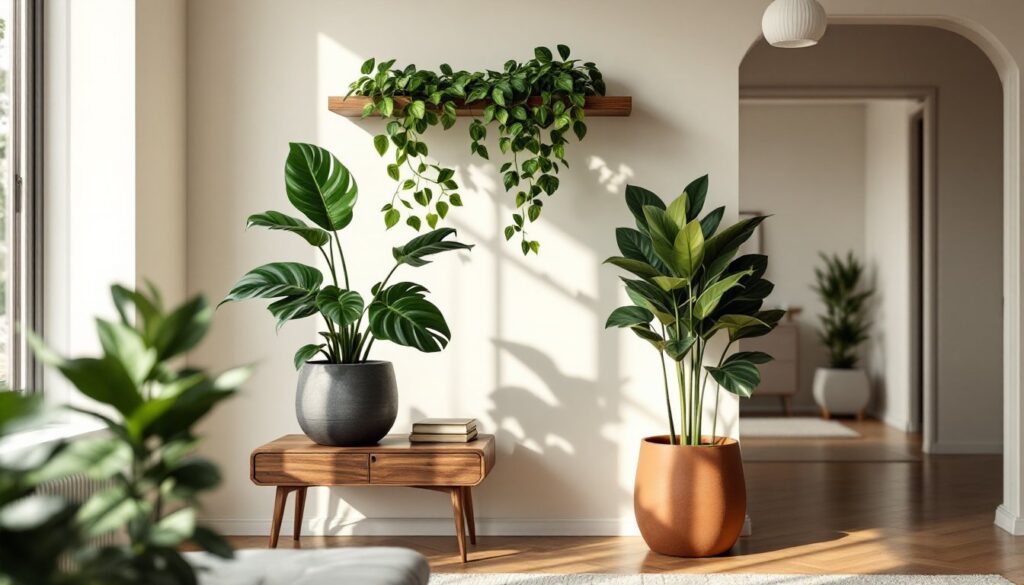
Pothos is the go-to trailing vine for dim spaces. Its heart-shaped leaves emerge in shades of green, chartreuse, or marbled white depending on variety. ‘Golden Pothos’ and ‘Marble Queen’ both perform well under fluorescent office lighting or north-facing windows.
Pothos roots easily in water or soil, making propagation as simple as snipping a 4–6 inch stem cutting below a node and placing it in a jar. Within two weeks, roots appear. It’s nearly impossible to kill, unless you waterlog it. Like snake plant, pothos prefers to dry out between waterings. In low light, expect slower growth and slightly smaller leaves.
Train it up a moss pole, let it cascade from a shelf, or drape it across a bookcase. Pothos tolerates low humidity, irregular watering, and even occasional drafts. Just keep it away from pets: the plant contains calcium oxalate crystals that cause oral irritation if chewed. Many easy-to-care-for houseplants share this mild toxicity, so placement matters in homes with curious cats or dogs.
Best Statement Plants for Low-Light Corners
When a space needs architectural presence, not just a tabletop accent, these larger specimens deliver drama without demanding a sunroom.
Dracaena varieties (such as Dracaena marginata, Dracaena fragrans, or Dracaena deremensis) grow tall and narrow, ideal for flanking a sofa or filling an empty corner. Their cane-like trunks and arching leaves create vertical interest. Most cultivars tolerate fluorescent or LED light as low as 50 foot-candles. Water when the top two inches of soil feel dry: brown leaf tips signal either underwatering or fluoride in tap water (switch to filtered or rainwater if this occurs).
Cast iron plant (Aspidistra elatior) earned its name by surviving Victorian parlors heated by coal dust and gas lamps. It handles deep shade, temperature swings, and irregular care. Glossy, dark green leaves emerge from the soil on individual stems, forming a dense clump over time. Growth is glacially slow, expect one or two new leaves per year in low light, but the plant is nearly indestructible. It’s also one of the few houseplants that tolerate neglect and occasional overwatering without immediate collapse.
ZZ plant (Zamioculcas zamiifolia) stores water in thick, potato-like rhizomes beneath the soil. Its waxy, pinnate leaves deflect dust and pests. ZZ plants can go a month or more without water in cooler months, making them ideal for vacation-prone owners. They adapt to light levels from bright indirect down to dim hallway conditions, though growth slows in deep shade. The only real threat is root rot from soggy soil. Use a pot with drainage holes and a chunky, fast-draining mix. According to experts in low-light houseplant care, ZZ plants rank among the most forgiving options for shadowy interiors.
Unique Low-Light Plants to Elevate Your Interior Design
Beyond the usual suspects, a few less common species offer texture, color, and conversation-starting appeal.
Chinese evergreen (Aglaonema) comes in striking patterns, silver splashes, pink veins, red margins, that look more like art than foliage. Newer cultivars like ‘Siam Aurora’ or ‘Red Valentine’ bring warm tones to dim corners. Chinese evergreens prefer consistently moist (not wet) soil and humidity above 40%, so they pair well with bathrooms or kitchens. In very low light, stick to darker green varieties: highly variegated types need a bit more brightness to maintain color.
Philodendron species (especially heartleaf philodendron, Philodendron hederaceum) rival pothos for ease but offer slightly different leaf shapes. Some climb, some trail, and some grow upright. ‘Brasil’ has chartreuse stripes: ‘Micans’ has velvety, bronze-toned leaves. All tolerate low light, though variegation fades without moderate brightness. Philodendrons appreciate a moss pole or trellis if space allows vertical growth.
Parlor palm (Chamaedorea elegans) is one of the few true palms that thrives indoors without blazing sun. Its delicate, feathery fronds add tropical flair to offices, entryways, or bedrooms. Parlor palms grow slowly, topping out around 3–4 feet indoors. They prefer evenly moist soil and benefit from occasional misting in dry climates. Spider mites can appear if humidity drops too low, so check leaf undersides periodically and rinse fronds under lukewarm water every few weeks.
Prayer plant (Maranta leuconeura) earned its name from leaves that fold upward at night, mimicking hands in prayer. The foliage displays intricate patterns, red veins on ‘Erythroneura,’ purple spots on ‘Kerchoveana.’ Prayer plants need higher humidity than most low-light species (50%+ is ideal), so they do best in terrariums, bathrooms, or near a small humidifier. Keep soil lightly moist and avoid direct sun, which bleaches the vibrant patterns. Many popular houseplant varieties share these humidity preferences, so grouping them together can create a microclimate.
Care Tips for Thriving Low-Light Indoor Plants
Even shade-tolerant species have non-negotiables. Success hinges on matching care routines to each plant’s evolved strategy.
Watering: Low light slows photosynthesis, which reduces water uptake. Overwatering is the top killer. Stick a finger two inches into the soil: if it’s dry, water thoroughly until excess drains from the pot’s bottom. If it’s damp, wait. In winter or unheated rooms, cut watering frequency in half. Use room-temperature water to avoid shocking roots.
Soil and drainage: A chunky, well-aerated mix prevents anaerobic conditions that rot roots. Combine standard potting soil with perlite, orchid bark, or coarse sand at a 2:1 ratio. Always use pots with drainage holes. Ceramic and terracotta breathe better than plastic, helping soil dry between waterings. If a decorative cachepot has no drainage, double-pot: place the nursery pot inside and remove it to water in a sink, letting excess drain before returning it.
Light measurement: “Low light” isn’t pitch black. Most species need at least 50–100 foot-candles to survive and 100–200 to grow. A simple lux meter (or smartphone app) can measure available light. As a rule of thumb, if you can comfortably read a book without a lamp, there’s enough light for pothos, snake plant, or philodendron. Deep corners or windowless rooms may need supplemental LED grow bulbs (look for full-spectrum bulbs rated 2,000–3,000K). Research from home and garden authorities confirms that even modest supplemental lighting extends the range of species that will thrive indoors.
Fertilizing: Slow growth means low nutrient demand. Feed once every 6–8 weeks during spring and summer with a balanced liquid fertilizer diluted to half strength. Skip fertilizer entirely from October through February unless the plant is actively pushing new leaves. Overfertilizing in low light causes salt buildup and crispy leaf margins.
Cleaning and pest prevention: Dust blocks light absorption. Wipe leaves with a damp microfiber cloth monthly. Inspect leaf undersides and stems for spider mites, mealybugs, or scale. Pests spread faster in low air circulation, so isolate new plants for two weeks before introducing them to a collection. If pests appear, rinse foliage under lukewarm water and apply insecticidal soap or neem oil, wearing gloves and eye protection.
Humidity: Many low-light species originate in tropical understories where humidity hovers around 60–80%. Modern homes average 30–40%, especially in winter. Group plants together to create a shared humid microclimate, use a pebble tray (a shallow dish filled with water and pebbles, with the pot resting on top), or run a small humidifier nearby. Crispy leaf edges signal low humidity: yellow, drooping leaves often indicate overwatering.
Repotting: Slow-growing plants may stay in the same pot for two to three years. Repot when roots circle the pot’s bottom or push through drainage holes. Move up one pot size (1–2 inches wider in diameter) and refresh the soil. Spring is the ideal window: repotting in fall or winter when growth slows can stress plants. For those new to houseplant maintenance, understanding common plant species and their care needs helps avoid mismatched expectations.