
Table of Contents
ToggleIndoor air quality isn’t just about comfort, it’s about health. The average American spends roughly 90% of their time indoors, and the EPA estimates that indoor air can be two to five times more polluted than outdoor air. Whole house air purifiers integrate directly into a home’s HVAC system, filtering allergens, particles, and pollutants before they circulate through every room. Aprilaire has dominated the residential air purification market for decades with MERV-rated filtration systems that require minimal maintenance and no standalone floor space. This guide breaks down how these systems work, which models fit different homes, and what homeowners need to know before and after installation.
Key Takeaways
- Aprilaire whole house air purifiers integrate directly into your HVAC system to filter allergens and pollutants throughout your entire home, with MERV 16 filters capturing particles as small as 0.3 microns with 95% efficiency.
- The Model 5000 is ideal for homes up to 4,000 square feet with high-CFM systems, while the Model 2410 suits smaller homes and older HVAC systems with its MERV 13 filtration and compact design.
- Annual filter replacement costs $60–$100 and takes just five minutes, making Aprilaire systems significantly cheaper to maintain than multiple portable air purifiers that require monthly replacements.
- Homes with pets, smokers, or occupants with asthma and allergies benefit most from MERV 16 whole-house air purification, which is clinically proven to reduce respiratory symptoms and improve sleep quality.
- DIY installation is achievable in 2–3 hours with basic tools, though you should verify ductwork dimensions, HVAC capacity, and warranty requirements before starting.
- Proper airflow design in Aprilaire systems can reduce heating and cooling costs by 10–15% compared to restrictive fiberglass filters, while saving valuable floor space that portable units typically occupy.
What Is an Aprilaire Whole House Air Purifier?
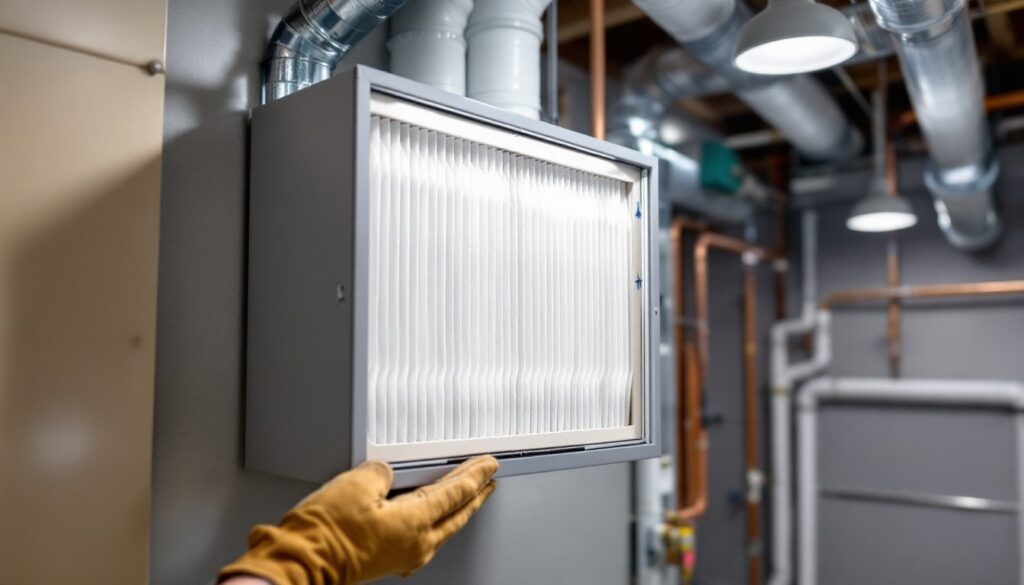
An Aprilaire whole house air purifier is a dedicated filtration unit installed directly into the return duct of a forced-air HVAC system. Unlike portable air purifiers that clean one room at a time, these units filter every cubic foot of air that cycles through the heating and cooling system.
Aprilaire systems use MERV-rated filters (Minimum Efficiency Reporting Value), typically ranging from MERV 10 to MERV 16. A MERV 16 filter captures particles as small as 0.3 microns, pollen, mold spores, pet dander, dust mite debris, bacteria, and even some viruses. For context, a human hair is about 70 microns: most allergens sit between 0.3 and 10 microns.
The unit itself is a metal cabinet roughly 16 to 25 inches wide depending on the model, mounted to the ductwork near the furnace or air handler. Air flows through the filter media before entering the blower, meaning every register in the house delivers filtered air. These systems operate passively, no fans, UV lights, or ionizers, just mechanical filtration driven by the existing HVAC blower.
Aprilaire also manufactures models with self-sealing filter frames, which prevent bypass, a common issue where unfiltered air sneaks around the edges of poorly seated filters. This design detail matters in real-world performance, especially in homes with older or less precise duct fabrication.
Key Benefits of Installing an Aprilaire Air Purification System
Whole-home coverage is the standout advantage. A single Aprilaire unit processes air for homes up to 4,000 square feet (depending on model and HVAC capacity), eliminating the need to buy and maintain multiple portable units.
Lower maintenance frequency compared to portables is another practical win. Aprilaire filters typically last nine to twelve months with average use, versus monthly replacements for many standalone purifiers. The filter change process takes about five minutes, no tools required on most models. Just unlatch the cabinet, slide out the old filter, and drop in the new one.
Energy efficiency improves when the HVAC system doesn’t have to work against a clogged or restrictive filter. Aprilaire filters are designed with a large surface area (often 60 to 200 square feet of pleated media) to minimize airflow resistance. This reduces static pressure in the duct system, which can lower heating and cooling costs by 10–15% compared to using a cheap fiberglass filter.
For households with asthma, allergies, or respiratory sensitivities, MERV 16 filtration can make a measurable difference. Studies show that removing fine particulate matter reduces symptoms and improves sleep quality. This isn’t lifestyle marketing, it’s backed by clinical research from organizations like the American Lung Association.
No floor space or noise is a bonus many homeowners appreciate. The unit lives inside the ductwork, silent and invisible. There’s no bulky tower in the corner, no cord to trip over, and no fan hum to compete with conversation or TV.
Finally, whole-house air purifiers tend to hold their value better in resale scenarios. HVAC upgrades that improve air quality and energy performance are often highlighted in home listings, especially in markets where buyers prioritize health-conscious features.
Top Aprilaire Whole House Air Purifier Models Compared
Model 5000 vs. Model 2410
The Aprilaire Model 5000 is the flagship. It features a MERV 16 filter, the highest rating in the residential lineup, capturing particles down to 0.3 microns with 95% efficiency. It’s designed for homes up to 4,000 square feet and handles HVAC systems with airflow up to 2,000 CFM (cubic feet per minute). The cabinet is larger, roughly 25 inches wide, and requires a return duct of at least 20 inches in height for proper fit. Filter changes are annual under normal conditions.
The Model 2410 offers MERV 13 filtration, still hospital-grade but slightly less restrictive. It’s sized for homes up to 2,000 square feet and systems up to 1,200 CFM. The cabinet is more compact at about 20 inches wide, making it a better fit for tighter mechanical rooms or smaller ductwork. Filters also last about a year, and the unit costs roughly $100 to $150 less than the 5000.
Both models use Aprilaire’s self-sealing design and require no electrical connection, they’re purely mechanical. The main trade-off is filtration efficiency versus system compatibility. If your blower can handle the static pressure of a MERV 16 filter without strain, the 5000 is the better long-term investment. If your system is older or marginally sized, the 2410 prevents airflow issues.
How to Choose the Right Model for Your Home
Start with your HVAC system’s capacity. Check the furnace or air handler data plate for CFM rating. If it’s rated for 1,800 CFM or higher, the Model 5000 fits. Below that, lean toward the 2410 or consult an HVAC tech.
Next, measure your return duct dimensions. Aprilaire provides installation templates on their website. The cabinet must mount flush to the ductwork, and there needs to be clearance for filter access, usually 3 to 4 inches in front of the unit.
Consider your indoor air quality goals. Homes with pets, smokers, or occupants with severe allergies benefit more from MERV 16. If you’re mainly targeting dust and general particulates, MERV 13 is plenty effective.
Finally, verify filter availability and cost. Aprilaire filters are widely stocked at HVAC supply houses and online, but check current pricing. MERV 16 filters run about $80 to $100 per year: MERV 13 filters are closer to $60 to $80. That’s still cheaper than running three or four portable units.
When comparing options, many homeowners also review expert-tested air purifiers to see how whole-house systems stack up against portable models in terms of coverage and long-term value.
Installation and Maintenance: What Homeowners Need to Know
Installation is intermediate-level work if you’re comfortable with sheet metal and ductwork. The process involves cutting an opening in the return plenum, mounting the cabinet with self-tapping screws, and sealing the seams with foil tape or mastic. Aprilaire provides a cardboard template to mark the cutout.
You’ll need a drill, tin snips or aviation shears, a tape measure, and a straightedge. A jigsaw with a metal-cutting blade speeds up the process but isn’t required. Expect 2 to 3 hours for a first-time install, including cleanup.
Safety note: Turn off power to the furnace or air handler at the breaker before starting. Ductwork edges are sharp, wear leather work gloves and safety glasses. If your HVAC system is still under warranty, check whether self-installation voids coverage. Some manufacturers require licensed HVAC techs to perform any duct modifications.
Most jurisdictions don’t require a permit for adding an air cleaner to existing ductwork, but if you’re installing a new HVAC system at the same time, the whole job may need inspection under the International Residential Code (IRC). Check with your local building department.
Once installed, the only regular maintenance is filter replacement. Set a calendar reminder for every 9 to 12 months. Some homeowners in high-pollen areas or with multiple pets swap filters every 6 months. The filter frame has a built-in reminder strip that changes color as the filter loads with particles, though it’s not always accurate.
To change the filter, unlatch the two spring clips on the cabinet door, slide out the old filter, and note the airflow direction arrow on the frame. The new filter must be oriented correctly, arrow pointing toward the blower, or it won’t seal properly.
There’s no need to clean the cabinet interior. Dust buildup on the housing is cosmetic and doesn’t affect performance. If you see moisture inside, that’s a red flag for duct leaks or condensation issues unrelated to the air cleaner. Call an HVAC tech to diagnose.
Pro tip: Buy filters in multipacks. Aprilaire and third-party suppliers often discount two- or three-packs, saving 15–20% over time. Store extras in a dry location, still sealed in plastic.
For those evaluating multiple purification technologies, comprehensive air purifier guides often compare mechanical filtration like Aprilaire’s with UV and ionization systems to help homeowners weigh maintenance and long-term costs.
Conclusion
Aprilaire whole house air purifiers offer a straightforward, low-maintenance path to cleaner indoor air without the clutter or recurring expense of portable units. Whether you’re managing allergies, improving respiratory health, or just cutting down on dust, a properly sized system integrated into your HVAC delivers measurable results. Match the model to your system’s capacity, plan for annual filter swaps, and you’ll have a set-it-and-forget-it solution that works quietly in the background for years.