
Table of Contents
ToggleIndoor plants bring life to any room, until a fuzzy gray mold or yellow leaf spots show up. Fungal infections are among the most common problems houseplant owners face, and they spread fast in the warm, humid conditions that most homes provide. Left unchecked, fungi like powdery mildew, botrytis, and root rot can kill even hardy specimens. The good news? Most fungal issues are treatable if you catch them early and use the right product. This guide covers the best fungicides for indoor plants in 2026, from gentle organic options to stronger synthetics, plus how to apply them without harming your greenery or breathing in anything you shouldn’t.
Key Takeaways
- The best fungicide for indoor plants depends on infection severity—use organic options like neem oil for mild powdery mildew, and synthetic fungicides like chlorothalonil or myclobutanil for advanced infections.
- Overwatering is the #1 cause of fungal problems in houseplants; prevent infection by letting soil dry between waterings, improving air circulation, and maintaining humidity below 60%.
- Apply fungicide to all leaf surfaces including undersides, repeat applications every 7–14 days for 2–4 cycles, and wear appropriate PPE (gloves, safety glasses, and respirator for synthetics) with good ventilation.
- Isolate infected plants immediately, remove heavily damaged foliage, and trash trimmings rather than composting to prevent spores from spreading to healthy plants.
- Good cultural practices—proper watering, air circulation, light, and sterile potting mix—prevent 90% of fungal problems, making prevention far more effective than relying on fungicide treatment alone.
Why Indoor Plants Need Fungicide Treatment
Fungi thrive in still air, high humidity, and low light, conditions that describe the average living room or bathroom in winter. Overwatering is the #1 trigger. When soil stays soggy, oxygen can’t reach roots, and opportunistic fungi like Pythium and Rhizoctonia move in. Above the soil line, powdery mildew and botrytis (gray mold) spread via airborne spores that land on damp leaves.
Symptoms vary by infection type. Powdery mildew looks like a dusting of flour on leaves. Botrytis causes water-soaked brown spots and a fuzzy gray coating. Root rot manifests as yellowing leaves, wilting even though wet soil, and a sour smell from the pot. Leaf spot fungi create circular brown or black lesions, often with a yellow halo.
Fungicides work in two ways: contact formulas kill spores on leaf surfaces, while systemic products are absorbed into plant tissue and fight infection from within. Neither will reverse existing damage, dead leaves stay dead, but both stop the spread. If more than 50% of a plant is affected or roots are black and mushy, fungicide alone won’t save it. Trash the plant and sterilize the pot before reusing it.
Prevention beats treatment every time. Most common house plants are vulnerable to fungal issues when their environment is off, so understanding symptoms early matters.
Top Fungicide Options for Indoor Plants
Choosing the right fungicide depends on the infection type, plant sensitivity, and whether you’re comfortable with synthetic chemicals indoors. Below are the most effective options for houseplants in 2026.
Organic and Natural Fungicide Alternatives
Neem oil is the go-to for mild fungal problems and prevention. It’s a broad-spectrum botanical fungicide derived from neem tree seeds. Mix 2 tablespoons of cold-pressed neem oil with 1 gallon of water and a few drops of dish soap (the soap helps it emulsify). Spray leaf tops and bottoms until they drip, then repeat every 7–14 days. Neem works best on powdery mildew and early-stage leaf spot. It won’t cure advanced infections, but it’s safe for edibles and won’t harm pets if they brush against treated leaves. Apply in the evening, neem under bright light can burn foliage.
Copper-based fungicides (like copper sulfate or copper octanoate) are OMRI-listed organic options that pack more punch. They’re effective against bacterial leaf spot, downy mildew, and some root pathogens. Bonide Copper Fungicide is a common retail brand. Dilute according to label directions (usually 1–2 tablespoons per gallon) and apply as a foliar spray or soil drench. Copper can stain surfaces and build up in soil with repeated use, so rotate it with other treatments. Avoid using it on ferns or other copper-sensitive species.
Baking soda sprays (sodium bicarbonate) change leaf surface pH, making it hostile to fungal spores. Mix 1 tablespoon baking soda, 1 tablespoon horticultural oil, and 1 gallon of water. This works for powdery mildew but does little against systemic infections. It’s cheap and non-toxic, but less reliable than neem or copper.
According to Better Homes & Gardens, many gardeners now favor hydrogen peroxide soil drenches for root rot. Mix 1 part 3% hydrogen peroxide to 4 parts water and pour it through the soil. It oxygenates roots and kills anaerobic pathogens, but it also disrupts beneficial microbes, so use it sparingly.
Synthetic Fungicides for Severe Infections
When organic treatments fail, synthetic fungicides offer stronger, faster results. Most contain active ingredients like chlorothalonil, mancozeb, or myclobutanil.
Chlorothalonil (sold as Daconil and Ortho MAX Garden Disease Control) is a broad-spectrum contact fungicide. It prevents spore germination but doesn’t penetrate plant tissue, so thorough coverage is critical. Use it for botrytis, leaf spot, and anthracnose. Mix according to label rates (typically 1–2 teaspoons per gallon) and spray every 7–10 days. Chlorothalonil is not for edibles and requires gloves and a mask during application. Ventilate the room and keep pets out until surfaces dry.
Myclobutanil (Spectracide Immunox) is a systemic triazole fungicide. It’s absorbed through leaves and roots, offering 2–4 weeks of protection. It’s highly effective against powdery mildew and rust. Apply as a foliar spray or soil drench at labeled rates. Because it’s systemic, you can’t wash it off, don’t use it on herbs or anything you’ll eat.
Thiophanate-methyl (3336, Cleary’s) is another systemic option, often used in commercial greenhouses. It fights a wide range of fungi, including root rot pathogens. It’s sold as a wettable powder: mix 1–2 teaspoons per gallon and drench the soil. Wear a respirator when handling the powder.
Synthetic fungicides are regulated by the EPA and carry specific PPE requirements. Always read the label. Indoor use requires good ventilation, open windows and run a fan. If you’re treating a large collection or tall indoor house plants, consider moving them outdoors or to a garage for application.
How to Apply Fungicide to Indoor Plants Safely
Fungicide application isn’t complicated, but sloppy technique wastes product and risks plant damage. Here’s the process, step by step.
1. Isolate infected plants immediately. Fungal spores spread through air currents, watering splashes, and contact. Move sick plants away from healthy ones before you do anything else.
2. Remove heavily infected material. Prune off leaves or stems with visible mold, spots, or rot. Use clean, sharp scissors or pruners and disinfect blades between cuts with rubbing alcohol or a 10% bleach solution. Bag trimmings and trash them, don’t compost.
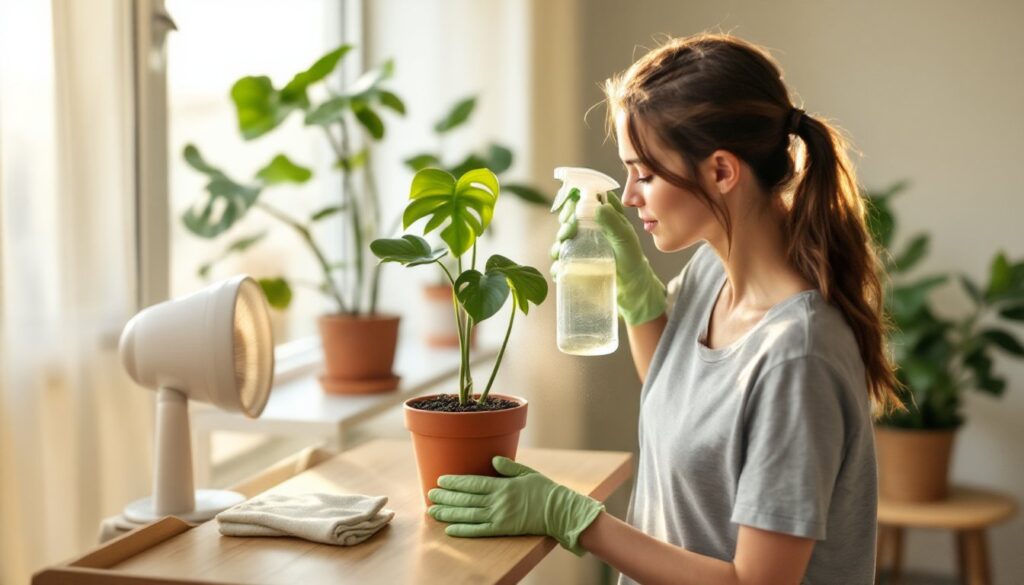
3. Prep the plant and workspace. Wipe down leaves with a damp cloth to remove dust and loose spores. Lay down newspaper or a drop cloth to catch drips. If you’re spraying, do it in a bathtub, shower, or garage, not on carpet or upholstery.
4. Mix fungicide according to label directions. More isn’t better. Overdosing can burn foliage or build up toxic residues. Use a dedicated spray bottle or pump sprayer: don’t reuse one that held herbicides or cleaners. Shake or stir thoroughly if using emulsions or wettable powders.
5. Apply to all plant surfaces. For foliar sprays, coat tops and undersides of leaves, stems, and soil surface until the solution drips off. Fungi hide on undersides, so don’t skip them. For soil drenches, pour slowly until liquid runs out the drainage holes. Avoid getting systemics on skin, wear nitrile gloves.
6. Wear appropriate PPE. At minimum: nitrile gloves and safety glasses. For synthetic products or wettable powders, add a respirator with organic vapor cartridges (3M 6000 series or equivalent). Long sleeves help if you’re treating a lot of plants. According to guidance from The Spruce, proper PPE prevents both acute exposure and long-term sensitization.
7. Ventilate and allow to dry. Open windows and run a fan to disperse fumes. Don’t let pets or kids near treated plants until they’re completely dry (usually 2–4 hours). Some products require a 12–24 hour re-entry interval: check the label.
8. Repeat as directed. Most fungicides require 2–4 applications at 7–14 day intervals. Mark your calendar. Stopping after one treatment lets resistant spores rebound.
Cleanup: Rinse spray equipment with water immediately after use. Dispose of leftover mixed solution according to local regulations, don’t pour it down the drain. Wash hands and forearms with soap even if you wore gloves.
Preventing Fungal Problems in Your Indoor Garden
Fungicides treat the symptom, not the cause. If you don’t fix the environmental issues that triggered the infection, you’ll be spraying forever. Here’s how to keep fungi from gaining a foothold.
Water properly. Overwatering is the root cause (pun intended) of most fungal disease. Let the top 1–2 inches of soil dry out between waterings for most houseplants. Use pots with drainage holes, never let plants sit in saucers full of water. Water early in the day so foliage dries before nightfall. Bottom watering (filling the saucer and letting the plant wick it up) keeps leaves dry and reduces foliar disease risk.
Improve air circulation. Stagnant air lets humidity build up around leaves, creating ideal fungal conditions. Run a ceiling fan on low or place a small oscillating fan near your plant shelf. Don’t cram plants together, leave a few inches between pots.
Control humidity. Most fungi love humidity above 60%. If you’re running a humidifier for tropical species, aim for 50–60% and use a hygrometer to monitor it. Increase air movement in high-humidity rooms (bathrooms, basements). For particularly susceptible plants, consider a small dehumidifier.
Provide adequate light. Weak, etiolated growth is more vulnerable to infection. Most houseplants need bright, indirect light. Supplement with grow lights if your space is dim, especially in winter. LED panels with a full spectrum (5000–6500K) work well and don’t generate much heat.
Use sterile potting mix. Garden soil and reused potting mix can harbor fungal spores and pathogens. Start with fresh, bagged potting mix from a reputable brand. If you reuse containers, scrub them with hot soapy water and rinse with a 10% bleach solution, then let them air-dry completely.
Fertilize appropriately. Excess nitrogen produces lush, soft growth that fungi love. Use a balanced fertilizer (like 10-10-10 or 20-20-20) at half the recommended strength during the growing season. Avoid fertilizing stressed or recently repotted plants.
Inspect new plants. Quarantine any new arrivals for 2–3 weeks before integrating them with your collection. Check for pests and disease. Many house plants from retailers arrive already infected, so a quarantine period saves headaches later.
Prune and clean regularly. Remove dead leaves and spent flowers promptly, they’re magnets for botrytis and other saprophytic fungi. Wipe dust off leaves monthly with a damp cloth to improve photosynthesis and remove spores.
As noted by experts at Gardenista, good cultural practices prevent 90% of fungal problems. Fungicides are a backup, not a substitute for proper care.
Conclusion
Fungal infections don’t have to mean the end of your indoor house plants. Catch them early, choose the right fungicide for the job, organic for mild cases, synthetic for severe ones, and apply it correctly with proper PPE and ventilation. More importantly, fix the watering, airflow, and light issues that let fungi take hold in the first place. A little prevention beats a lot of spraying.