
Table of Contents
ToggleMost tropical houseplants come from environments where humidity hovers between 50-80%, but the average home, especially during winter, sits closer to 30-40%. That gap is why your fiddle leaf fig gets crispy edges and your calathea curls up like a defensive hedgehog. Running the furnace, sealing up drafts for energy efficiency, and living in arid climates all pull moisture from the air your plants desperately need. A dedicated humidifier bridges that divide, turning a hostile indoor climate into one where your greenery can actually thrive instead of just survive.
Key Takeaways
- Most tropical houseplants thrive in 50-80% humidity, while average homes sit at 30-40%, making a humidifier essential to prevent crispy leaves and stunted growth.
- The best humidifier for indoor plants should feature adjustable mist output, adequate coverage area (200-400 sq ft), and easy-to-clean components to prevent mineral buildup and bacterial growth.
- Ultrasonic humidifiers excel in bedrooms and quiet spaces, while evaporative models provide superior coverage for larger plant collections but require regular filter maintenance.
- Position your humidifier 3-5 feet from foliage, pair it with an oscillating fan for airflow, and maintain 50-60% humidity levels to prevent fungal infections and maximize plant health.
- Weekly cleaning with vinegar and monthly deep maintenance are critical to prevent mineral deposits from clogging output and reduce harmful bacteria growth around your indoor plants.
Why Indoor Plants Need a Humidifier
Plants don’t just drink water through their roots, they breathe it through tiny pores called stomata on their leaves. When ambient humidity drops too low, those pores close to conserve moisture, which slows photosynthesis, stunts growth, and leaves foliage vulnerable to pests like spider mites that thrive in dry conditions.
Tropical species are especially sensitive. Monsteras, pothos, philodendrons, and ferns evolved in rainforest understories where moisture hangs thick in the air. In a dry room, they’ll survive, but growth slows, leaves yellow prematurely, and new foliage emerges smaller than it should.
Even desert-adapted succulents appreciate moderate humidity during active growing seasons, it’s the combination of dry air and overwatering that causes rot, not humidity alone.
Beyond plant health, maintaining proper humidity protects wood furniture, musical instruments, and even your own respiratory system during heating season. A good humidifier does double duty for both your houseplants and your home’s overall comfort.
Misting plants with a spray bottle is a common remedy, but it’s theater, not treatment. The moisture evaporates within minutes and does nothing to raise ambient humidity. You’d need to mist every 20 minutes around the clock to replicate what a humidifier delivers passively.
Key Features to Look for in a Plant Humidifier
Not all humidifiers are built for plant care. Here’s what actually matters when choosing one for your indoor jungle:
Tank capacity determines runtime. A 1-gallon tank typically runs 12-16 hours on low, which means daily refills. If you’re humidifying a larger plant room or want to refill less often, look for 2-3 gallon reservoirs that can go 24-36 hours between fills.
Coverage area is measured in square feet. Match it to your space, most plant-focused models cover 200-400 square feet, enough for a bedroom or dedicated plant corner. Oversizing won’t hurt: undersizing means the unit runs constantly and still can’t hit target humidity.
Adjustable mist output lets you dial in the exact humidity level. Fixed-output models are cheaper but less flexible. Built-in hygrometers (humidity sensors) are a bonus, pair them with auto-shutoff and the unit maintains your target without overshooting into mold territory.
Quiet operation matters if the humidifier lives in a bedroom or workspace. Ultrasonic models generally run quieter than evaporative ones, though evaporative units double as white noise machines if that’s your thing.
Ease of cleaning prevents mineral buildup and bacterial growth. Wide tank openings, removable bases, and dishwasher-safe components save frustration. Experts at Good Housekeeping emphasize cleaning frequency as the top factor in humidifier longevity.
Warm vs. cool mist is mostly preference for plants, they respond to humidity, not mist temperature. Cool mist is safer around curious pets and kids (no heating element), while warm mist can feel more comfortable in already-chilly rooms. If you’re juggling indoor gardening alongside home comfort, cool mist is the safer bet.
Top Humidifiers for Indoor Plants in 2026
Ultrasonic Humidifiers
Ultrasonic models use high-frequency vibrations to break water into a fine mist. They’re whisper-quiet, energy-efficient, and produce visible mist that disperses quickly. The downside: they can leave a fine white dust (mineral residue) on nearby surfaces if you use tap water.
Best for: Medium to large plant collections, bedrooms, and spaces where noise is a concern.
What to look for: Models with dual-nozzle outputs let you direct mist toward plant clusters. Adjustable mist levels (low/medium/high) and timers prevent over-humidification. Prioritize units with antimicrobial tank coatings to reduce mold and bacteria growth between cleanings.
Ultrasonic units work well for humidity-loving tropicals like calatheas, alocasias, and orchids. Position the humidifier 3-4 feet away from foliage to avoid water droplets settling directly on leaves, which can cause fungal issues. Many common house plants respond well to the consistent output ultrasonic models provide.
Pro tip: Use distilled or filtered water to minimize mineral dust. A gallon jug costs about $1 and eliminates the cleanup hassle. If you’re already investing in tall indoor plants that anchor a room, spending an extra dollar per refill is worth it.
Evaporative Humidifiers
Evaporative humidifiers pull air through a wet wick or filter, releasing moisture naturally. They’re self-regulating, as humidity rises, evaporation slows, so they won’t over-humidify. The tradeoff: they’re louder (fan noise), require regular filter replacements, and consume more electricity than ultrasonic models.
Best for: Whole-room humidity control, homes with hard water, and anyone who doesn’t want to fuss with distilled water.
What to look for: Replaceable wicking filters (expect to swap them every 1-3 months depending on water quality). Larger fans move more air but generate more noise, check decibel ratings if sound sensitivity matters. Some models include antimicrobial filter treatments that reduce bacterial growth.
Evaporative units excel in larger spaces or open-concept layouts where you need even humidity distribution. They’re particularly useful if you’re managing a plant shelf or multi-level setup, since the fan helps circulate air and prevent stagnant pockets. Testing by reviewers at Tom’s Guide consistently shows evaporative models outperforming ultrasonics in coverage area per gallon of water.
For enthusiasts maintaining specialized setups like indoor house plants in fish tanks, evaporative humidifiers complement the existing water features without oversaturating the air.
Maintenance note: Rinse the filter weekly and replace it when it turns brown or develops an odor. Skipping this step tanks performance and can introduce musty smells into your space.
How to Use a Humidifier for Optimal Plant Health
Owning a humidifier is step one. Using it correctly is what separates thriving plants from those that limp along. Here’s how to dial it in:
1. Measure baseline humidity. Grab a basic hygrometer (they’re $10-15 and dead simple). Place it near your plants and check readings over a few days. Most houseplants thrive at 50-60% relative humidity. If you’re running below 40%, a humidifier will make a visible difference within a week.
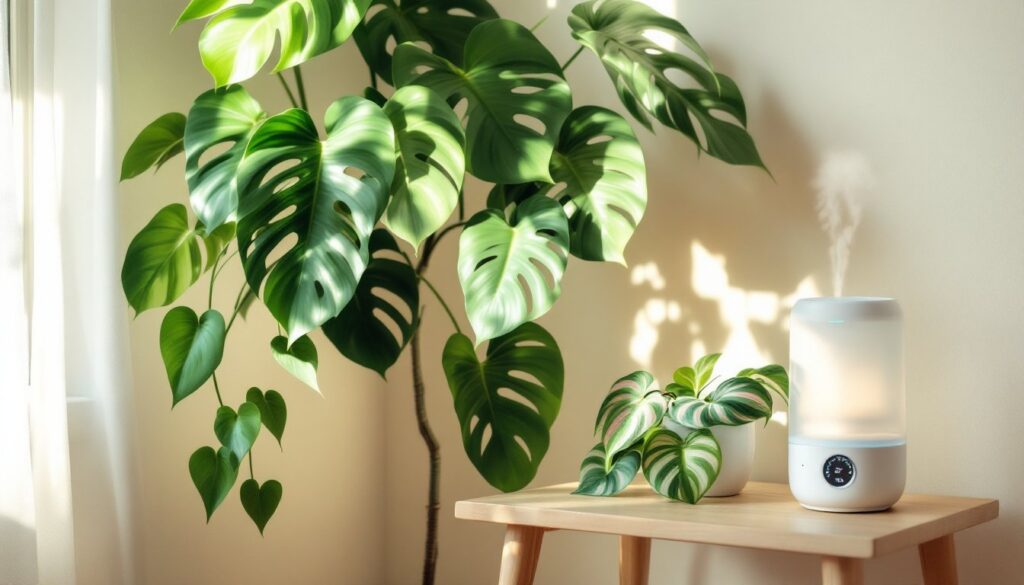
2. Position strategically. Set the humidifier 3-5 feet away from your densest plant cluster, elevated on a small table or plant stand. This lets mist disperse before settling on foliage. Never aim the nozzle directly at leaves, standing water invites fungal infections like powdery mildew and botrytis.
3. Run it consistently. Humidity spikes and crashes stress plants more than steady, moderate levels. Run the humidifier during the day when plants are actively photosynthesizing (stomata open) and during heating season when indoor air is driest. A timer helps maintain routine without manual fussing.
4. Pair with good airflow. Stagnant, humid air breeds mold. Use a small oscillating fan on low to keep air moving gently around plants. This mimics natural breezes and strengthens stems while preventing moisture from pooling. Resources like The Spruce emphasize airflow as the missing piece in most plant care routines.
5. Clean weekly, deep-clean monthly. Empty the tank daily if possible. Once a week, rinse with white vinegar (1 part vinegar to 3 parts water), scrub with a soft brush, and air-dry completely. Monthly, disassemble and clean every component, including the mist nozzle and any filters. Mineral buildup clogs output and reduces efficiency: bacteria growth can actually harm plant health and your own respiratory system.
6. Adjust seasonally. Winter’s the critical time, forced-air heating and sealed windows tank humidity fast. Summer usually needs less help unless you run AC constantly. If you’ve picked up popular house plants from the local nursery, they’ve likely acclimated to greenhouse humidity (60-70%), so ease them into your home environment gradually.
Safety note: Keep humidifiers on stable surfaces away from electronics, outlets, and wood floors that can warp with prolonged exposure to moisture. Use a waterproof tray or mat underneath to catch drips during refills.
Conclusion
A quality humidifier isn’t a luxury for plant parents, it’s infrastructure. Pair the right model with consistent use and basic maintenance, and you’ll see faster growth, lusher foliage, and fewer pest problems. Start with a hygrometer, choose a unit that fits your space and plant count, and give it a few weeks to work. Your plants will tell you it’s working.