
Table of Contents
ToggleArizona’s desert climate might seem hostile to plant life, but indoors is a different story. Low humidity, abundant sunshine filtering through windows, and warm year-round temperatures create conditions many houseplants actually crave. The trick is matching the right species to the environment, not fighting it with misters and humidifiers every day. This guide focuses on plants that genuinely thrive in Arizona homes, from bone-dry air to sun-soaked south-facing rooms, without requiring a horticulture degree or daily maintenance routines.
Key Takeaways
- Arizona’s warm, dry indoor climate with low humidity (10–30%) is ideal for desert-adapted and heat-loving houseplants, eliminating the need for constant misting and humidity management.
- Best indoor plants for Arizona include snake plant, pothos, philodendron, aloe vera, ZZ plant, and rubber plant—all of which thrive with minimal watering and tolerate low humidity effortlessly.
- Water based on soil dryness rather than a fixed schedule, checking the top 1–3 inches of soil with your finger before watering, as Arizona’s dry air significantly reduces how often most houseplants need hydration.
- Use well-draining potting mixes with perlite (20% by volume) and terracotta pots for succulents to prevent overwatering, the leading cause of plant failure in Arizona homes.
- Dust leaves monthly with a damp cloth to maintain photosynthesis efficiency, and manage spider mites—the primary pest threat in dry climates—by inspecting leaf undersides and spraying with insecticidal soap if needed.
- Arizona’s intense sunlight supports faster growth; use sheer curtains to diffuse intense afternoon sun (12–4 PM) through west-facing windows and rotate plants weekly for even growth and balanced foliage.
Why Arizona’s Indoor Climate Is Perfect for Certain Plants
Arizona homes share several environmental traits that make them ideal for specific plant families. Relative humidity typically sits between 10–30% indoors, far below the national average of 30–50%. While ferns and calatheas would shrivel in these conditions, desert-adapted and semi-arid species handle it without stress.
Year-round warmth is another advantage. Indoor temperatures rarely dip below 65°F, even in winter, which suits tropical and subtropical species that go dormant or suffer cold damage in climates with pronounced seasonal swings. Plants don’t have to acclimate to drastic temperature changes, reducing shock and leaf drop.
High light availability from Arizona’s intense sun, even filtered through windows, supports photosynthesis for sun-loving varieties. South and west-facing windows deliver bright indirect to direct light for 6–8 hours daily in many homes, a rarity in cloudier states. This allows homeowners to grow plants that would etiolate (stretch and weaken) elsewhere.
Finally, Arizona’s dry air discourages common houseplant pests like fungus gnats, which breed in moist soil and high humidity. Spider mites can still appear, but overall pest pressure is lower than in humid regions. Combine these factors, and Arizona becomes a low-fuss environment for the right plant roster.
Top Low-Maintenance Indoor Plants for Arizona Homes
Snake Plant (Sansevieria)
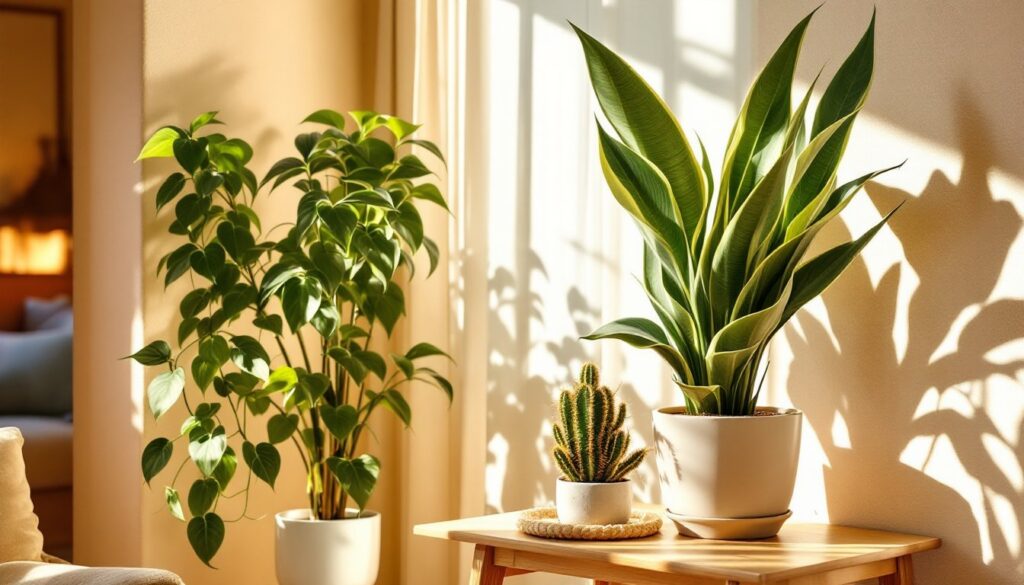
Snake plants (now reclassified as Dracaena trifasciata, but still widely sold under Sansevieria) are nearly indestructible. Their thick, upright leaves store water like a cactus, letting them go 2–4 weeks between waterings in Arizona’s dry air. They tolerate low light but grow faster in bright indirect light, making them adaptable to any room.
Water only when the top 2–3 inches of soil are bone-dry. Overwatering is the only real threat, root rot sets in fast if soil stays wet. Use a well-draining potting mix (50% cactus mix, 50% standard potting soil works well) and a pot with drainage holes. Dust leaves monthly with a damp cloth to keep pores clear: dusty leaves can’t photosynthesize efficiently.
Snake plants also tolerate temperature swings from 55–85°F, so drafty entryways or rooms with fluctuating AC aren’t a problem. They’re one of the easiest house plants for beginners or anyone who travels frequently.
Pothos and Philodendron Varieties
Pothos (Epipremnum aureum) and heartleaf philodendron (Philodendron hederaceum) are vining tropicals that adapt surprisingly well to Arizona’s dry indoor climate. Both tolerate low humidity and bounce back from occasional neglect. Their waxy leaves reduce moisture loss, and they signal when they need water by wilting slightly, then perk up within hours of watering.
These plants thrive in bright indirect light but survive in medium light, though growth slows and variegation may fade. Place them within 3–6 feet of an east or west window for best results. Water when the top inch of soil feels dry: in Arizona, that’s typically every 7–10 days. Use a standard potting mix with added perlite (20% by volume) to improve drainage.
Both species are excellent for hanging baskets or training up a moss pole. Trim leggy vines back by one-third every spring to encourage bushier growth. According to research on low-humidity houseplants, pothos ranks among the most forgiving for dry climates. If leaf tips brown, it’s usually from fluoride or chlorine in tap water, switch to filtered or rainwater if possible.
Heat-Loving Tropical Plants That Excel Indoors
Certain tropical species that struggle in cooler, humid climates actually prefer Arizona’s warm, dry interiors. Aloe vera is a prime example. It’s a succulent that stores water in its fleshy leaves and thrives in temperatures from 55–80°F with minimal watering, every 3 weeks is typical. Place it in a south-facing window for 6+ hours of direct sun daily. Use cactus mix and a terracotta pot to prevent waterlogging.
ZZ plant (Zamioculcas zamiifolia) is another heat-lover with thick, waxy leaves and rhizomes that store moisture underground. It tolerates Arizona’s low humidity effortlessly and can go a month without water if needed. ZZ plants handle low to bright indirect light, making them versatile for dim hallways or sunny living rooms. Water only when soil is completely dry 2–3 inches down.
Rubber plant (Ficus elastica) enjoys Arizona’s warmth but needs consistent bright indirect light to maintain its large, glossy leaves. It tolerates dry air better than most ficus species, though it may drop a few lower leaves during initial acclimation. Water when the top 1–2 inches of soil dry out, and wipe leaves monthly to remove dust. Rubber plants can reach 6–10 feet indoors if given space and light.
For rooms with intense sun exposure, consider indoor cacti, which handle full sun and neglect. Prickly pear and barrel cactus varieties add sculptural interest and require watering only once a month in Arizona’s dry climate.
Caring for Indoor Plants in Arizona’s Dry Climate
Watering frequency is the biggest adjustment for Arizona plant owners. Dry air pulls moisture from soil faster than in humid climates, but it also means plants transpire less aggressively. Check soil moisture with your finger or a moisture meter before watering, don’t rely on a fixed schedule. Most houseplants prefer to dry out slightly between waterings: only moisture-loving species like peace lilies need consistently damp (not wet) soil.
Container choice matters. Terracotta pots wick moisture away from roots faster than plastic or glazed ceramic, which helps prevent overwatering but may require more frequent watering in dry months. Match pot material to the plant’s water needs: succulents and cacti do well in terracotta, while tropicals like pothos can stay in plastic nursery pots inside decorative covers.
Soil amendments improve water retention without creating soggy conditions. Mix perlite or coarse sand into standard potting soil at a 1:3 ratio for most houseplants. For cacti and succulents, use a 50/50 blend of cactus mix and perlite. Avoid garden soil indoors, it compacts and drains poorly in containers.
Light management is straightforward in Arizona. Most homes get ample natural light, but intense summer sun through west-facing windows can scorch leaves. Use sheer curtains to diffuse direct sun during peak afternoon hours (12–4 PM), or move plants 2–3 feet back from the glass. Rotate plants a quarter-turn weekly so all sides get even light exposure and growth stays symmetrical.
Humidity tweaks aren’t necessary for most Arizona-friendly plants, but if you grow a moisture-loving species, group plants together to create a microclimate, transpiration from multiple plants raises local humidity slightly. Pebble trays (a shallow dish filled with water and pebbles, with the pot sitting on top) add negligible humidity and can cause root rot if the pot sits in water. Skip them.
Fertilizing needs are modest. Use a balanced liquid fertilizer (10-10-10 or 20-20-20 NPK) diluted to half-strength once a month during spring and summer. Arizona’s year-round warmth means some plants grow actively in winter, but reduce feeding to every 6–8 weeks in cooler months. Over-fertilizing causes salt buildup in soil, flush pots with water every 2–3 months by running water through the soil for a minute, then draining completely.
Dust control is critical in Arizona. Dust settles on leaves and blocks stomata (pores plants use to breathe), reducing photosynthesis. Wipe smooth-leaved plants like rubber plants and snake plants with a damp microfiber cloth monthly. For plants with fuzzy or textured leaves, use a soft brush or rinse them gently in the shower.
Pest prevention is easier in dry climates, but spider mites thrive in hot, dry conditions. Inspect leaf undersides monthly for fine webbing or stippling (tiny yellow dots). If you spot mites, rinse leaves with lukewarm water and spray with insecticidal soap or neem oil, repeating every 5–7 days until clear. Good airflow from ceiling fans or open windows discourages pests without stressing plants.
Many houseplants suited to hot climates also tolerate Arizona’s unique indoor conditions. For additional guidance on indoor gardening techniques, look for resources focused on arid and semi-arid environments rather than general tropical care.
Conclusion
Arizona’s indoor environment isn’t a limitation, it’s an opportunity to grow plants that would struggle elsewhere. By choosing species adapted to warmth and low humidity, homeowners skip the daily misting and humidity monitoring that tropical collectors deal with. Match the plant to the space, adjust watering to soil dryness rather than a calendar, and keep leaves dust-free. The result is a low-maintenance indoor garden that thrives year-round.