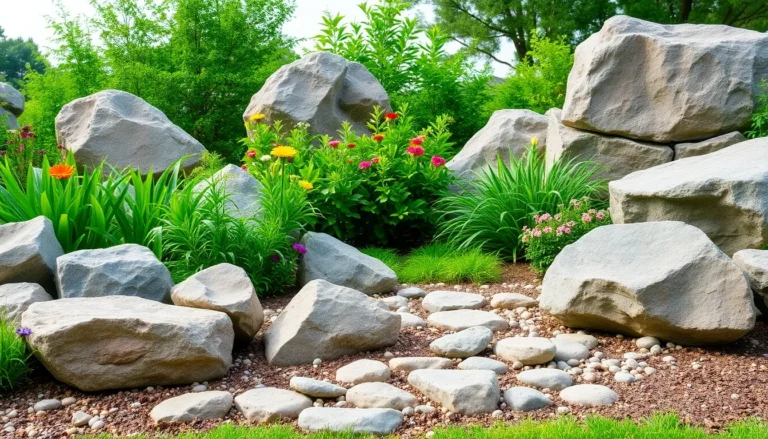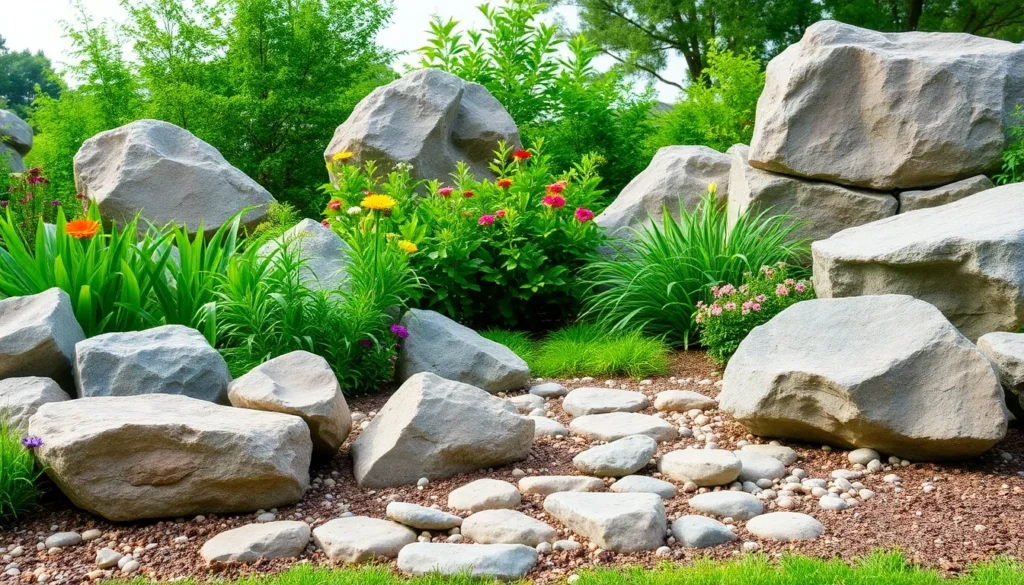

When it comes to sprucing up outdoor spaces, landscaping rocks are the unsung heroes of garden design. They’re not just sitting there looking pretty; they’re versatile, practical, and can transform any yard from drab to fab faster than you can say “boulder.” Whether it’s creating a serene zen garden or adding a touch of rugged charm, these rocks have got you covered.
Imagine your garden without those pesky weeds or muddy patches. Landscaping rocks can help with that too! They’re like nature’s little helpers, providing drainage, preventing erosion, and even attracting compliments from neighbors. So why settle for a boring lawn when you can rock your way to a stunning landscape? Let’s dive into the world of landscaping rocks and discover how they can elevate your outdoor space to new heights.
Overview Of Landscaping Rocks
Landscaping rocks serve multiple purposes in garden design. They enhance aesthetic appeal by providing color and texture contrast. Many types of rocks can fit various themes, like gravel for pathways or boulders for a natural look.
Functionality is another significant advantage of landscaping rocks. These materials help prevent weed growth by blocking sunlight. Improved drainage occurs as they allow rainwater to flow freely, reducing puddles and pooling. Erosion control becomes easier with strategic placement, stabilizing soil and securing plant roots.
Different shapes and sizes of rocks create unique visual elements. Small pebbles can define borders, while larger stones can act as focal points. Their versatility extends to usage in gardens, patios, and walkways, making them suitable for all outdoor spaces.
Popular choices for landscaping rocks include river rocks, limestone, and basalt. River rocks complement water features, while limestone offers a classic, timeless look. Basalt, with its rugged finish, adds a dramatic touch to any landscape.
Sustainability concerns become less pressing with landscaping rocks. They require minimal maintenance and last for years without deterioration. As durable options, they reduce the need for constant replacement, making them cost-effective in the long run.
Choosing landscaping rocks contributes to an environmentally-friendly approach to garden design. Landscape professionals often recommend using them for their ability to save water and limit chemical herbicides. Prioritizing these natural materials supports healthier ecosystems and promotes biodiversity in garden habitats.
Types Of Landscaping Rocks
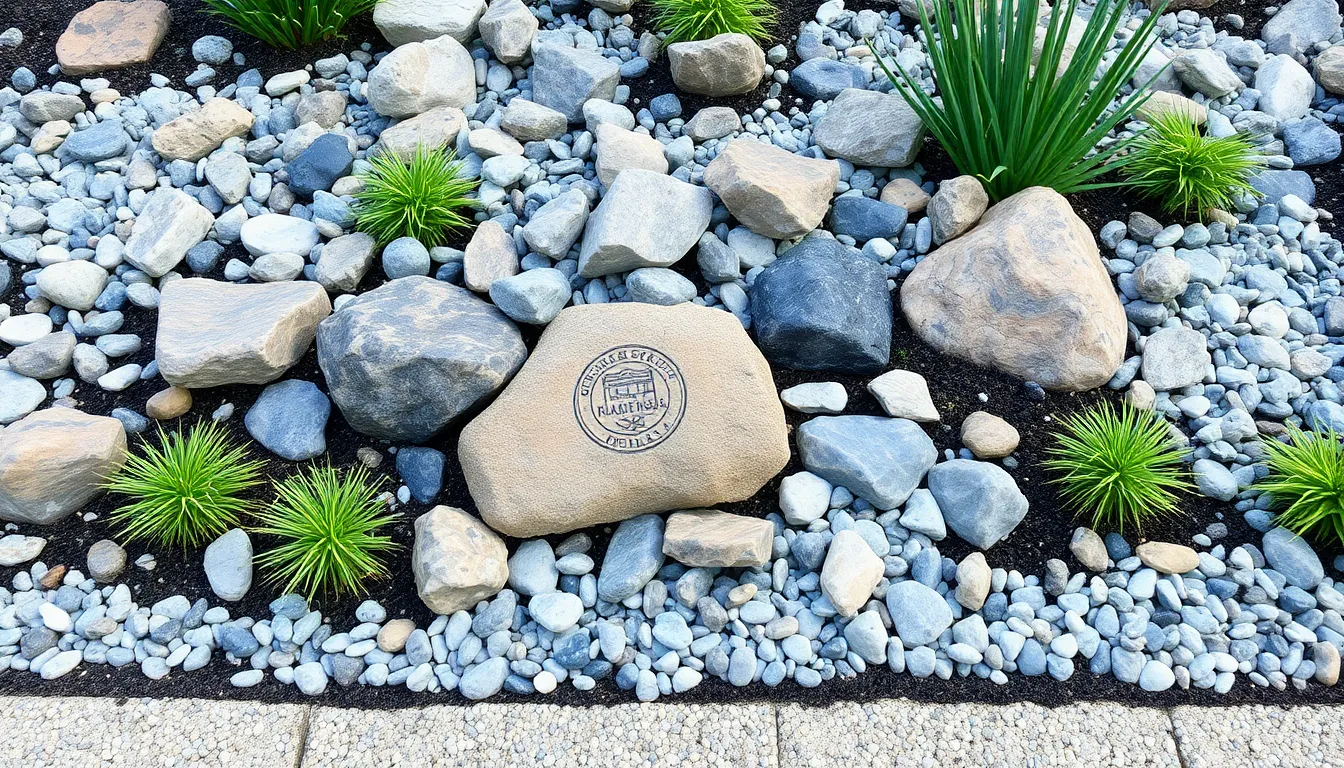
Landscaping rocks fall into two main categories: decorative and functional. Each type serves specific roles in enhancing outdoor spaces.
Decorative Rocks
Decorative rocks provide visual appeal and can transform a garden’s appearance. They come in various shapes, sizes, and colors, offering endless design possibilities. River rocks often create a serene look, making them popular for water features or pathways. Granite adds a touch of elegance with its unique grain patterns. Pebbles work well for plant beds, while larger boulders can serve as statement pieces, breaking up flat areas. Incorporating these rocks into a landscape design creates texture, draws the eye, and enriches the overall environment.
Functional Rocks
Functional rocks enhance the garden’s practicality while maintaining aesthetics. Gravel serves as a practical choice for driveways and walkways, providing solid footing and excellent drainage. Lava rock contributes to erosion control and weed prevention, minimizing maintenance needs. Limestone often helps stabilize soil, improving structure and health. Additionally, basalt is frequently used in retaining walls, adding strength and longevity. Utilizing these rocks effectively balances functionality with beauty, making them essential in any landscape design.
Benefits Of Using Landscaping Rocks
Landscaping rocks offer numerous benefits, enhancing both the functionality and beauty of outdoor spaces. Their versatility makes them a popular choice among gardeners and landscape designers.
Aesthetic Appeal
Landscaping rocks create visual interest through various shapes, sizes, and colors. Favorably, river rocks bring a serene quality to gardens, while granite adds a touch of elegance. Unique arrangements can define pathways or create focal points, enhancing overall design. Blending different types of rocks allows for striking contrasts and textured layers. For instance, combining smooth pebbles with rugged boulders brings dynamic depth to a landscape. This variety in aesthetics ensures a tailored approach to any garden theme.
Low Maintenance
Landscaping rocks require minimal upkeep, making them ideal for busy homeowners. They do not need regular watering, unlike traditional plant life. Additionally, rocks prevent weed growth, reducing the requirement for herbicides. Simple occasional rinsing keeps them clean and visually appealing. Their durability also means that they can withstand harsh weather and remain intact for years. Overall, establishing a rock-based landscape leads to lower long-term maintenance costs, allowing gardeners to enjoy their spaces rather than upkeep them.
Choosing The Right Landscaping Rocks
Selecting the appropriate landscaping rocks involves careful consideration of size, shape, color, and texture. These factors significantly influence the overall aesthetic and functionality of outdoor spaces.
Size And Shape Considerations
Choosing size and shape plays a crucial role in creating visual interest in a garden. Larger boulders serve as striking focal points, while smaller pebbles can define pathways and garden borders. The size of the rocks should complement the scale of the landscape; oversized stones may overwhelm a small yard, while tiny pebbles might get lost in expansive areas. Incorporating a mix of shapes enhances the natural look, as irregularly shaped stones blend seamlessly with organic elements. Additionally, the positioning of rocks affects their visual impact, whether laid individually or grouped together for added depth.
Color And Texture Options
Exploring color and texture opens up endless design possibilities for landscapes. Landscape rocks come in various hues, from earthy tones to vibrant shades, allowing for a customized look. Neutral colors like gray and beige provide a timeless appeal, while bold colors like red or blue can add eye-catching contrasts. Texture also contributes to visual dynamics; smooth stones create a polished feel, whereas rougher textures add an organic touch. Choosing rocks that harmonize with plant life and other landscape features ensures a cohesive design. Gardeners can use contrasting colors and textures to draw attention to specific areas or create soothing, harmonious spaces.
Installation Tips For Landscaping Rocks
Planning a landscaping project involving rocks requires proper techniques for installation. Start by selecting the ideal location. Assess the area’s drainage, exposure to sunlight, and existing plants, ensuring compatibility with the intended rock types.
Consider the size and style of landscaping rocks for effective placement. Cohesion in design emerges from combining larger boulders with smaller pebbles. Position larger stones as focal points and use smaller rocks to define pathways or borders.
Excavate the ground where you’ll install the rocks. Clear away grass and debris to create a clean base. For optimal stability, a depth of 3 to 6 inches often works. Lay landscaping fabric to minimize weed growth beneath the rocks.
Fill the designated area with a layer of gravel or sand. This base provides better drainage and supports the rocks’ weight. Level the surface before placing the rocks, ensuring an even distribution.
Arrange the rocks based on the desired look. Experiment with various shapes and sizes for a natural appearance. Filling gaps with smaller stones enhances visual interest while ensuring stability.
After rock placement, apply a thorough wash to remove dust or debris. This helps showcase the colors and textures of the rocks. Water the area lightly, allowing the rocks to settle into position.
Monitor the landscape over time. Essential for aesthetics, shifting or settling might occur, requiring adjustments. Tidy up the space by adding more small rocks or adjusting existing ones when necessary.
Landscaping rocks offer a blend of beauty and practicality that can elevate any outdoor space. Their versatility allows for creative designs that cater to various aesthetics while providing essential functions like weed prevention and improved drainage. With options ranging from decorative river rocks to sturdy boulders, homeowners can customize their landscapes to reflect personal style and enhance functionality.
By incorporating these elements thoughtfully, they can create visually appealing environments that require minimal maintenance. Ultimately, landscaping rocks not only contribute to the overall charm of a garden but also support sustainable practices that benefit the ecosystem, making them an excellent choice for any landscaping project.