Indoor cacti are the ultimate houseplants for anyone who wants to add a touch of nature without the commitment of a full-on garden. These little spiky wonders not only look great but also thrive on neglect, making them perfect for those who might forget to water their plants—like that one friend who always promises to call back. With a variety of shapes and sizes, indoor cacti can fit into any nook or cranny, transforming even the dullest corner into a desert oasis.
But don’t let their prickly exteriors fool you; these resilient plants are low-maintenance and can bring a quirky charm to your home. Plus, with their air-purifying qualities, they’ll help keep your space fresh while you enjoy the benefits of a mini desert right in your living room. So why not embrace the cactus craze and let these spiky companions liven up your indoor space?
Overview of Indoor Cacti
Indoor cacti exhibit a range of characteristics that make them desirable for home decor. These plants thrive in various shapes and sizes, catering to diverse aesthetic preferences. Their low-maintenance nature stands out, attracting busy individuals seeking easy-to-care-for houseplants.
Consider the unique attributes of different cactus species. Saguaro cacti grow tall, while Echinocactus, often called barrel cactus, maintains a round appearance. Many enjoy displaying these varieties in clusters for visual interest.
Indoor cacti require specific care to flourish. They benefit from bright, indirect sunlight, with some species tolerating direct beams, depending on their native habitat. Minimal watering suffices, as most prefer dry conditions. Overwatering leads to root rot, a common issue that many plant owners face.
Air-purifying qualities of indoor cacti enhance their appeal. Research indicates that certain cacti can remove pollutants and improve indoor air quality. Incorporating them into living spaces promotes not only style but also health.
In terms of placement, consider highlighting indoor cacti on windowsills or shelves for maximum exposure to light. Grouping multiple varieties creates an eye-catching display that transforms any room. Careful consideration of their unique requirements ensures these resilient plants thrive indoors, enhancing the natural ambiance of any environment.
Benefits of Growing Indoor Cacti
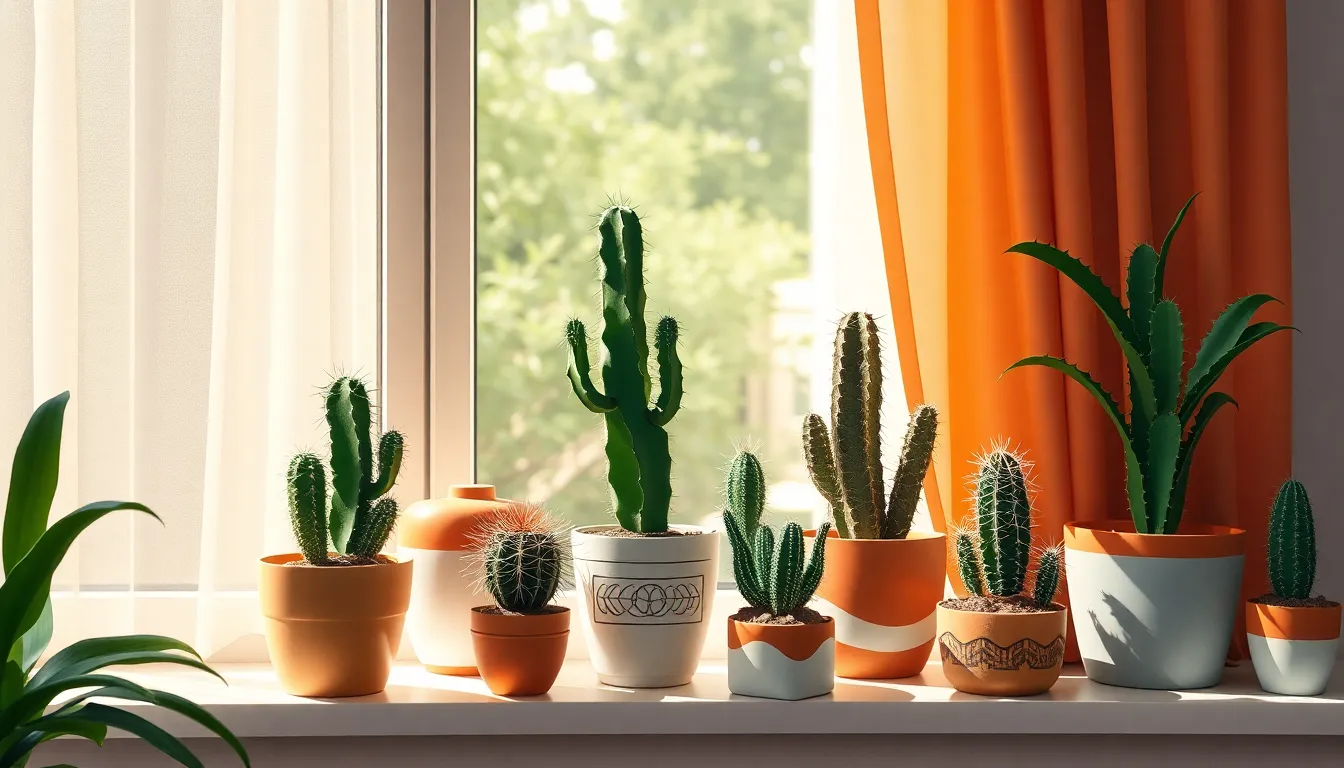
Indoor cacti offer numerous advantages that make them appealing for any home. Their unique qualities cater to various lifestyles while enhancing indoor spaces.
Low Maintenance Requirements
Cacti thrive with minimal care, making them perfect for busy individuals or those new to gardening. These plants require infrequent watering, typically every few weeks, and can survive in less-than-ideal conditions. For those reluctant to commit to high-maintenance plants, indoor cacti require just bright, indirect sunlight to flourish. A simple watering routine and proper placement can keep these resilient plants healthy. Busy lives can benefit from the easy-going nature of cacti without sacrificing beauty or charm.
Air Purification Properties
Cacti contribute to improved indoor air quality, serving as natural air purifiers. Research indicates that plants like cacti absorb carbon dioxide while releasing oxygen during photosynthesis. Their presence can lead to cleaner and fresher air, promoting a healthier living environment. Specific cactus species also help eliminate toxins found in household items, making them effective at reducing indoor pollutants. Choosing to grow cacti not only beautifies a space but also enhances overall air quality, fostering well-being for inhabitants.
Popular Indoor Cacti Varieties
Various indoor cacti species offer unique appearances and care requirements. Each variety adds distinctive appeal, making it easy to find the right fit for any space.
Assume Cactus (Echinopsis)
Assume cactus, also known as Echinopsis, features vibrant blooms that emerge in the summer. This cactus enjoys bright light, making it suitable for sunny windowsills. Watering should occur when the soil is dry, preventing over-saturation. It reaches heights up to 12 inches, providing a striking vertical element. Additionally, Echinopsis varieties come in numerous colors, enhancing visual interest in indoor arrangements.
Christmas Cactus (Schlumbergera)
Christmas cactus, or Schlumbergera, brings joy during the holiday season with blooms in red, pink, or white. It thrives in indirect light and prefers a more humid environment, especially during flowering. Although it requires more water than typical cacti, soil should still be well-draining. This plant can grow up to 24 inches wide, creating a stunning display when it flowers. Propagation through cuttings ensures easy expansion of existing collections.
Moon Cactus (Gymnocalycium mihanovichii)
Moon cactus, known botanically as Gymnocalycium mihanovichii, showcases eye-catching, colorful tops. Grafting allows for vibrant hues due to the lack of chlorophyll in the colorful top, which connects to a green bottom cactus. These plants thrive in bright indirect light and require minimal watering. Typically, moon cacti reach heights of around 6 inches. Their compact size makes them ideal for small spaces or desk decorations, adding a pop of color to any setting.
Care Tips for Indoor Cacti
Indoor cacti thrive with proper care, ensuring they remain healthy and vibrant. Each aspect of care plays a vital role in their overall well-being.
Light Requirements
Bright, indirect sunlight supports healthy growth for indoor cacti. Cacti prefer south-facing windows but can adapt to east and west-facing locations. Direct afternoon sun can scorch their skin, so filtered light is ideal. Monitor for signs of insufficient light, such as stretching or faded colors. When possible, rotate cacti every few weeks to promote even light exposure.
Watering Techniques
Minimal watering is crucial for indoor cacti. Overwatering often leads to root rot, a common issue for many cactus owners. Allow the soil to dry completely between waterings, typically every 2-3 weeks in warmer months and less often in cooler months. During watering, apply water directly to the soil, avoiding the cactus body. Consider factors such as humidity and temperature, as they may influence the frequency of watering.
Soil and Fertilization
Well-draining soil is essential for indoor cacti. A commercial cactus mix offers excellent drainage, but mixing regular potting soil with sand or perlite also works well. Fertilize during the growing season, typically spring and summer, using a balanced, diluted fertilizer every 4-6 weeks. Avoid fertilizing during the dormant fall and winter months to prevent stress. Maintaining proper soil and fertilization not only promotes growth but also enhances cactus vitality.
Indoor cacti offer a unique blend of beauty and practicality that fits seamlessly into any lifestyle. Their low-maintenance nature makes them perfect for busy individuals or those new to gardening. With a variety of shapes and sizes available, these resilient plants can enhance any indoor space while contributing to improved air quality.
By understanding the specific care requirements and selecting the right species, anyone can enjoy the charm and benefits of indoor cacti. Embracing these hardy plants not only adds a touch of nature to the home but also promotes a healthier living environment. It’s time to bring the allure of cacti indoors and experience their many advantages.